Do You Need a Permit for a Hot Tub? U.S. Rules Explained

You may need a permit for a hot tub, but there is no single U.S. rule that applies everywhere. The answer depends on your city or county, whether the spa is portable or permanent, how it is powered, whether it sits on a deck, whether plumbing or gas is involved, and local zoning or barrier rules.
In many places, the hot tub itself may not need a building permit, while the electrical work still does. In other jurisdictions, a permanent spa, indoor installation, or hot tub placed on a deck can trigger building review as well. The local building department or authority having jurisdiction is the place that makes the binding decision for your property.
Do You Need a Permit for a Hot Tub?
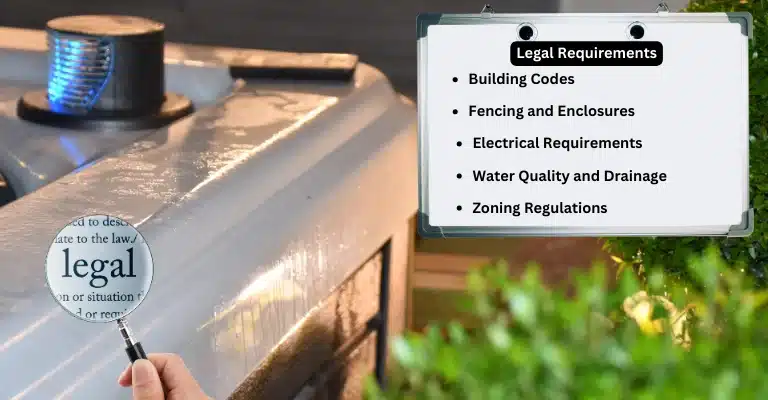
Often, you need at least one permit or inspection, but not always a building permit for the spa itself. A typical installation can involve several separate approvals:
| Permit or approval | When it may apply | Who usually handles it |
|---|---|---|
| Electrical permit | New circuit, hardwired spa, electrical heater, disconnect, or other electrical work | City or county electrical/building department |
| Building permit | Permanent spa, indoor installation, structural work, or hot tub on a deck in some jurisdictions | Building department |
| Mechanical permit | Gas-fired heating in jurisdictions that regulate it separately | Building or mechanical department |
| Plumbing permit | Direct connection to water supply or drainage in some jurisdictions | Building or plumbing department |
| Zoning review | Setbacks, easements, lot coverage, location, or neighborhood-specific rules | Zoning or planning department |
| Barrier or safety compliance | Fence, gate, safety cover, access protection, or local pool/spa barrier rules | Building/code enforcement |
| HOA approval | Private community restrictions | Homeowners association, not the government permit office |
Why the Answer Changes From One City to Another
Permit rules are local because states and municipalities adopt building and electrical codes on their own schedules and may add local amendments. The 2026 National Electrical Code exists at the national model-code level, but your jurisdiction may still be enforcing an earlier adopted edition.
That is why a hot tub owner should not rely on a national blog post for a final permit answer. Use national standards to understand the safety issues, then confirm the adopted rules with your own city or county.
Two Official Examples Show How Different the Rules Can Be
Portland, Oregon
The City of Portland currently says a hot tub or spa does not need a building permit just because it is a hot tub. However, an electrical permit is required for electrically heated hot tubs, a mechanical permit is required for gas heating, and a plumbing permit is needed if the spa has a direct plumbing connection.
Portland also notes that a hot tub placed on a deck more than 30 inches above grade can trigger structural design requirements. That means the tub itself may be exempt from a building permit while the supporting structure still needs review.
Montgomery County, Maryland
Montgomery County uses a different approach. Its current residential spa and hot tub permit page says no building permit is required for a self-contained portable hot tub installed outside a dwelling, but building permits can apply to permanent installations, indoor installations, and spas installed on decks or other structures.
The county also states that electrical and, when applicable, mechanical permits are required to complete hot tub projects. Its process specifically requires site-plan information for outdoor portable units so setbacks can be reviewed.
These examples are not rules for the rest of the country. They demonstrate why you should verify your own jurisdiction before pouring a pad, wiring the spa, or scheduling delivery.
Does a 120V Plug-and-Play Hot Tub Need a Permit?
A 120V plug-and-play spa may avoid some building or electrical work because it can use a manufacturer-approved cord-and-plug connection instead of a new 240V hardwired circuit. That does not automatically make it permit-free.
Some jurisdictions still require an electrical permit or site review for a self-contained portable spa. Others may not require a new electrical permit if you are using an existing compliant receptacle without altering the electrical system. Zoning, setback, barrier, and deck rules can still apply either way.
If you are comparing 120V and 240V installations, see our hot tub amperage guide for the electrical differences, but use your local inspector and spa manual for the actual permit and circuit requirements.
Does a 240V Hot Tub Need an Electrical Permit?
In many jurisdictions, yes. A 240V hot tub commonly needs a dedicated electrical installation, GFCI protection, disconnecting means, grounding or bonding as applicable, and inspection under the electrical code adopted locally.
NFPA 70, the National Electrical Code, contains spa and hot tub requirements in Article 680. The exact adopted edition and local amendments vary, so do not copy breaker sizes, conductor sizes, bonding details, or disconnect placement from another homeowner’s installation.
Have the electrician work from the hot tub’s current installation manual and the code edition enforced by your local authority.
Do You Need a Permit to Put a Hot Tub on a Deck?
A deck can change the permit question because the issue is no longer only the spa. A filled hot tub is a heavy concentrated load, so the deck may need structural review, reinforcement, or its own permit even where a ground-level spa does not require a building permit.
Never assume an existing residential deck can support a filled spa because it feels sturdy under normal use. Use the actual filled weight of the hot tub, water, occupants, and accessories. For structural planning questions, see our hot tub deck guide.
Does the Hot Tub Foundation Need a Permit?
A simple ground-level pad may not require a separate building permit in some places, but grading, drainage, retaining walls, property setbacks, easements, or a larger patio project can change that answer.
Before choosing concrete, pavers, gravel, or a prefabricated pad, confirm the spa manufacturer’s base requirements and local site rules. Our hot tub base guide can help you compare foundation options after you know what your jurisdiction allows.
What About Setbacks and Zoning?
A permit exemption does not necessarily mean you can place the hot tub anywhere on the property. Zoning rules can regulate distance from property lines, easements, buildings, septic systems, streets, or other features.
Ask the zoning or planning office whether a site plan is needed and whether your property has special overlays, shoreline rules, historic-district restrictions, or other location-specific requirements.
Do Hot Tubs Need a Fence or Safety Barrier?
Barrier rules also vary by jurisdiction. The U.S. Consumer Product Safety Commission recommends barriers to help prevent children from gaining unsupervised access to residential pools, spas, and hot tubs. Its residential barrier guidance discusses fences, gates, alarms, and safety covers.
A compliant lockable safety cover may satisfy or change barrier requirements for a portable spa in some jurisdictions, while other locations can impose additional fencing or access-control rules. Confirm what your local code accepts rather than assuming the factory cover is enough.

Is HOA Approval the Same as a Permit?
No. A homeowners association, condominium association, deed restriction, or private covenant is separate from government permitting.
You can have a city permit and still violate an HOA rule, or receive HOA approval and still need a city or county permit. Check both when private community rules apply to your property.
How to Check Your Hot Tub Permit Requirements
- Identify the exact hot tub. Have the model, dimensions, voltage, heater type, water capacity, and filled weight available.
- Choose the proposed location. Measure distances to property lines, buildings, utilities, easements, and other site features.
- Contact the local building department. Ask specifically about building, electrical, mechanical, and plumbing permits for a residential hot tub or spa.
- Contact zoning if needed. Confirm setbacks and any site-plan requirements.
- Ask about barrier requirements. Find out whether a listed safety cover is accepted or whether fencing, gates, or alarms are required.
- Have the deck reviewed if applicable. Do not rely on visual inspection for a heavy filled spa.
- Give the electrician the spa manual. Electrical work should match the exact model and locally adopted code.
- Check HOA rules separately. Government approval does not override private covenants.
- Schedule required inspections. Do not close walls, cover wiring, or finish work before the inspector has seen anything that must remain visible.
What to Ask the Permit Office
You can save time by asking direct questions instead of simply asking, “Do I need a permit?”
- Does this portable or permanent hot tub need a building permit?
- Does the electrical installation need a separate permit and inspection?
- Are there setback requirements for the spa or equipment?
- What barrier or safety-cover standard is required?
- Does placing the spa on an existing deck require structural plans?
- Do direct plumbing connections require a plumbing permit?
- Does a gas heater require a mechanical permit?
- Which electrical and building code editions are currently adopted?
Common Permit Mistakes to Avoid
- Using another county’s permit fee or rule: fees and requirements change and are not transferable between jurisdictions.
- Assuming “portable” means exempt: the spa may be portable while electrical, zoning, barrier, or deck rules still apply.
- Ordering the hot tub before confirming setbacks: the easiest delivery route may not be a legal installation location.
- Building the pad before checking the site plan: moving a concrete pad after a zoning problem is expensive.
- Assuming an old deck can carry the load: hot tub weight can create a structural issue separate from the spa permit.
- Skipping the inspection because the spa works: operation does not prove the installation meets local electrical or building requirements.
For a broader installation safety review, see our hot tub safety precautions.
Frequently Asked Questions
Do all hot tubs need a permit?
No. Permit requirements vary by jurisdiction and installation type. Some portable outdoor spas may be exempt from a building permit while still requiring electrical review, zoning compliance, or other approvals.
Do I need a permit for a 120V plug-and-play hot tub?
Possibly. Some locations exempt certain self-contained outdoor spas from a building permit, but electrical, zoning, barrier, or site-plan requirements may still apply. Check the local rules before installation.
Do I need a permit for a 240V hot tub?
A 240V installation commonly involves permitted electrical work and inspection. The exact requirements depend on the electrical code edition and local amendments adopted by your jurisdiction.
Does a hot tub on a deck need a permit?
It may. Even where the spa itself is exempt from a building permit, the deck can require structural review or permitting because of the filled hot tub load.
Can I install a hot tub before getting the permit?
Do not start work that requires a permit before the required approval is issued. Doing so can lead to stop-work orders, added fees, reinspection, or having to expose or redo work so it can be inspected.
Who should I call to find out if I need a hot tub permit?
Start with the city or county building or permitting department for the property address. Ask about electrical, building, zoning, plumbing, mechanical, barrier, and deck requirements for the exact spa you plan to install.
The Bottom Line
There is no reliable nationwide yes-or-no answer to whether a hot tub needs a permit. A self-contained portable spa may be exempt from a building permit in one city while still needing electrical review, and a similar spa on a deck may trigger structural approval somewhere else.
Before delivery, verify the exact hot tub, proposed location, electrical setup, support structure, setbacks, and barrier requirements with the authority that serves your property. That one check is more reliable than any national permit-cost table.
For examples of how local rules differ, see the City of Portland hot tub permit guidance and Montgomery County residential spa permit process. For residential barrier safety, see the U.S. Consumer Product Safety Commission barrier guidance.