Calcium Hardness Calculator for Hot Tub (Free Tool)

Not sure how much calcium hardness increaser to add to your hot tub?
You’re not alone. A lot of hot tub owners either add too little and see no change, or add too much and end up dealing with cloudy water and buildup.
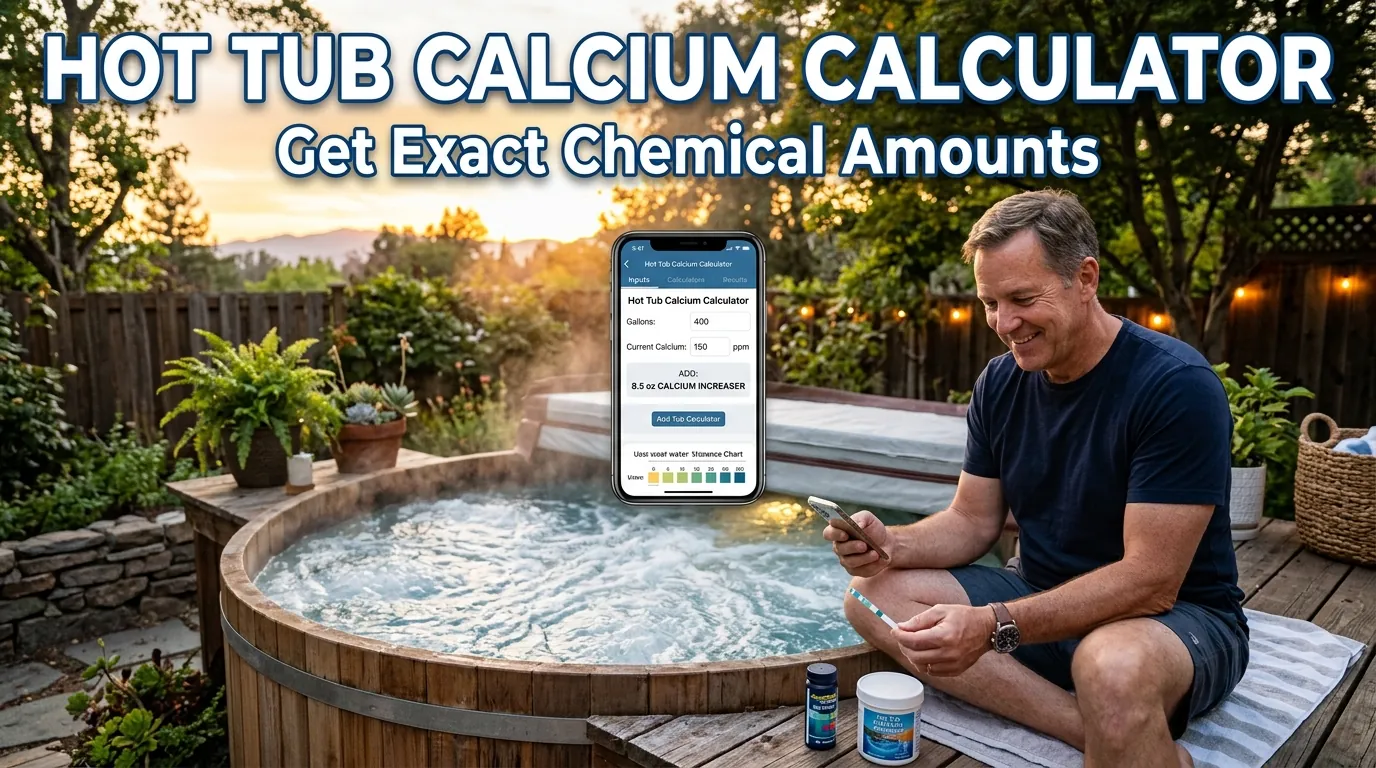
This simple calcium hardness calculator takes out the guesswork. Just enter your current level and tub size, and it tells you exactly what to do.
If you’re new to water chemistry, it also helps to understand the basics of how to balance hot tub water so everything works together properly.
Calcium Hardness Calculator
Hot tub & spa water balance tool
Add increaser in small doses and retest after each addition. Never add too much at once — overshooting is harder to fix than undershooting.
How to Use This Calculator
Using this tool is simple and takes less than a minute:
- Enter your current calcium hardness level (ppm)
- Enter your hot tub volume in gallons
- Click calculate
- Follow the recommended dosage
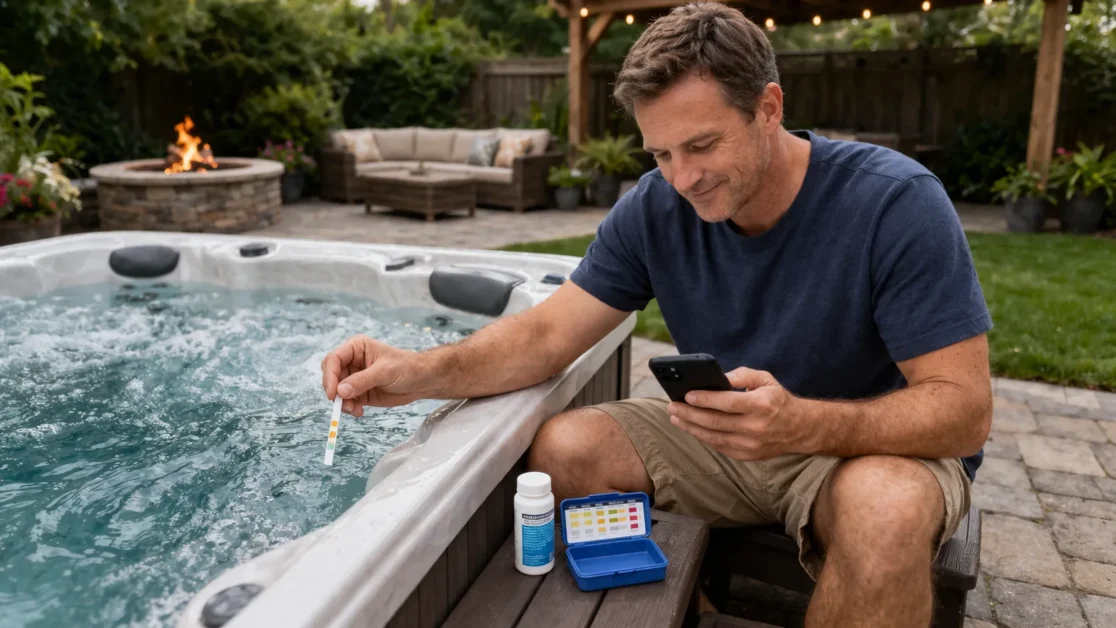
If you’re unsure about your tub size, you can use these hot tub calculation tools to get accurate numbers.
What Is Calcium Hardness in a Hot Tub?
Calcium hardness measures how much dissolved calcium is in your water.
Too little, and your water becomes aggressive. Too much, and it leaves behind scale and buildup.
Hot tubs are especially sensitive because they use less water and run hotter than pools, so changes happen faster.
Best Calcium Hardness Increaser (Recommended)
Recommended Calcium Hardness Increaser

SpaGuard Spa Calcium Hardness Increaser (12 oz, 3 Pack)
- Easy-to-use granular formula
- Raises calcium hardness safely
- Protects equipment from corrosion
- Works with all sanitizer systems
Disclosure: This post may contain affiliate links. We may earn a small commission at no extra cost to you.
Ideal Calcium Hardness Range
The ideal calcium hardness level for a hot tub is:
200 to 250 ppm
This range helps:
- protect your heater and equipment
- prevent corrosion
- avoid scale buildup
If your levels drift outside this range, problems can show up quickly.
How Much Calcium Increaser Do You Need?
This calculator works by comparing:
- your current calcium level
- your target level (around 250 ppm)
- your hot tub volume
It then calculates the exact amount of calcium increaser needed.
For precise adjustments, you can also use this calcium hardness calculator tool for additional guidance.
What Happens If Calcium Is Too Low or Too High?
Low Calcium Problems
- corrosion inside pipes and heater
- damage to hot tub surfaces
- skin irritation
High Calcium Problems
- white scale buildup
- cloudy or dull water
- clogged filters and jets
If you’re dealing with buildup already, check this guide on hot tub scale buildup causes and fixes.
Tips for Adding Calcium Safely
Keep things simple and avoid common mistakes:
- Always add in small amounts
- Dissolve before adding to water
- Run jets while adding
- Retest after 30 minutes
- Avoid adding too much at once
For long-term results, follow a simple hot tub water balance routine to keep everything stable.
Final Thought:
Balancing calcium hardness doesn’t have to be complicated.
With the right calculator and a simple routine, you can keep your water clear, protect your equipment, and avoid costly problems down the road.
Try the calculator above, make small adjustments, and your hot tub will stay in great shape.
Frequently Asked Questions
What happens if calcium hardness is too low in a hot tub?
Low calcium can cause corrosion, damage equipment, and lead to irritation over time.
Can high calcium damage my hot tub?
Yes, high calcium leads to scale buildup that can clog filters and damage heaters.
How often should I test calcium hardness?
Test at least once a month and after refilling your hot tub.
Does calcium hardness affect pH levels?
Not directly, but both are connected and influence overall water balance.
Can I use tap water without adjusting calcium?
It depends on your area. Many locations have hard water, so testing is usually needed.