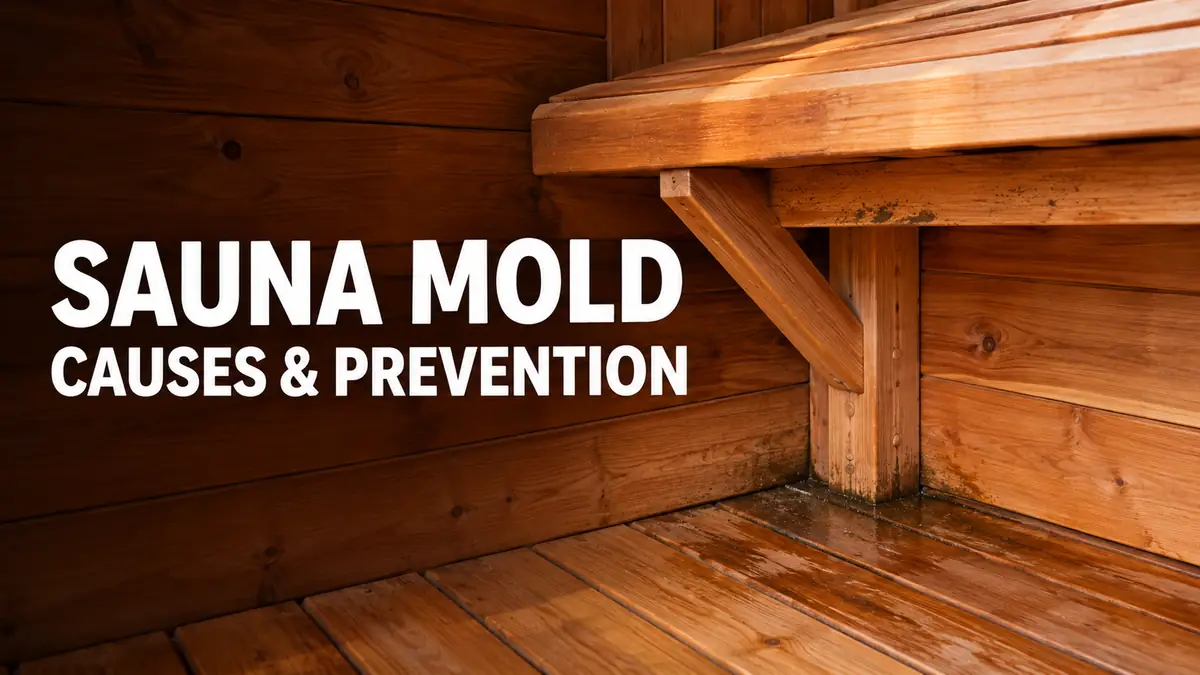
Sauna Mold: Causes, Cleaning & Prevention

You lift the sauna bench mat and notice dark spotting, or a musty smell hangs around long after the room has cooled. The first instinct may be to heat the room harder or spray the wood with a strong cleaner. Neither addresses the main question: why is moisture staying there?
Quick answer: If you suspect sauna mold, stop using the affected space until you understand the extent of the problem. Locate and correct moisture sources, follow the sauna manufacturer’s cleaning directions, and dry the area thoroughly. A small amount of surface growth on an appropriate cleanable surface may be manageable, but widespread, recurrent, hidden, or deeply affected materials call for professional assessment. Heat alone is not a reliable mold-removal method.
This guide helps you distinguish an ordinary maintenance issue from one that deserves specialist attention. It provides a moisture inspection map and a practical prevention routine without pretending every dark wood stain can be diagnosed by sight.
Why Mold Can Appear in a Sauna
Mold needs moisture. Saunas are hot while in use, but their surfaces cool afterward; damp towels, spilled water, sweat, poor airflow, leaks and condensation can leave localized wet areas. A heater does not automatically dry every bench support, floor corner or wall cavity. Infrared cabins can develop moisture problems too if wet textiles or insufficient drying are part of the routine.
The US Environmental Protection Agency emphasizes that cleaning visible mold without correcting the moisture problem often leads to its return. The same cause-and-effect reasoning applies to a sauna, although specific cleaning agents must also be compatible with high-heat sauna materials.
A cedar sauna is not mold-proof. Natural wood has different properties, but persistent water and hidden dampness can affect many wood surfaces. A varnish or perfumed cleaner does not substitute for correcting the source.
Is That Dark Spot Mold, Water Staining or Dirt?
Discoloration does not identify mold by itself. Sweat stains, mineral residue from water, soot near a wood stove, harmless color variation and true microbial growth can look similar in a photograph. A musty odor or recurring patches after ordinary cleaning make moisture investigation more important, but a professional may be needed to determine the source and appropriate remedy.
| What you notice | What it might suggest | Reasonable next step |
|---|---|---|
| Dark patch under a bench | Sweat staining, water damage or possible growth | Inspect for recurring dampness and document the area |
| Musty odor after drying | Moisture may be trapped or hidden | Inspect ventilation and concealed wet spots; seek help if persistent |
| White residue near water splash zone | Possible mineral deposit, not proof of mold | Check manufacturer-approved cleaning and water practices |
| Soft, swollen or decaying timber | Potential significant water damage | Stop use and ask a competent professional to assess material |
| Spots returning after cleaning | Moisture source likely remains | Investigate leaks, condensation and airflow rather than repeating cleaner |
You do not need to identify an exact mold species to know that visible growth and sustained moisture warrant action. Do not rely on online color charts to declare a spot harmless.
Where to Inspect for Sauna Moisture
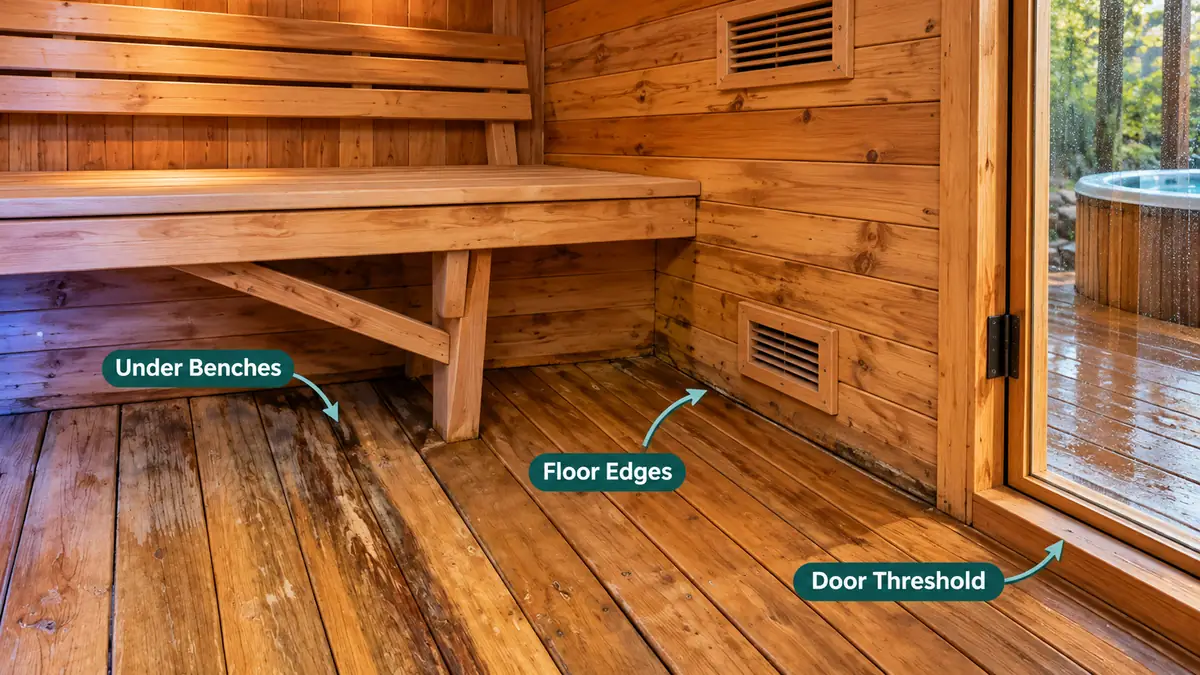
Begin only when the sauna is off and cool. Do not disassemble electrically connected parts or heater enclosures. Use a flashlight to inspect surfaces you can reach without damaging panels, and photograph any suspect area. Do not disturb extensive moldy material just to look behind it.
| Area | What to look for | Possible moisture route |
|---|---|---|
| Underside of benches and supports | Dark patches, lingering dampness, poor drying | Sweat and wash water collecting in shaded areas |
| Back wall and wall-to-bench join | Recurring spots or damp trim | Condensation or water running behind backrests |
| Floor corners and removable mats | Standing water, damp seams, dirty trapped debris | Splashing, cleaning water or insufficient drainage |
| Door threshold | Wet timber, poor seal or pooling | Rain entry, tracked-in water or cleaning runoff |
| Ceiling and upper joints | Stains, swollen panels or drip marks | Roof leak or condensation in cold weather |
| Ventilation openings | Blocked vents, dust, wet adjacent surfaces | Insufficient drying path or an enclosure problem |
| Outside wall or roof of backyard cabin | Leaks, failed flashing, wet insulation clues | Weather intrusion needing repair |
Indoor conversions require extra care: moisture may affect adjoining living areas or hidden building materials. See the sauna ventilation guide for airflow planning and the sauna insulation guide for why assembly details matter. These are building-envelope topics, not reasons to open walls without expertise.
How to Respond Safely to Suspected Sauna Mold
There is no universal chemical recipe for every sauna wood surface. Use the EPA’s general moisture-control approach alongside your actual sauna manufacturer’s material-care instructions. If mold appears extensive, hidden, or associated with structural damage, do not attempt an informal deep clean.
- Pause use and protect the area. Keep people away from visibly affected surfaces while you decide how to address the problem. People with asthma, severe allergies, or weakened immunity should avoid cleanup exposure.
- Find and correct moisture first. Check for roof or plumbing leaks, pooling, damp mats, poor drying and condensation. If a building cavity is wet, obtain appropriate specialist help.
- Check whether the surface is suitable for owner cleaning. Nonporous surfaces differ from wood, insulation and other absorbent materials. Consult both EPA guidance and the sauna maker’s instructions.
- For a small, appropriate cleanable hard surface, use approved mild cleaning. The EPA describes detergent-and-water cleaning followed by complete drying for hard surfaces. Avoid saturating wood or spreading runoff into heater equipment.
- Dry thoroughly and restore ventilation. Follow the heater manufacturer’s post-cleaning and drying instructions; remove wet items and allow air to circulate.
- Reinspect before normal use. If odor, dampness or growth returns, do not call the job finished. Investigate the hidden source or involve a professional.
The EPA’s mold cleanup guidance uses roughly 10 square feet as a general small-area threshold for many household cases, but it also highlights exceptions such as major water damage. That figure is not a guarantee that porous sauna wood can be cleaned safely as a DIY project. Extent, material, health risks and hidden damage all matter.
Which Cleaning Products Should You Avoid in a Sauna?
High heat changes the cleaning decision. Do not improvise with bleach, ammonia, strong solvents, fragrant oils, or mixed household chemicals on hot wood. Do not combine cleaning agents or spray them onto heaters, sensors or electrical controls. Some substances are inappropriate for sauna materials and some mixtures produce hazardous fumes.
Harvia’s maintenance directions recommend moderate amounts of water and suitable detergent for routine cleaning, followed by thorough drying and ventilation. These instructions are routine care guidance, not proof that any particular chemical will remediate established mold inside porous materials.
Avoid sealing, painting or lacquering over a suspected mold problem. The EPA cautions that paint or caulk over moldy surfaces does not solve the underlying issue. Interior sauna treatments should be manufacturer-approved. Sanding suspected growth can also disperse contaminated dust, so do not treat it as a casual cosmetic task.
Why Turning the Heater to Maximum Is Not a Mold Treatment
A sauna gets hot, but heating the room does not guarantee every surface, joint or material interior receives a verified decontamination treatment. Trying to “bake out” mold can leave contaminated material and moisture pathways in place. It may also introduce avoidable fire or overheating risk if the heater is operated outside normal instructions.
Use the heater only as its manufacturer instructs for ordinary drying after cleaning. If growth is inside an absorbent component or a wall cavity, drying the room cannot replace assessing or replacing the affected material.
How to Keep Sauna Mold From Returning
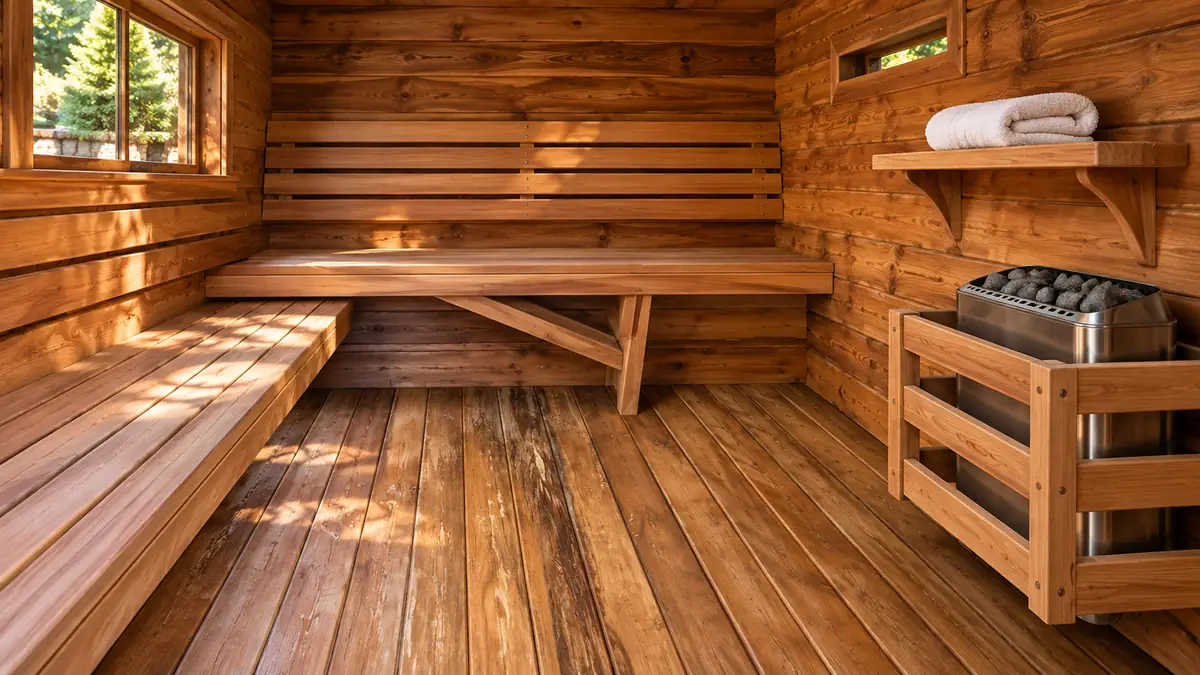
The prevention goal is simple: do not allow damp material to remain trapped after a session. Build a small routine rather than waiting for stains. The details will vary between a dry electric sauna, an outdoor wood-burning cabin and an infrared room.
- Immediately after use: Remove used towels, damp covers, buckets and removable wet mats. Wipe up visible splashes where it is safe to do so.
- During the cooldown: Follow the manufacturer’s approved drying and ventilation instructions. Keep vents usable and avoid trapping damp air behind a closed door when the manual calls for airing.
- At routine cleaning: Clean benches, wall contact points and floors with approved products and dry fully before closing up.
- After rain or snow: Inspect the exterior roof, threshold and floor for water entry, especially on outdoor cabins.
- When an odor returns: Check under the benches and along the floor-to-wall joint. Do not cover the smell with fragrance.
- When materials stay wet: Document the location, investigate the source and arrange repair rather than repeating surface cleaning.
Sauna flooring choices affect how easily moisture can escape or be cleaned. The sauna flooring guide covers surface and drainage decisions for new and existing rooms.
Sauna Moisture Inspection and Follow-Up Log
This page-specific record helps you notice repeat patterns. Write what you observed, not an unverified mold diagnosis. Return to the same areas after the next few ordinary use and drying cycles, or after professional remediation, as appropriate.
| Inspection point | Today’s observation | Follow-up date or action |
|---|---|---|
| Benches and underside | __________________ | __________________ |
| Floor, mat and drain area | __________________ | __________________ |
| Door threshold | __________________ | __________________ |
| Ceiling and roofline | __________________ | __________________ |
| Vent locations | __________________ | __________________ |
| Damp textiles or stored items | __________________ | __________________ |
| Musty smell after cooldown | __________________ | __________________ |
| Leak or condensation source | __________________ | __________________ |
| Professional inspection needed? | __________________ | __________________ |
When to Hire a Mold or Building Professional
Call for help when growth is large, returns repeatedly, appears behind panels, involves wet insulation, affects structural wood, follows a significant leak, or creates particular health risks for occupants. In an attached indoor sauna, a building professional may also need to check the nearby wall or floor assembly. Ask for an assessment of the moisture source and a plan for safe repair, not merely a proposal to apply a chemical.
A maintenance company familiar with the heater is not automatically a qualified mold-remediation contractor. Different problems may require different professionals: a roofer for an active leak, a building contractor for damaged assemblies, a ventilation specialist for airflow, and a remediation company for significant contamination.
FAQs: Sauna Mold and Cleaning
Can mold grow in a dry sauna?
Yes. The room may be dry during heating while localized areas remain wet after use or cool down. Moisture trapped under benches or inside a building assembly can still create a problem.
Can sauna heat kill mold instead of cleaning it?
Do not rely on running the heater to treat established mold. Identify the moisture source and follow suitable cleanup or professional remediation guidance.
Is a black stain on a sauna bench definitely black mold?
No. A dark mark alone cannot identify the cause or mold species. Investigate recurring dampness, visible growth and odors rather than diagnosing by color.
Should I use bleach to clean mold off sauna wood?
Do not assume bleach is safe or effective for sauna wood, and never mix household cleaners. Follow the manufacturer’s material guidance and consult a professional for contaminated porous material.
How do I prevent mold after a sauna session?
Remove wet textiles, clean spills, use the manufacturer’s drying and ventilation routine, and investigate any area that stays damp.
The Next Useful Step
With the sauna cool and unused, inspect the underside of benches, the floor edges and any place water collects. Fix the moisture route before treating the appearance of a stain. If the problem is hidden, repeated, widespread or affecting soft timber, arrange professional assessment rather than experimenting with stronger heat or chemicals.