Pool Plaster vs Quartz vs Pebble: Which Finish Is Best?

If you want the lowest initial cost and the smoothest traditional feel, white plaster is usually the starting point. If you want more aggregate character without a pronounced pebble texture, quartz is often the middle option. If you prefer a natural, dimensional look and are comfortable with more texture and a higher initial quote, pebble may fit better.
There is no single “best” pool finish for every concrete or gunite pool. The better choice depends on the exact product, how the surface feels to you, the water color you want, your local resurfacing quote, the installer, start-up care, and the warranty. This guide compares the three finish families without treating marketing claims or regional prices as universal facts.
Pool Plaster vs Quartz vs Pebble at a Glance
| Decision factor | White plaster | Quartz aggregate | Pebble aggregate |
|---|---|---|---|
| Typical surface character | Smooth, classic troweled finish | Smooth to lightly textured, depending on product and exposure | Textured to refined, depending on pebble size and finish method |
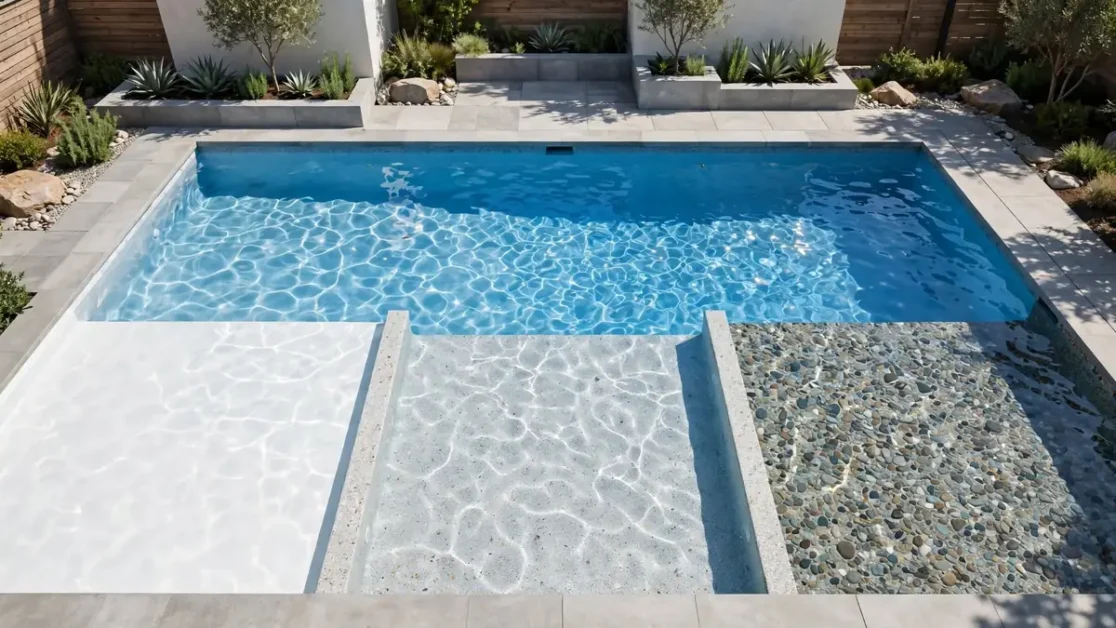
| Visual style | Clean, traditional, often bright | More color flecks and aggregate detail | Natural, dimensional, stone-forward appearance |
| Relative initial price | Generally lowest | Generally middle | Generally higher |
| Best fit when… | Budget and smooth feel lead the decision | You want a balance of texture, color options, and upgraded aggregate | You prioritize natural appearance and an exposed-aggregate look |
| What to verify | Mix, color, start-up plan, workmanship warranty | Exact quartz product, aggregate exposure, color, warranty | Pebble size, texture, exposure, installer authorization, warranty |
The labels are useful for shopping, but they do not tell you everything. The National Plasterers Council notes that cementitious pool finishes can use several aggregates, including limestone, quartz, pebble, and glass bead. Installation and water chemistry also affect how these surfaces age. See the NPC technical guidance on cementitious pool finishes.
What Is White Pool Plaster?
Traditional white pool plaster is a cementitious interior finish, commonly made with white cement and fine mineral aggregate. It is troweled over a prepared concrete or gunite pool shell to create the finished surface you see and touch.
Its main appeal is simplicity. White plaster gives a familiar clean look, is usually the lower-cost finish family in a contractor’s lineup, and typically feels smooth when properly installed. It also provides a neutral base for the classic light-blue water appearance many homeowners expect.
The tradeoff is that a smooth cementitious surface can make cosmetic variation, staining, scaling, or etching easier to notice. The National Plasterers Council specifically warns that color and shade can vary and that proper start-up and ongoing water chemistry affect finish longevity. That makes installer quality and water care important even when you choose the most basic finish. NPC’s pool interior finish disclosure explains these limitations.
What Is a Quartz Pool Finish?
A quartz pool finish is still a cementitious system, but it incorporates quartz aggregate into the finish. Depending on the product, the quartz may be natural, colored, pigmented, or combined with other specialty aggregates.
Quartz is often positioned between standard plaster and pebble because it can add visible aggregate and color variation without the larger exposed-stone texture associated with many pebble products. The exact feel, however, depends on the product and how the surface is finished. Do not assume every quartz finish feels the same.
For example, National Pool Tile’s current QuartzScapes product pages describe finishes made with white Portland cement and natural quartz aggregate, with some colors adding pigments and colored quartz highlights. NPT also tells buyers to examine an actual sample because installed color can differ from images. That is a good rule for any brand. See an NPT QuartzScapes product example.
What Is a Pebble Pool Finish?
Pebble finishes are exposed-aggregate cementitious finishes that bring small stones or pebbles to the visible surface. The installer applies the finish and exposes the aggregate so the stone becomes a major part of the final look and feel.
That exposed aggregate creates the natural, dimensional appearance that makes pebble popular for lagoon-style and landscape-focused pools. Texture can vary substantially. Larger natural-textured products may feel more pronounced underfoot, while refined, smaller-stone, or polished product lines can feel noticeably smoother.
PebbleTec’s current finish lineup illustrates how wide that texture range can be, from natural-textured pebble to refined and polished options. Its product information also notes that actual water color can vary with lighting, shade, pool depth, landscaping, and natural stone variation. Review the PebbleTec finish lineup as one manufacturer example, not as a specification for every pebble finish.
Which Finish Looks Best in the Water?
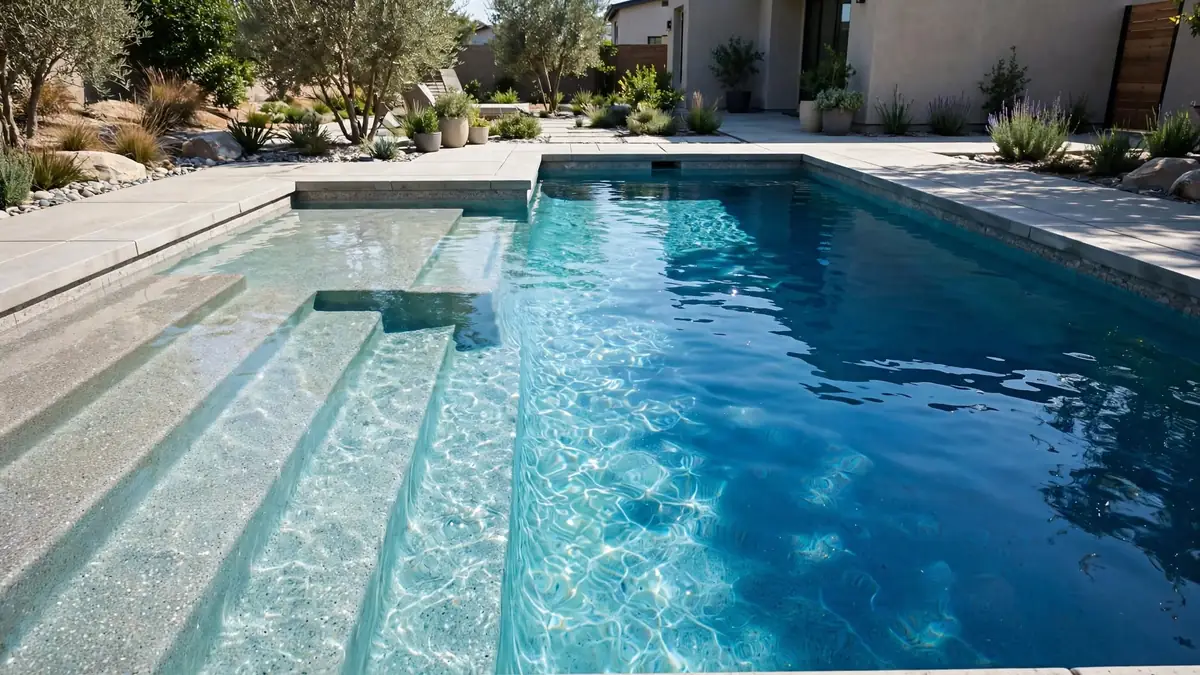
Finish color matters, but it is only one part of what you see. Pool depth, sunlight, shade, landscaping, deck color, water clarity, and the viewing angle can all change the apparent water color. Manufacturer photos are useful for narrowing choices, not for guaranteeing the exact result in your yard.
If water color is your main decision, compare wet samples and completed pools in conditions similar to your own. Then use our pool plaster color guide to narrow the color family separately from the finish type.
Which Finish Feels Best Underfoot?
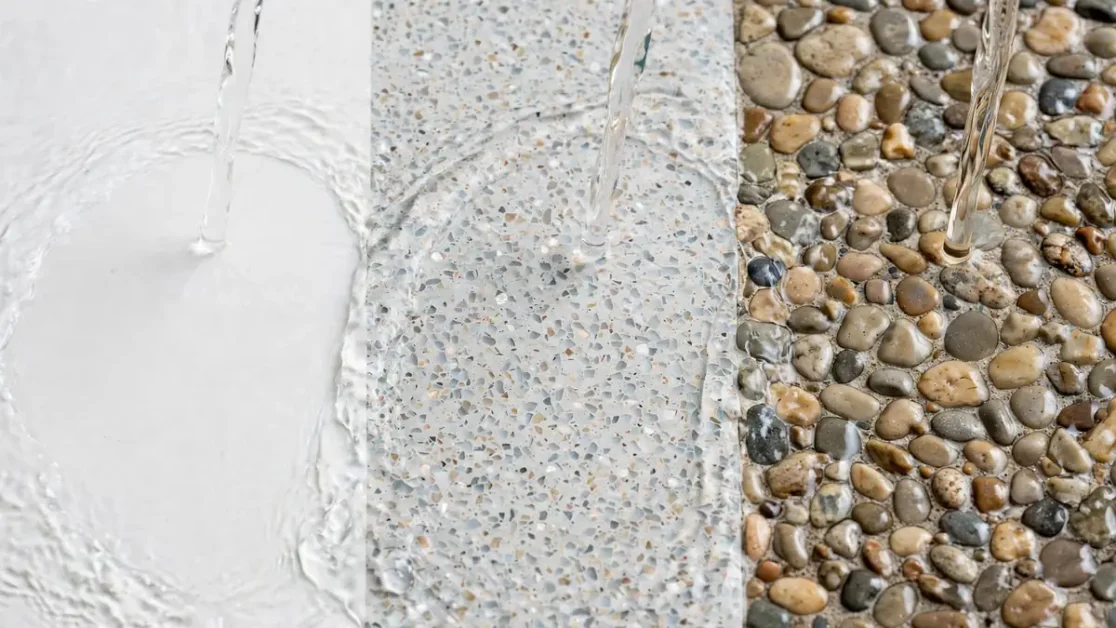
Standard plaster is usually the smoothest starting point, quartz is commonly smooth to lightly textured, and pebble can range from clearly textured to quite refined. But category labels alone are not enough to predict comfort.
Ask to touch a physical sample and, if possible, walk on the exact finish in a completed pool. Pay special attention to steps, benches, tanning ledges, and shallow areas where your feet and skin spend more time against the surface. If anyone in the household is particularly sensitive to texture, this check can matter more than a brochure photo. Texture is also a footing decision: the National Plasterers Council advises against overly smooth steps and benches because of slipping concerns.
How Should You Compare Cost?
White plaster is generally the lower-priced option, quartz commonly carries a moderate premium, and pebble is often quoted higher. A national dollar-per-square-foot figure can be misleading because pool size, shape, access, demolition, bond-coat or preparation work, crack repair, selected brand, finish color, start-up service, and local labor all affect the total.
Instead of comparing only the bottom-line number, ask every contractor to itemize the same scope. A quote that includes surface preparation, repairs, start-up, cleanup, and a stronger workmanship warranty may not be comparable to a cheaper quote that excludes those items.
Does Quartz or Pebble Last Longer Than Plaster?
Aggregate finishes are commonly sold as upgraded durability options, but a fixed lifespan ranking is not reliable enough to use as a guarantee. The exact formulation, substrate preparation, application, start-up, water chemistry, climate, pool use, and maintenance all affect how long a finish remains serviceable and how it looks while aging.
Manufacturer warranty periods are not the same thing as expected service life. Some warranties depend on timely product registration, use of an approved installer, documented water chemistry, or other conditions. PebbleTec, for example, separates material warranty coverage from installer workmanship coverage and applies product-specific eligibility terms. Confirm both warranties in writing and check the current PebbleTec warranty information if you are considering one of its products.
Maintenance and Start-Up Matter for Every Finish
No plaster, quartz, or pebble finish eliminates the need for balanced water and proper start-up. Fresh cementitious finishes are especially dependent on following the start-up procedure specified by the finish manufacturer and installer.
NPC guidance links finish longevity to proper start-up and ongoing water chemistry, and manufacturer instructions can make maintenance records part of warranty requirements. Follow the written instructions for the exact finish installed rather than copying a generic chemical schedule from another product.
Before installation, agree on who is responsible for filling and start-up. Ask when filling must begin, whether it should continue without interruption, who handles early brushing and water testing, and when the pool will be safe to use. The NPC’s filling and initial start-up guidance explains why these steps vary by finish; proprietary products must follow their own manufacturer’s instructions.
Once the pool is operating normally, keeping pH, alkalinity, calcium hardness, sanitizer, and other relevant water parameters within the ranges specified for your pool system helps reduce avoidable surface problems. For background on one of those balance factors, see our guide to pool water alkalinity.
New Pool vs Resurfacing: Does the Choice Change?
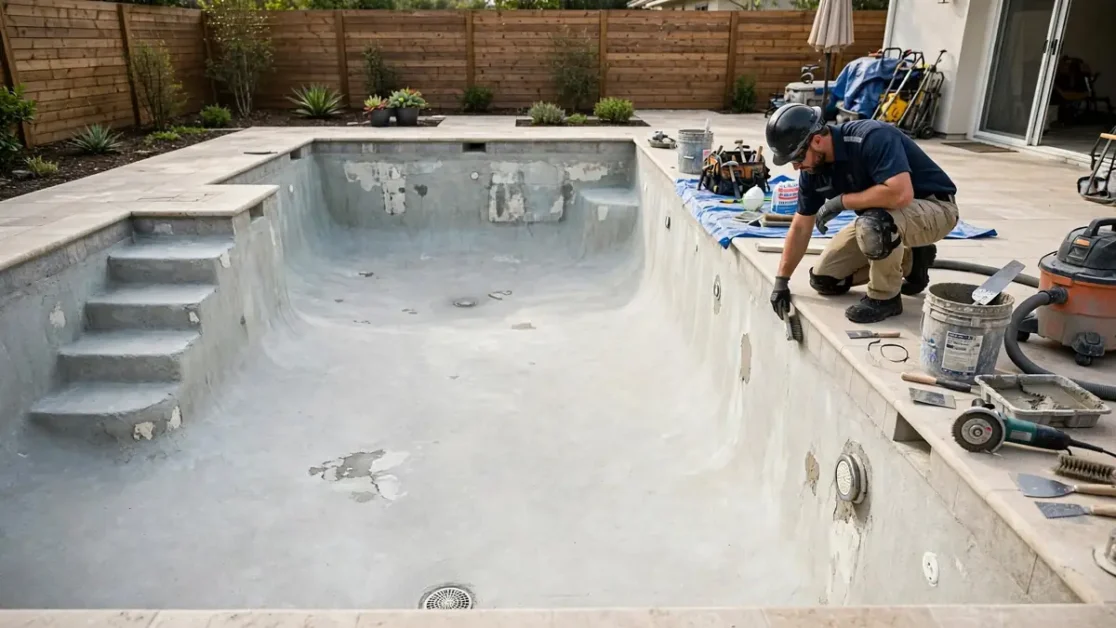
The finish decision is similar for a new concrete pool and a resurfacing project, but resurfacing adds another variable: the condition of the existing interior. Cracks, hollow or delaminated areas, previous coatings, stains, damaged fittings, and substrate problems can change the preparation required before the new finish goes on.
Ask the resurfacing contractor what will be removed, what can remain, how the substrate will be prepared, and which repairs are included before finish application. PebbleTec’s resurfacing-process overview shows how preparation, application, exposure, curing, and detailing work for its own finishes. Use that as a process example, not a specification for every plaster, quartz, or pebble product.
A Simple Decision Checklist
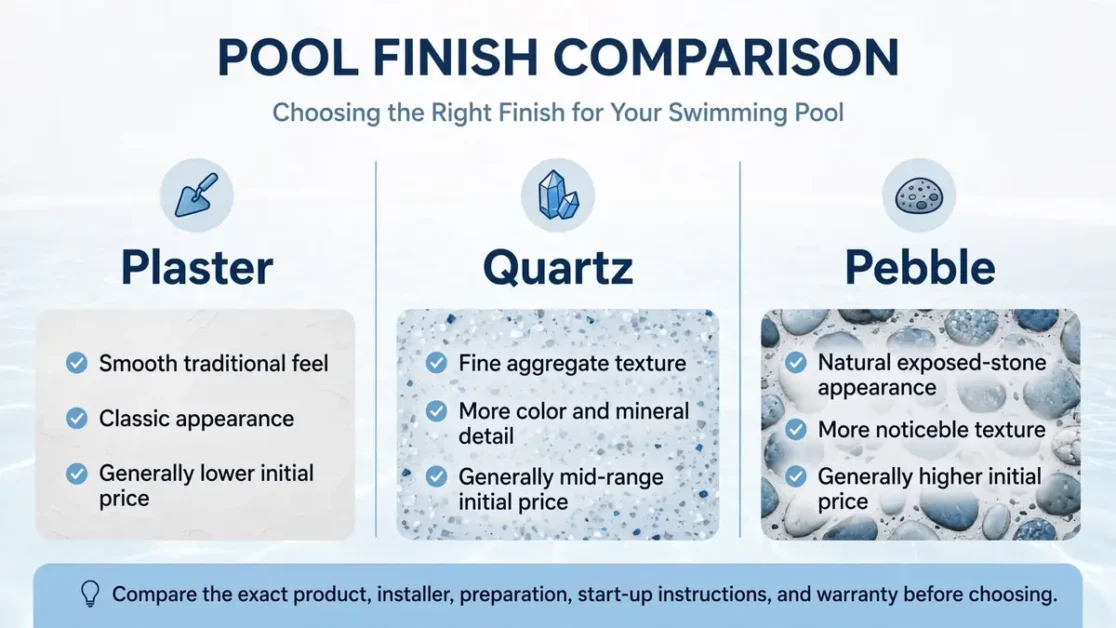
- Choose plaster first if smooth feel and lower initial cost are your top priorities.
- Choose quartz first if you want more aggregate character and color options without committing to a pronounced pebble texture.
- Choose pebble first if you want a natural exposed-aggregate appearance and are comfortable with its texture and typically higher initial quote.
- Do not decide from dry samples alone. View wet samples and completed pools whenever possible.
- Compare exact products, not categories. Write down the manufacturer, product line, color, aggregate size, and exposure or finish method.
- Compare the whole job. Preparation, repairs, start-up, cleanup, warranty, and installer qualifications can matter as much as the finish name.
Pool Finish Quote Comparison Worksheet
Use the same questions for every contractor so you can compare bids on equal terms:
- What is the exact manufacturer, product line, color, and aggregate?
- Is the finish standard plaster, quartz aggregate, exposed pebble, refined pebble, or a polished system?
- What demolition, surface preparation, bond coat, crack repair, or patching is included?
- Who applies the finish, and are they approved or authorized where the manufacturer requires it?
- Who handles filling and start-up, and what written start-up instructions will I receive?
- What does the material warranty cover?
- What workmanship warranty does the installer provide?
- What maintenance records or registration steps are required to keep the warranty valid?
- Can I see a completed pool with the exact finish, preferably one that has been in service for a while?
If you are still planning the broader pool project rather than only the interior finish, our pool buying and planning guide covers additional decisions around pool type and backyard setup.
Frequently Asked Questions
Is quartz or pebble better than plaster?
Neither is automatically better for every pool. Quartz and pebble are aggregate-finish options that may offer different appearance, texture, and durability characteristics, while standard plaster is usually simpler, smoother, and less expensive initially. Compare the exact products and installer proposals rather than choosing only by category name.
Which pool finish is smoothest?
Traditional plaster is usually the smoothest of the three broad categories. Quartz often feels smooth to lightly textured, while pebble texture varies widely by stone size and finishing method. Always feel the exact sample before choosing.
Which pool finish costs the least?
Standard white plaster is generally the lowest-cost starting point. Quartz commonly costs more, and pebble is often higher again. Actual installed prices depend heavily on location, pool condition, preparation, repairs, access, product, and included start-up work.
Does pebble always feel rough?
No. Pebble finishes range from more pronounced natural textures to refined or polished surfaces. The exact aggregate size and finish method matter, so a physical sample and installed reference pool are more useful than the word “pebble” alone.
Can I switch from plaster to quartz or pebble when resurfacing?
Often, but the existing surface and substrate must be evaluated first. The contractor should explain the required removal, preparation, repairs, compatibility, start-up, and warranty terms for the new finish system before work begins.
Which Pool Finish Should You Choose?
Start with the surface you actually want to live with, not a lifespan claim from a sales chart. Plaster is a strong fit when smooth feel and initial budget lead the decision. Quartz works well when you want a more decorative aggregate finish without a strongly pebbled feel. Pebble makes sense when a natural exposed-stone appearance is the priority and you like the exact texture.
Then compare local quotes for the same scope, verify the product and warranty in writing, and make sure the start-up plan is clear before the pool is filled. Those details can matter as much as whether the label says plaster, quartz, or pebble.