
The Hot Tub Deck Height Mistake Most Homeowners Make (And How to Avoid It)

The hot tub deck height mistake most homeowners make is focusing on appearance while overlooking maintenance, safety, and long term ownership.
A fully recessed spa may look incredible at first, but it can create expensive challenges later.
For most backyard installations, leaving about 18 to 30 inches of the hot tub shell above the deck provides the best combination of beauty, accessibility, and practicality.
Spending a little extra time planning now can save years of frustration and unnecessary repair costs.
The Deck Height Mistake Most Homeowners Make
The most common hot tub deck height mistake is building the deck flush with the top edge of the hot tub.
While this creates a sleek, resort style appearance, it often limits service access, complicates repairs, and makes future maintenance more expensive.
Many homeowners focus on how the finished project will look. What they don’t consider is how the hot tub will be maintained over the next 10 to 15 years.
A common mistake hot tub owners make is designing for appearance first and practicality second.
Why Flush Installations Look So Attractive
There are good reasons people choose this design:
- Clean built in appearance
- Luxury spa resort feel
- Easier initial step into the tub
- Better visual flow across the deck
Unfortunately, those benefits can hide long term drawbacks.
Why a Flush Hot Tub Deck Can Become a Problem
Maintenance Access Becomes Difficult
Hot tubs require occasional access to components such as:
- Pumps
- Heaters
- Plumbing lines
- Electrical connections
- Control systems
When the deck surrounds the tub too tightly, technicians may struggle to reach service panels.
Before designing your deck, it’s worth reviewing common considerations covered in this hot tub installation guide.
Repairs Can Cost More
Many homeowners don’t discover this issue until the first repair visit.
A repair that normally takes one hour can suddenly require:
- Removing deck boards
- Cutting access openings
- Dismantling deck sections
- Additional labor charges
Even simple repairs become more expensive when technicians cannot easily reach equipment.
Cover Removal Becomes Awkward
Another issue frequently overlooked is cover clearance.
You may notice that many beautiful Pinterest photos never show the hot tub cover open.
That’s because homeowners often forget to plan for:
- Cover lifters
- Nearby railings
- Pergolas
- Privacy walls
- Seating areas
If the cover cannot open fully, daily use becomes less convenient.
Safety Can Actually Decrease
Many people assume flush decks automatically improve safety.
In reality, safety depends on the entire setup.
Potential issues include:
- Slippery surfaces when exiting
- Reduced hand support
- Poor nighttime visibility
- Limited stepping options
This becomes even more important in colder climates where decks can become wet, icy, or slippery.
What Is the Ideal Hot Tub Deck Height?
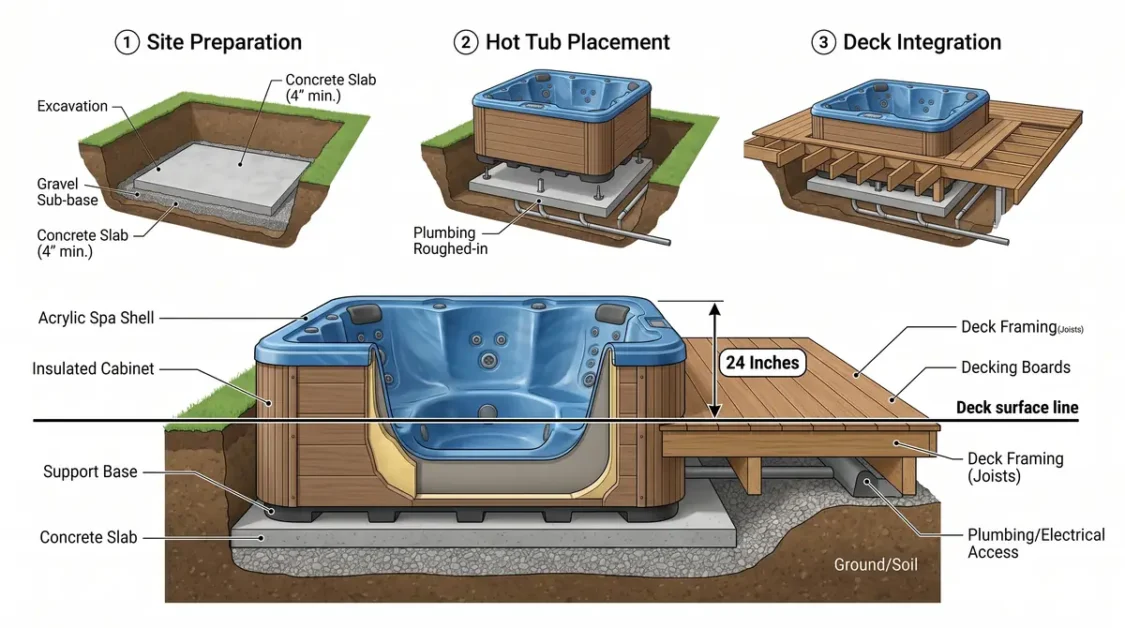
For most backyard installations, leaving approximately 18 to 30 inches of the hot tub shell above deck level provides the best balance of appearance, maintenance access, and safety. This recommendation appears consistently across installer discussions and hot tub owner experiences.
Why Semi Recessed Designs Work Best
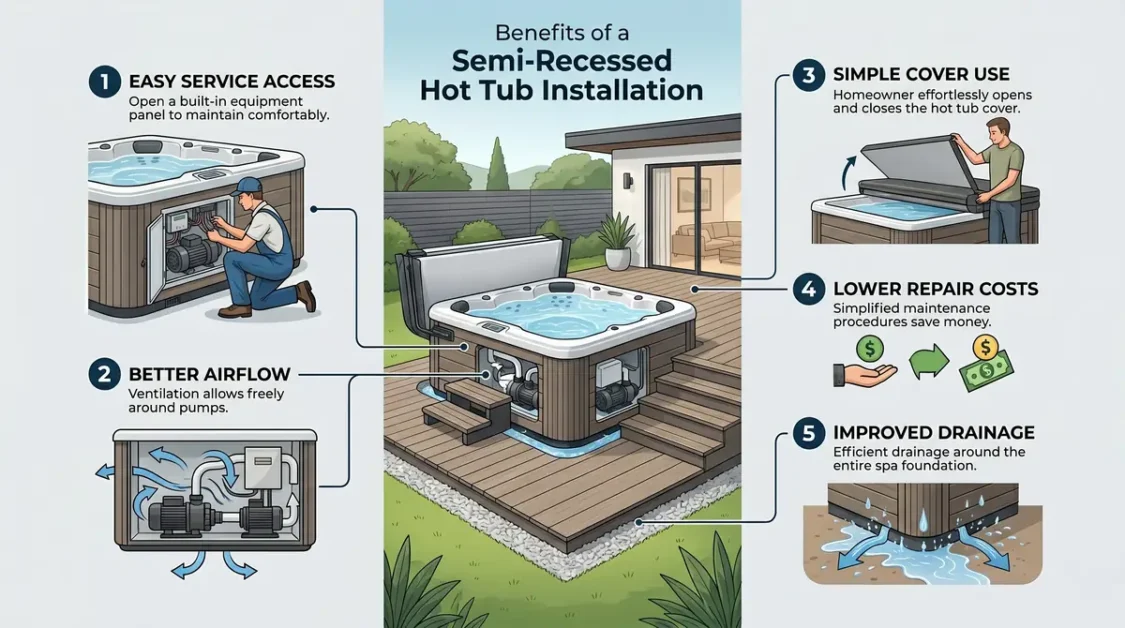
A semi recessed design gives you many of the visual benefits of a built in spa while avoiding most maintenance headaches.
Benefits include:
- Easier service access
- Better airflow around equipment
- Simpler cover operation
- Lower repair costs
- Improved drainage
In many backyard hot tub setups, this becomes the sweet spot between appearance and practicality.
Factors That Affect Ideal Height
Hot Tub Size
Larger tubs often require more service access around the cabinet.
User Mobility
What feels comfortable today may not feel comfortable ten years from now.
Climate
Snow, rain, and ice can affect entry and exit safety.
Deck Layout
Railings, stairs, seating, and landscaping all influence the ideal height.
For more planning ideas, check out this hot tub deck comprehensive guide.
Fully Recessed vs Semi Recessed vs Above Ground
| Feature | Fully Recessed | Semi Recessed | Above Ground |
|---|---|---|---|
| Appearance | Excellent | Excellent | Good |
| Repair Access | Poor | Very Good | Excellent |
| Cover Access | Fair | Good | Excellent |
| Construction Cost | Highest | Moderate | Lowest |
| Safety | Moderate | Good | Good |
| Long Term Practicality | Fair | Excellent | Good |
Which Option Is Best?
For most homeowners, a semi recessed design offers the best balance.
It provides:
- Attractive appearance
- Easier maintenance
- Better safety
- Lower lifetime ownership costs
The 4 Tests Every Homeowner Should Use Before Building
Test #1: The Service Panel Test
Ask yourself:
Can every service panel be removed without cutting into the deck?
If the answer is no, redesign the layout before construction starts.
Test #2: The Cover Lift Test
Ask:
Can the cover open completely without hitting anything?
Check clearance around:
- Railings
- Fences
- Walls
- Pergolas
- Privacy screens
Test #3: The Future Mobility Test
Picture using your hot tub:
- Five years from now
- Ten years from now
- After an injury
- As you get older
Comfort and accessibility should be part of every deck design decision.
Test #4: The Winter Exit Test
Imagine stepping out of the tub on a cold evening.
Would the transition feel safe?
Would there be secure footing?
Would stairs or handrails help?
Many homeowners never consider these questions until after construction is complete.
Real World Deck Height Examples
Example 1: Fully Flush Installation
Pros
- Luxury appearance
- Clean visual design
Cons
- Difficult repairs
- Higher maintenance costs
- Limited access
Example 2: 24 Inch Exposed Shell
Pros
- Excellent service access
- Attractive design
- Easier cover operation
Cons
- More visible cabinet
Example 3: Traditional Above Ground Setup
Pros
- Lowest construction cost
- Simplest maintenance
- Best service access
Cons
- Less integrated appearance
Common Deck Planning Mistakes to Avoid
Ignoring Service Access
This is by far the most expensive mistake.
Before construction starts, identify every equipment panel and ensure it remains accessible.
Forgetting Structural Requirements
A filled hot tub can weigh several thousand pounds.
Many deck failures occur because homeowners underestimate this weight.
If you’re still evaluating locations, this guide on putting a hot tub on a patio explains important load considerations.
Forgetting Drainage
Water should always drain away from:
- Deck framing
- Equipment compartments
- Access panels
- Electrical connections
Poor drainage often shortens the lifespan of both the deck and the hot tub.
Prioritizing Appearance Over Ownership
The best looking design isn’t always the easiest to live with.
A hot tub should be enjoyable for years, not just impressive on installation day.
Tailored Action Plan
Before approving your final deck design, complete this checklist.
Step 1
Measure the total height of the hot tub.
Step 2
Mark different deck height options using tape or temporary boards.
Step 3
Locate all service panels.
Step 4
Verify cover lift clearance.
Step 5
Test entry and exit comfort.
Step 6
Confirm structural load calculations.
Step 7
Ask your contractor:
“How will future repairs be performed without removing the deck?”
If they can’t answer clearly, rethink the design.
For homeowners looking for affordable design inspiration, these DIY hot tub patio ideas on a budget offer practical alternatives that balance appearance and usability.
Frequently Asked Questions
How high should a deck be around a hot tub?
Most installers recommend leaving approximately 18 to 30 inches of the hot tub shell above deck level to maintain easy access and improve safety.
Is a flush hot tub deck a bad idea?
Not necessarily. It can look great, but you must plan carefully for service access, cover clearance, and future repairs.
Can a hot tub be completely recessed into a deck?
Yes. However, accessible service panels and adequate clearance must be included to avoid maintenance problems.
How much space should be left around a hot tub?
Most manufacturers recommend leaving enough room to access equipment panels and safely remove the cover.
What is the safest hot tub deck design?
A semi recessed design is often considered the safest because it balances easy access, maintenance convenience, and visibility.