How to Reset a Spa Pump Safely: GFCI, Airlock & Flow Troubleshooting

When a spa pump stops, hums, loses flow, or shows a flow-related error, the first question is not “How do I replace the pump?” It is “Is this a reset, water-flow, or electrical problem?” Many hot tub pump issues come from a tripped GFCI, low water, a dirty filter, closed valves, or an airlock after draining and refilling.
This guide explains how to reset a spa pump safely, what to check when the pump still will not run, and when repeated resetting could make the problem worse. The steps are general—your manufacturer’s manual always takes priority.
Before resetting: stop if any of these are present
- The GFCI or breaker trips again immediately after one reset.
- You smell burning plastic, see melted wiring, or find water inside the control box.
- The power cord, plug, outlet, disconnect, or equipment compartment is wet or damaged.
- The pump is leaking onto electrical components, smoking, or making a sharp grinding sound.
- The spa is frozen, empty, or below its minimum water level.
Turn off power at the GFCI or breaker and contact a qualified spa technician or electrician. Never remove an equipment-panel cover or test live wiring unless you are trained and authorized to do so. A reset is not a repair for a short circuit, failed motor, damaged cord, or persistent ground fault.
How to reset a spa pump safely
Step 1: Record the symptom and error code
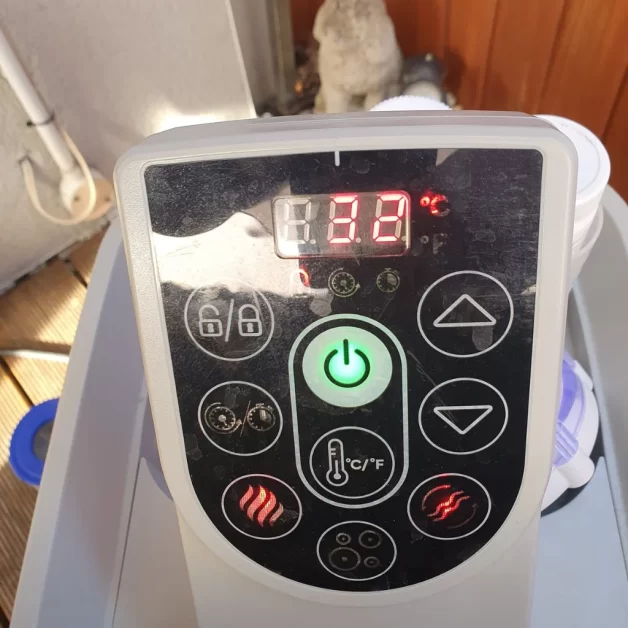
Before switching anything off, note what happened. Did the pump stop after a refill, power outage, heating cycle, or filter clean? Is the display showing FLO, FL, DR, DRY, E02, E03, E04, E05, E08, or another code? Photograph the display and find the code in the owner’s manual. Error codes are not universal across brands.
Step 2: Turn off the controls and isolate the power
Turn off the heater and jets from the control panel, then switch off the spa’s GFCI or disconnect. If the spa has a separate breaker, turn it fully off. Wait at least 30 seconds, or follow the longer wait time in the manual. Do not rely only on the topside control panel to make the equipment safe.
Step 3: Check water level, filter, valves, and intake
- Bring the water to the manufacturer’s marked level.
- Make sure the suction fittings and skimmer are not blocked by leaves, toys, or debris.
- Confirm service valves are open after maintenance and that adjustable jets are not all closed.
- Inspect the filter for collapse, heavy dirt, scale, or an incorrect installation.
- Look for obvious leaks, but do not reach into a running pump or remove plumbing under pressure.
A severely restricted filter or low water level can reduce flow enough to stop the heater or trigger an error. Do not run the pump dry to “see if it catches.” Running without adequate water can damage the pump and heater.
Step 4: Reset the GFCI once
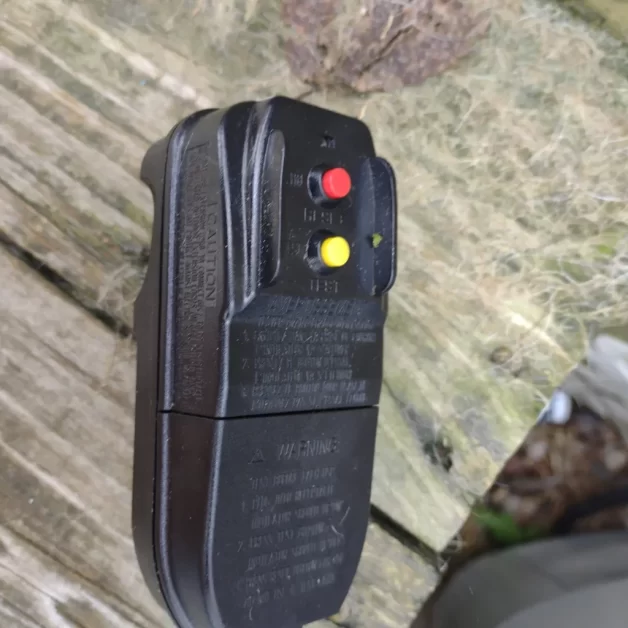
With the spa isolated and the area dry, press the GFCI reset button or turn the breaker fully off and then on, as your installation instructions describe. Restore power and watch the startup sequence. If the GFCI trips immediately or trips again when the heater or pump starts, turn it off and stop troubleshooting electrically. Repeated resets can hide a dangerous fault.
Step 5: Let the spa complete its priming cycle
Many spas run a short priming or startup routine after power is restored. Listen for the pump and look for steady water movement at the return. If the motor runs but there is little or no flow—especially after a drain and refill—an airlock, closed valve, blocked filter, or low water level may be preventing the pump from priming.
How to clear an airlock after refilling
An airlock traps air in the pump or plumbing and can make the pump hum without moving water. First confirm the spa is full, the valves are open, and the filter is installed as the manual requires. Use the manufacturer’s priming procedure. Some systems allow a pump union or bleed point to be loosened slightly to release air, but this must be done with power off and only if the manual specifically permits it.
Do not loosen a union on a pressurized or energized system, and do not keep restarting a pump that is not moving water. If the airlock does not clear, a technician can prime and inspect the system without risking the heater.
Thermal reset: only on models that have one
Some portable spas, including certain Bestway and Lay-Z-Spa models, have an external thermal reset button. It may trip after overheating, restricted flow, direct sun exposure, or an over-temperature condition. The button location and procedure vary, so use the model manual or the manufacturer’s instructions.
- Turn off and unplug the pump unit as directed by the manufacturer.
- Correct the likely cause first: low water, dirty filter, blocked intake, hot enclosure, or poor water flow.
- Press the thermal reset only if your unit is designed with that button; never force it.
- Restore power and check whether the error returns during startup or heating.
If the thermal error returns, do not keep pressing the button. The underlying flow, temperature, heater, or control problem needs diagnosis. The official Bestway spa maintenance guidance explains that reset-button locations and conditions are model-specific.
[wps_youtube url=”https://youtu.be/7o2gbvl8Mnw” responsive=”yes” autoplay=”no”]
Spa pump symptoms and likely causes
| What you notice | Possible cause | Safe first check |
|---|---|---|
| Nothing works | GFCI, breaker, outlet, or control-power issue | Check the GFCI once; stop if it trips again. |
| Pump hums but no water moves | Airlock, low water, blocked filter, closed valve, or impeller problem | Check water level, filter, valves, and the manual’s priming procedure. |
| Jets are weak | Dirty filter, closed jets, blocked suction, or air in the lines | Clean or replace the filter and inspect the intake. |
| FLO, FL, DR, or DRY appears | Insufficient water flow through the heater | Check water level, filter, valves, and airlock; do not run the heater dry. |
| Pump trips the GFCI | Moisture, damaged wiring, heater fault, motor fault, or ground fault | Turn power off and call a qualified professional. |
| Pump leaks or grinds | Seal, bearing, wet-end, or plumbing failure | Stop using it and arrange a repair inspection. |
Why a spa pump will not reset
- The reset is being used as a cure-all: A reset clears a protective trip; it cannot repair a failed capacitor, motor, relay, heater, flow switch, or control board.
- The filter is too dirty: Restricted flow can make the spa shut down to protect the heater.
- The pump was started with air in the lines: This is common after draining, moving, or refilling a spa.
- The water is too low: The pump can draw air instead of water, creating noise and a dry-heater condition.
- A valve is closed: A service valve left shut after maintenance can stop circulation.
- The GFCI is detecting a real fault: Repeated trips require testing, not repeated flipping.
When should you replace the pump?
Do not order a replacement pump just because a reset failed. A technician should confirm the pump is receiving the correct power and that water can reach and leave the pump. If the motor is seized, the wet end is leaking, the bearings are noisy, or the pump repeatedly overheats after flow problems are corrected, replacement may be appropriate.
Match voltage, horsepower, speed, unions, plumbing connections, cord or wiring, and control-system compatibility. For replacement planning, see our SaluSpa pump and heater replacement guide and hot tub repair cost guide.
Frequently asked questions
How do I reset my spa pump after a power outage?
Turn off the spa controls, switch off the GFCI or breaker, wait at least 30 seconds or follow the manual, then restore power once. Check water level, filter, valves, and the startup or priming cycle. If the GFCI trips again, stop and arrange professional diagnosis.
Where is the reset button on a spa pump?
Some portable spa pumps have an external thermal reset button, while many built-in hot tubs do not have a user-accessible pump reset button. Check the exact owner’s manual; do not press random buttons inside the equipment compartment.
Why does my spa pump hum but not circulate water?
The common possibilities are an airlock, low water, a restricted filter, closed valves, a blocked intake, or a damaged impeller or motor. Turn the power off, check the basic water-flow conditions, and use the manufacturer’s priming procedure. Do not let the pump run dry.
Why does my spa breaker trip when the pump starts?
A repeated trip can indicate moisture, a ground fault, damaged wiring, a failing pump, or a heater problem. Reset the GFCI only once. If it trips again, leave the power off and call a qualified electrician or spa technician.
Can a dirty filter stop a hot tub pump?
Yes. A clogged or collapsed filter can restrict circulation and trigger low-flow or dry-heater protection. Clean or replace the filter according to the manual, then check whether normal flow returns.
Should I repair or replace my spa pump?
Repair or replacement depends on the failed part, age of the pump, leaks, noise, compatibility, and labor cost. Confirm the pump is actually receiving power and has adequate water flow before buying a replacement.
Final safety reminder
A basic power cycle, GFCI reset, water-level check, filter check, or manufacturer-approved thermal reset may restore a spa pump. It should not be used to bypass a recurring electrical, dry-flow, overheating, or leakage problem. Keep the power off when inspecting equipment, never work on live wiring, and contact a qualified professional when the cause is not obvious.
For more troubleshooting help, visit our hot tub troubleshooting and maintenance guide or review our guide to Coleman SaluSpa E02 errors.