
10 Sauna Benefits: Evidence, Limitations, and Safety

Sauna bathing can be relaxing and produces real short-term physiological effects, but not every advertised “sauna benefit” is supported equally. The strongest long-term findings are associations from observational studies, while clinical trials are generally smaller and provide less certain evidence about disease outcomes.
This page examines what the research supports, where it remains limited, and how to interpret common claims. For sauna types, basic use, home options, and the wider content library, start with the main sauna guide.
How Strong Is the Evidence for Sauna Benefits?
Research on sauna bathing includes immediate physiology studies, small clinical trials, systematic reviews, and long-running observational cohorts. Those designs answer different questions.
| Evidence type | What it can show | Main limitation |
|---|---|---|
| Immediate physiology | Changes during or shortly after heat exposure, such as sweating, skin blood flow, heart rate, and blood pressure | Does not establish a lasting health benefit |
| Randomized or controlled trial | Whether a defined heat intervention changes a measured outcome | Many sauna trials are small, short, or use different heating protocols |
| Observational cohort | Associations between sauna habits and later health outcomes | Cannot prove sauna caused the outcome; lifestyle and population differences may contribute |
| Personal experience | Comfort, enjoyment, and how an individual feels | Subjective and not evidence of disease treatment |
A 2018 systematic review of regular dry-sauna studies found potential benefits but emphasized that many studies were small and that better data were needed. A newer meta-analysis of randomized passive-heating trials found no significant pooled improvement for most cardiometabolic and vascular outcomes.
10 Possible Sauna Benefits—and Their Limits
1. Relaxation and Enjoyment
Relaxation is the most practical and immediate reason many people use a sauna. A quiet setting, warmth, and time away from distractions may help someone feel calm or less tense. This is a reasonable comfort benefit, but it should not be described as treatment for anxiety, depression, or another mental-health condition.
2. Short-Term Circulatory Responses
Heat widens blood vessels near the skin, increases skin blood flow, and usually raises heart rate while the body tries to release heat. These are expected physiological responses. They are not the same as completing an exercise workout, and sauna should not replace aerobic or resistance training.
3. Cardiovascular Associations
Frequently cited Finnish cohort studies found that men reporting more frequent sauna use had lower rates of several cardiovascular and mortality outcomes. The finding is important, but it is observational. It shows an association—not proof that sauna prevented heart disease or extended life.
The original mortality cohort and a broader review of sauna evidence both support continued research, not guaranteed cardiovascular claims.
4. Blood Pressure and Vascular Function
Blood pressure can change during and after heat exposure, and some small studies report favorable vascular measurements. Results vary by protocol and population. Current evidence does not justify promising that sauna will lower cholesterol, control hypertension, or replace prescribed cardiovascular care.
5. Muscle Relaxation and Exercise Recovery
Warmth may feel soothing after exercise and may reduce the sensation of tightness for some people. Research on recovery, soreness, and performance uses different sauna types and schedules, so results should not be generalized into a guaranteed recovery benefit. Sauna also adds heat and fluid loss after exercise.
For timing and hydration considerations, see sauna before or after a workout.
6. Temporary Comfort for Stiffness or Pain
Whole-body warmth may temporarily feel comforting for muscle or joint stiffness. That observation does not establish that sauna treats arthritis, fibromyalgia, chronic fatigue syndrome, inflammation, or the cause of pain. Persistent or severe pain needs appropriate evaluation and treatment.
7. Sleep and a Wind-Down Routine
Some users report that an evening sauna helps them relax before bed. Evidence for clinically meaningful sleep improvement remains limited, and the effect may reflect the routine, quiet environment, or post-heating cool-down rather than a direct treatment for insomnia.
8. Temporary Respiratory Comfort
Warm air may feel soothing to some people, but dry sauna and steam rooms are different environments. Sauna does not cure a cold, prevent infection, or treat asthma, COPD, bronchitis, or another respiratory disease. People with respiratory conditions should follow their clinician’s guidance and leave if heat makes breathing harder.
9. Sweating and How Skin Feels
Sweating helps regulate body temperature. Showering afterward may remove sweat, surface oil, and debris, but pores do not “open” to release stored toxins. Sauna is not a treatment for acne, eczema, psoriasis, cellulite, or skin infection, and heat can irritate some skin conditions.
For a more focused discussion, see the guide to sauna, skin, and cellulite claims.
10. A Consistent Wellness or Social Ritual
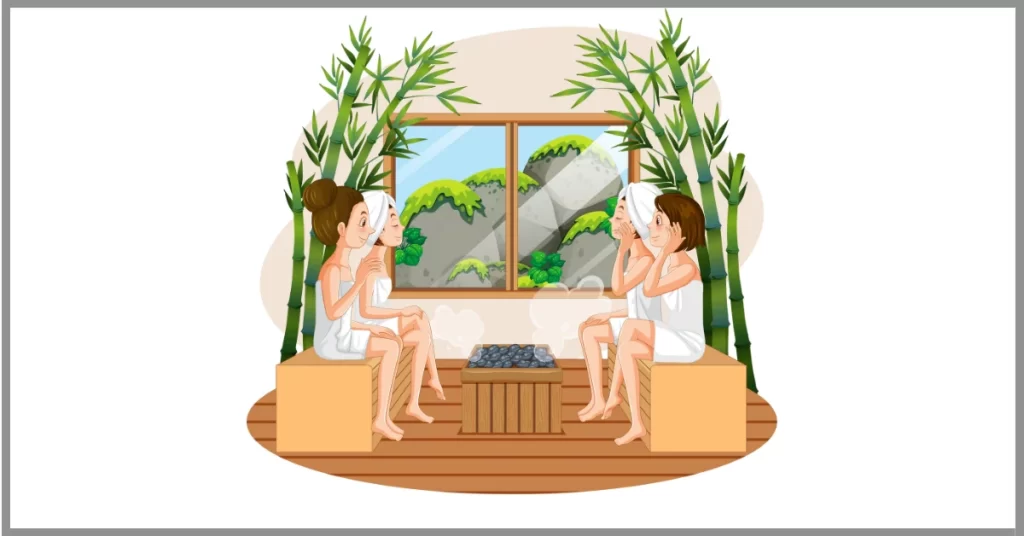
A sauna can provide a repeatable time for quiet, social connection, or post-activity relaxation. The benefit is the sustainable ritual someone enjoys—not a promise that heat “boosts immunity,” regulates hormones, prevents disease, or compensates for sleep, nutrition, movement, or medical care.
Common Sauna Myths
| Claim | Evidence-based interpretation |
|---|---|
| “Sweat detoxifies the body” | Sweat primarily regulates temperature. The liver, kidneys, lungs, and digestive system handle most chemical processing and elimination. |
| “Sauna burns body fat” | Immediate scale loss is mainly fluid and returns with rehydration. Sauna is not a fat-loss treatment. |
| “Sauna is equivalent to exercise” | Heat can raise heart rate and change circulation, but it does not reproduce the full adaptations or benefits of exercise. |
| “More heat means more benefit” | Hotter or longer exposure can increase dehydration, overheating, blood-pressure changes, and fainting without proving additional benefit. |
| “Sauna prevents or cures illness” | No general sauna routine is established as a cure or guaranteed preventive treatment for disease. |
The U.S. Agency for Toxic Substances and Disease Registry explains that sweat glands are not an important general route for eliminating toxic substances; the kidneys, liver, lungs, and urine have much larger roles. See the ATSDR toxicology guidance.

Risks and Contraindications Matter
Potential immediate harms include dehydration, overheating, dizziness, headache, low blood pressure, fainting, falls, and burns from hot surfaces or steam. Alcohol and sauna are a dangerous combination.
People who are pregnant or who have cardiovascular disease, uncontrolled blood pressure, kidney disease, impaired sweating or temperature regulation, or medications that affect hydration or blood pressure should obtain individualized medical advice. The American Heart Association advises people with blood-pressure concerns to ask a healthcare professional and warns against mixing alcohol with sauna use.
For warning signs, contraindications, pregnancy, medications, and heat precautions, use the dedicated sauna safety guide. Session length is a separate planning question covered in the sauna duration guide.
How to Interpret a Sauna Claim
- Identify the outcome. Feeling relaxed is different from preventing a heart attack or treating a disease.
- Check the study design. An observational association is not a randomized test of cause and effect.
- Check the heat method. Finnish sauna, infrared cabins, steam rooms, hot-water immersion, and local heating should not automatically be treated as equivalent.
- Check who was studied. Findings in frequent Finnish sauna users or a small clinical population may not apply to everyone.
- Balance benefit against risk. A possible wellness benefit does not eliminate dehydration, overheating, medication, pregnancy, or cardiovascular considerations.
Bottom Line
Sauna bathing can be an enjoyable relaxation practice with real short-term heat responses and several promising areas of research. The strongest long-term findings remain associations, and controlled evidence is not strong enough to promise disease prevention, detoxification, fat loss, immune enhancement, or treatment of medical conditions.
Use this page for benefits and evidence. Use the sauna pillar for the broad overview and the safety guide for personal risk questions.