Sauna for Menstrual Cramps: Comfort, Evidence, and Limits

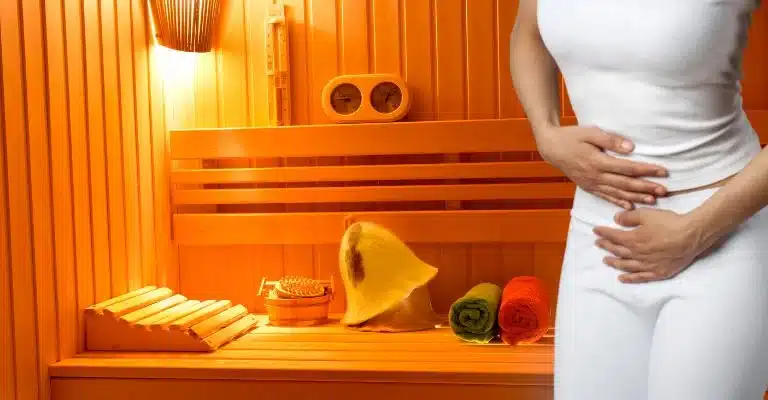
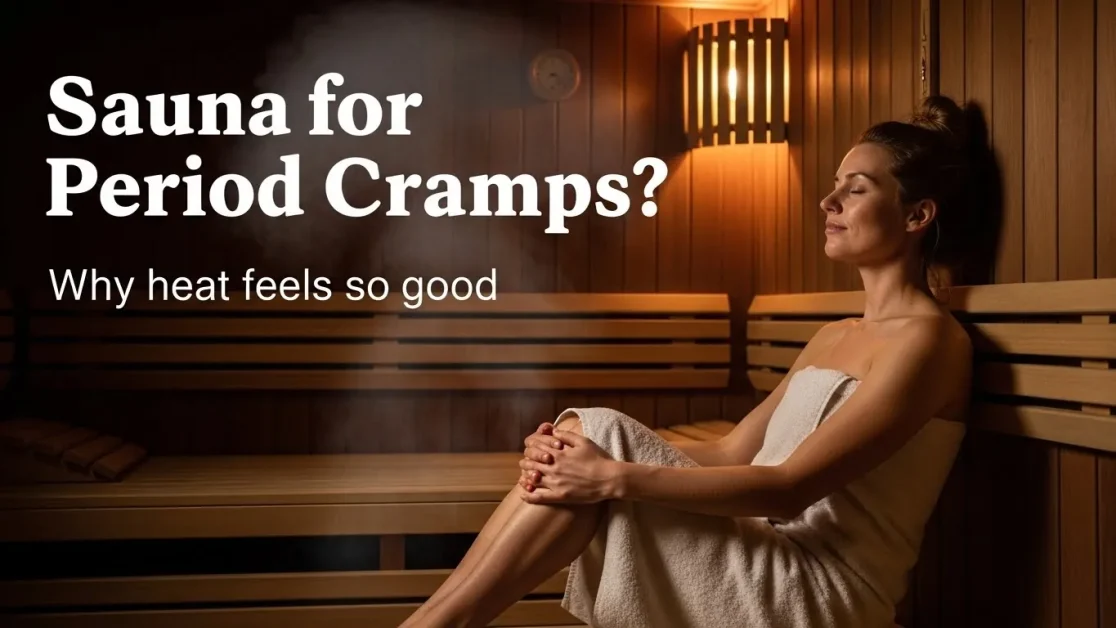
A sauna may feel comforting during menstrual cramps, but evidence for sauna as a cramp treatment is limited. Medical guidance supports localized heat—such as a heating pad, hot-water bottle, or warm bath—for comfort. That evidence should not be stretched into claims that sauna cures cramps, regulates hormones, “detoxes” the body, or treats an underlying condition.
What the Evidence Actually Supports
ACOG lists localized heat among self-care options that may soothe painful periods. Localized heat can be directed at the lower abdomen or back and stopped quickly. A sauna exposes the whole body to heat and adds sweating and cardiovascular strain, so the two are not interchangeable.
See ACOG’s dysmenorrhea guidance for medically reviewed information about painful periods.
When Sauna May Still Feel Helpful
If you already tolerate sauna use, gentle heat and quiet time may help you relax or feel temporarily more comfortable. That is a comfort observation, not proof that sauna changes uterine contractions, prostaglandins, inflammation, menstrual flow, or the cause of pain.
Sauna vs. a Heating Pad for Cramps
| Option | What it offers | Main limitation |
|---|---|---|
| Heating pad or hot-water bottle | Targeted, adjustable heat | Can burn skin if too hot or used improperly |
| Warm bath | Comfortable, broad warmth | May not suit everyone |
| Sauna | Whole-body warmth and relaxation | Sauna-specific cramp evidence is limited; dehydration and overheating are possible |
How to Try a Sauna Cautiously
- Use a familiar, moderate routine rather than increasing heat or time to chase pain relief.
- Hydrate and take a cooling break.
- Leave immediately if you feel dizzy, faint, nauseated, unusually weak, or if pain worsens.
- Do not use sauna to delay medical evaluation or as a substitute for treatment recommended by your clinician.
When Cramps Need Medical Attention
Talk with a healthcare professional if pain is severe, worsening, begins later after previously mild periods, interferes with daily life, or comes with unusually heavy bleeding, fever, fainting, pain outside menstruation, or other concerning symptoms. Conditions such as endometriosis, fibroids, adenomyosis, or pelvic infection can cause secondary dysmenorrhea and need appropriate evaluation.
For hygiene, hydration, products, and a full routine, see our primary guide to using a sauna during your period. Also review general sauna safety.