7 Things You Need in Your Hot Tub This Winter (Before the First Snow)

I didn’t realize how much I was overpaying on heating costs until I upgraded my hot tub cover last December. And it got me curious about what other simple additions could make winter soaking both safer and more enjoyable without breaking the bank.
Winter transforms your hot tub into something magical, steam rising into cold air, stars overhead, the contrast of icy surroundings and warm water. But without the right essentials, you’ll face frozen pipes, sky-high energy bills, and safety hazards, especially if you’re still figuring out the basics of using a hot tub in the winter.
This guide covers the seven must-have items that protect your investment, slash your costs, and turn every winter soak into pure relaxation.
Why Winter Hot Tubbing Requires Special Equipment
Your hot tub works overtime in winter. While summer might mean occasional temperature adjustments, winter demands constant heating against freezing air that can drop 50-70 degrees below your water temperature.
Temperature Extremes and Equipment Stress
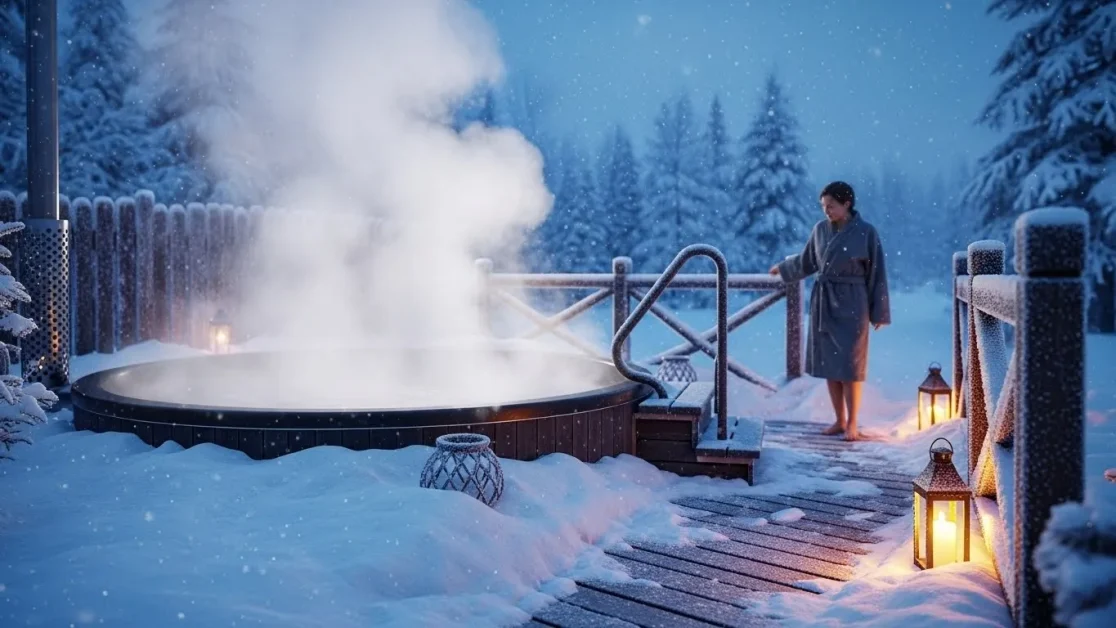
When it’s 20°F outside and your water is 104°F, that’s an 84-degree temperature differential your equipment is fighting every single minute. Your heater runs more frequently, your pump works harder, and every bit of exposed plumbing becomes vulnerable to freezing.
Safety Considerations in Cold Weather
Ice forms on decks. Steam obscures vision. Metal handrails become slippery. The transition from hot water to cold air can cause dizziness if you’re not careful. Winter hot tubbing isn’t just about comfort, it’s about preventing falls, frostbite on wet skin, and hypothermia if something goes wrong.
Energy Efficiency Becomes Critical
The difference between a well-insulated winter setup and a poorly protected one can mean $50-150 extra per month on your energy bill. That’s $450-1,800 over a single winter season. Smart equipment choices pay for themselves within weeks.
#1. A Quality Thermal Cover Winter Essential)
If you’re going to invest in one thing for winter hot tubbing, make it a premium thermal cover. This single piece of equipment determines whether your bills are manageable or astronomical.
How Much Heat and Money You Lose Without One
An uncovered hot tub in winter can lose 1-2 degrees per hour in moderate cold, and up to 4-5 degrees per hour in extreme conditions. That means your heater runs almost constantly, consuming 1,500-3,000 watts every hour it’s on. Over a month, that’s an extra $100-200 in electricity costs.
A proper thermal cover reduces heat loss by 75-90%, keeping your water within 1-2 degrees of target temperature even overnight in freezing weather.
R-Value Explained: What to Look for
R-value measures insulation effectiveness. For winter climates, look for covers with an R-value of at least 16. Premium covers reach R-20 or higher. The higher the number, the better the insulation.
Quality winter covers feature:
- 4-6 inch thick tapered foam (thicker in center for water runoff)
- Vapor barrier to prevent moisture absorption
- Marine-grade vinyl exterior
- Reinforced stitching and handles
- Locking straps to prevent wind lift
Expect to pay $400-800 for a cover that’ll last 5-7 years. Cheaper covers deteriorate faster in winter conditions, waterlogged foam loses insulation value and becomes too heavy to lift safely.
Cover Lifters That Make Winter Use Easier
Here’s something nobody tells you until your first winter: heavy covers get heavier when you’re cold and wet. A cover lifter transforms the experience from a two-person wrestling match into a one-hand operation.
Hydraulic lifters work best in cold weather since they don’t rely on springs that can stiffen in freezing temperatures. Budget $200-400 for a quality lifter that mounts to your deck.
#2. Floating Thermal Blanket for Extra Insulation
Think of a floating thermal blanket as a second layer of defense under your main cover. It sits directly on your water surface, trapping heat that would otherwise rise and escape.
How Thermal Blankets Work Under Your Cover
These lightweight sheets create an insulating air pocket between the water and cover. They’re particularly effective at preventing evaporation—the biggest source of heat loss even with a cover on.
Materials matter here. Look for:
- Closed-cell foam or bubble construction
- UV and chemical-resistant materials
- At least 8mm thickness
- Custom-cut size for your tub (or easy-to-trim sheets)
Cost Savings Breakdown
A floating thermal blanket costs $50-150 and can reduce heating costs by an additional 20-30% beyond what your cover already saves. In a cold climate, that’s $20-40 per month in savings. The blanket pays for itself in 2-4 months, then continues saving you money for years.
Plus, they reduce chemical evaporation, which means you’ll spend less on maintaining water balance too. Speaking of which, properly calculating your chemical needs makes a real difference in winter when water chemistry can fluctuate more—our chemical dosage calculator helps you get the ratios right the first time.
Best Materials for Cold Climates
Solar blankets (the ones with bubbles) work great, but specifically choose ones rated for cold weather use. Some cheaper versions crack when exposed to repeated freeze-thaw cycles. Look for blankets rated to at least -20°F.
Diamond-weave thermal blankets tend to outlast bubble blankets by 2-3 years, making them worth the extra $30-50 if you’re in a harsh winter climate.
#3. Waterproof Thermometer You Can Actually See
Your hot tub has a built-in thermostat, but it’s not always accurate, especially after years of use or in extreme cold. An independent thermometer gives you peace of mind and helps you spot problems before they become expensive.
Why Winter Temperature Monitoring Matters
When temperatures plunge below freezing, you want to know your water temperature is holding steady. A thermometer that’s easy to read at a glance means you’ll actually check it. Digital ones with large displays work better than trying to read tiny numbers on floating thermometers in dim winter light.
If you notice your water temperature dropping more than 2-3 degrees overnight, it’s an early warning sign that your cover is failing, your heater is struggling, or you have an insulation problem somewhere.
Digital vs. Floating Thermometers
Floating thermometers ($10-25) are simple and reliable, but they’re hard to read in steam and darkness. Digital wireless thermometers ($30-80) sit on your deck railing and display temperature from a distance. Some even connect to smartphone apps and alert you if temperature drops dangerously low.
For winter, invest in a digital model with:
- Wireless transmission up to 100+ feet
- Backlit display for night reading
- Temperature alerts
- Weather-resistant housing rated to -20°F or lower
Ideal Winter Temperature Settings
Most people set their tubs to 102-104°F in winter. That’s hot enough to be therapeutic but not so hot that the contrast with outside air becomes dangerous. If you’re using your hot tub outside during winter, maintaining a consistent temperature becomes even more important for equipment longevity.
You can drop the temperature to 95-98°F during extended periods when you won’t use it, saving energy while still keeping everything warm enough to prevent freezing.
#4. Non-Slip Deck Mat or Heated Pathway
The most dangerous part of winter hot tubbing isn’t the tub itself, it’s the walk to and from it. Wet feet on icy decking is a recipe for injury.
Ice Hazards Around Hot Tubs
Here’s what happens: You exit the hot tub. Water drips from your body onto the cold deck. That water freezes within minutes, creating an invisible ice slick. The next person (maybe you, maybe a family member) steps on it and goes down hard.
I’ve seen cracked ribs, sprained wrists, and concussions from hot tub falls. It’s not worth the risk.
Material Options That Handle Freeze-Thaw Cycles
For immediate safety, rubberized non-slip mats work well. Look for:
- Marine-grade rubber with drainage holes
- Thick enough to provide cushioning (1/2 inch minimum)
- Textured surface that grips even when wet
- Large enough to create a safe path from door to tub
Expect to pay $50-200 depending on size. Replace them every 2-3 years as they crack from freeze-thaw exposure.
Outdoor carpet or artificial turf rated for marine use works too, but ensure it has a rubberized backing that won’t slip.
Heated Mat Considerations
If you’re serious about winter hot tubbing and have the budget, heated walkway mats are game-changers. They plug into standard outlets and keep pathways ice-free automatically.
These cost $100-300 for a 3×10 foot runner, plus electricity costs (roughly $10-30 per month depending on usage and local rates). They’re worth it if you use your tub multiple times per week throughout winter.
#5. Spa Cover Cap or Snow Shield
Your cover is designed to handle water and temperature extremes, but heavy snow is another story. Most covers are rated for 20-40 pounds per square foot, which sounds like a lot until you realize wet, heavy snow can exceed that in a single storm.
Snow Load Dangers for Your Cover
A 6-inch layer of wet snow on an average 7-foot round spa cover weighs roughly 150-200 pounds. A foot of snow can approach 400 pounds. That weight doesn’t just compress your cover—it can crack the foam core, tear vinyl seams, and bend the cover so severely that it loses its seal.
Once your cover is damaged, it absorbs water, becomes even heavier, and loses insulation value. Replacement covers cost $400-800, so protecting your existing cover makes financial sense.
When You Need Additional Protection
If you live where snowfall regularly exceeds 6 inches, or where snow sits for days without melting, a cover cap is essential. These waterproof shields sit over your regular cover and shed snow before it can accumulate.
Cover caps ($50-150) are made from heavy-duty polyethylene or reinforced tarp material. They don’t add insulation, but they keep snow and ice off your actual cover.
Some feature center support poles that create a peaked roof, helping snow slide off naturally. Others rely on the existing slope of your cover.
DIY vs. Purchased Options
You can make a DIY version from a heavy tarp and some paracord for under $30, but commercial covers fit better and last longer. If you go the DIY route, ensure your tarp is UV-resistant and rated for outdoor use in cold temperatures—cheap tarps become brittle and tear in winter.
Brush snow off regularly regardless of whether you use a cover cap. Even with protection, letting 12+ inches accumulate isn’t smart.
#6. Chemical Test Strips for Cold Water
Water chemistry behaves differently in cold weather, and if you’re not testing regularly, you’re either wasting chemicals or creating unsafe water conditions.
How Cold Affects Water Chemistry
Cold air means more cover time, which reduces evaporation. That sounds good, but it also means chemicals don’t dissipate as quickly. Your chlorine or bromine can build up to uncomfortable levels if you’re dosing on a summer schedule.
Conversely, heavy hot tub use during winter (people love soaking in cold weather) means more organic contamination from oils, sweat, and lotions. If you’re curious about total costs including chemicals throughout winter, our chemical cost calculator can help you budget accurately.
Temperature also affects pH readings and the effectiveness of sanitizers. Chlorine works less efficiently in very hot water, so maintaining proper levels becomes more critical.
Testing Frequency in Winter
Test your water twice per week minimum, and ideally before every soak session. That sounds excessive, but it takes 30 seconds and prevents problems before they start.
Use test strips that measure:
- Free chlorine or bromine
- pH level
- Total alkalinity
- Calcium hardness
Multi-parameter test strips cost $15-25 for a bottle of 50 strips—enough for 3-6 months of testing.
Storage Tips for Test Strips in Cold Weather
Here’s a mistake people make: storing test strips in the outdoor hot tub cabinet where they freeze. Freezing destroys the reagent chemicals on the strips, making them inaccurate or useless.
Store test strips indoors at room temperature in their original sealed container. Only take out what you need for immediate testing. Keep the container tightly closed to prevent moisture exposure.
Replace test strips every season. Even properly stored, they gradually lose accuracy after 6-12 months.
#7. Emergency Freeze Protection Kit
Power outages happen. Equipment fails. Being prepared means the difference between minor inconvenience and thousands of dollars in frozen pipe damage.
What Goes in Your Winter Hot Tub Emergency Kit
Assemble these items before the first hard freeze:
Immediate Response Items:
- Extra heavy-duty tarps or blankets
- Foam pipe insulation (pre-cut to fit exposed plumbing)
- Shop vacuum (to remove water if necessary)
- Submersible pump (as backup to drain quickly if power fails)
- Flashlight or headlamp with extra batteries
Chemical & Maintenance:
- Anti-freeze rated for spas (never automotive antifreeze)
- Extra sanitizer tablets
- pH test strips
- Spare filters
Emergency Contact Info:
- Hot tub service technician number
- Plumber who handles hot tubs
- Equipment manual and warranty info
Keep everything together in a weatherproof bin near your hot tub. Review the contents each fall.
Pipe Insulation Essentials
Any exposed plumbing should be insulated year-round, but double-check before winter. Even pipes that run through “protected” areas like under decks can freeze if wind drives cold air through gaps.
Foam pipe insulation with a 1/2-inch wall thickness works for most hot tub plumbing. Wrap joints and connections extra carefully, that’s where freezing usually starts. Secure with weatherproof tape rated to -40°F.
For the ultimate protection, heat trace cable provides active warming for vulnerable pipes. It’s overkill for most situations but worth considering if you’ve experienced frozen pipes before. If you’re planning new hot tub installation, talk to your installer about burying supply lines below the frost line.
Power Outage Preparation
The biggest winter emergency is losing power during a cold snap. Your hot tub relies on electricity for heating and circulation. Without it, water can freeze in as little as 4-6 hours when temperatures are well below freezing.
Immediate Actions When Power Fails:
- Layer extra insulation over your cover (sleeping bags, blankets, foam mats)
- Don’t open the cover—every opening dumps heat
- If power will be out 12+ hours and temps are below 20°F, consider draining
Long-term Solutions:
- Install a backup generator with enough capacity for your hot tub (minimum 3,000 watts)
- Use an electric blanket under your regular cover for emergency heat
- Know how to drain your hot tub quickly (practice once in fall)
Most hot tubs can survive 24 hours without power in moderate winter weather (20-30°F) if they’re well-insulated and you don’t open the cover. Below that, or beyond 24 hours, you’re risking freeze damage.
Bonus Items That Elevate Winter Soaking
Once you’ve covered the essentials, these extras transform winter hot tubbing from functional to fantastic.
Waterproof Bluetooth Speakers
There’s something magical about listening to music while soaking under stars with steam rising around you. Waterproof Bluetooth speakers designed for marine use handle winter moisture and temperature swings.
Look for:
- IPX7 rating minimum (fully waterproof)
- Battery life of 8+ hours
- Floatable design
- Cold-weather battery performance
Good options range from $40-150. Cheaper speakers often fail when batteries get cold, cutting out unexpectedly mid-session.
Ambient Lighting Options
Winter nights are long, and harsh overhead lights kill the mood. LED lights designed for outdoor use create ambiance without running up your electric bill.
Options that work well:
- Floating LED orbs ($15-40 each)
- Submersible color-changing lights ($25-60)
- Solar-powered string lights around your deck perimeter
- Battery-operated lanterns
Avoid anything with exposed electrical connections near water. Use only products rated for outdoor winter use.
Color temperature matters too. Warm white or amber tones feel cozier than harsh blue-white LEDs. Many people like color-changing options for variety.
Spa-Safe Aromatherapy for Winter
Eucalyptus, peppermint, and lavender are winter favorites. Eucalyptus helps clear sinuses in cold air, peppermint feels invigorating, and lavender promotes relaxation before bed.
Use only products specifically designed for hot tubs. Regular essential oils can damage your filter, create foam, and mess up water chemistry.
Spa-safe aromatherapy crystals or liquids cost $8-15 per bottle and last for 10-20 uses. Add them right before you soak, not hours in advance, for best effect.
Winter Hot Tub Maintenance Schedule
Staying on top of maintenance prevents problems and extends equipment life. Here’s a realistic schedule that won’t take over your life.
Weekly Winter Checklist
Every Week (10-15 minutes):
- Test water chemistry and adjust as needed
- Check water level (add if below skimmer openings)
- Inspect cover for snow accumulation or ice dams
- Quick visual check of equipment cabinet for leaks
- Brush snow away from equipment access panels
- Verify thermometer reading matches thermostat setting
Every 2 Weeks:
- Clean waterline with spa-safe cleaner
- Rinse or spray down filter with hose
- Check that jets are flowing freely
If you’re following proper winter hot tub care practices, these quick checks prevent bigger issues from developing.
Monthly Deep Maintenance
Once Per Month (30-45 minutes):
- Remove and deep clean filter (soak in filter cleaner)
- Wipe down cover interior and exterior
- Check all cover straps and fasteners for wear
- Inspect deck mat for damage or ice buildup underneath
- Test GFCI by pressing test/reset buttons
- Check for ice formation around equipment panels
Every 3 Months:
- Replace filter cartridge (or when visibly damaged)
- Drain, clean, and refill tub
- Inspect all plumbing connections for leaks
- Check sacrificial anode if your tub has one
- Verify heater is maintaining temperature efficiently
Pre-Winter Preparation Timeline
6-8 Weeks Before First Freeze:
- Inspect cover condition (repair or replace if needed)
- Order cover lifter if you don’t have one
- Install pipe insulation on exposed plumbing
- Purchase floating thermal blanket
- Assemble emergency freeze protection kit
- Consider winterizing your hot tub if you won’t use it all season
4 Weeks Before First Freeze:
- Install non-slip mats or heated pathway
- Test all equipment at full operating temperature
- Balance water chemistry perfectly before cold weather hits
- Clear deck area of items that could blow into tub during storms
2 Weeks Before First Freeze:
- Top off water to proper level
- Clean filters thoroughly
- Check that cover seal is tight all around
- Set thermostat to desired winter temperature
- Review emergency procedures with anyone who uses the tub
Starting early means you’re not scrambling when the first cold snap hits unexpectedly.
Common Winter Hot Tub Mistakes to Avoid
Even experienced hot tub owners make these mistakes. Learn from others’ expensive lessons.
Letting Your Hot Tub Freeze
This is the big one. A frozen hot tub means cracked pipes, damaged pumps, destroyed heaters, and potentially a shell that splits. Repair costs easily run $1,500-5,000, and sometimes the damage is irreparable.
How It Happens:
- Extended power outages without preparation
- Heater failure that goes unnoticed
- Draining the tub but not clearing all water from plumbing
- Lowering temperature too much trying to save energy
Prevention:
- Never drop your thermostat below 80°F in freezing weather
- Check your tub daily during extreme cold
- Set up temperature alerts if your system supports them
- Know how to quickly drain if equipment fails
If you’re planning to use your hot tub in winter, maintaining minimum temperatures is non-negotiable.
Over-Covering or Under-Covering
Some people think more insulation is always better, so they pile blankets and tarps directly on their thermal cover. This can trap moisture against the cover, leading to mildew and accelerated deterioration.
Other people think their cover alone is enough and skip the floating thermal blanket, costing themselves $30-50 monthly in unnecessary heating costs.
The right approach: Use your proper thermal cover as primary insulation, add a floating blanket underneath, and use a cover cap only when heavy snow is forecast.
Ignoring Water Level in Cold Weather
Water evaporates slower in winter, but it still evaporates, especially if you’re uncovering your tub frequently. Low water levels expose heater elements, causing them to burn out.
Check your water level weekly. It should always cover the skimmer openings and jets. Top off with warm water if possible to reduce the load on your heater.
In extreme cold, also watch for ice formation around the waterline if you lift your cover. That ice can damage the shell if allowed to build up. Brush it away gently.
How to Winterize Your Hot Tub in Under 20 Minutes
If you want to keep your hot tub running smoothly all winter, doing a quick winterization check once a month saves you from frozen lines and expensive repairs. Here’s a simple routine you can knock out fast, even in cold weather.
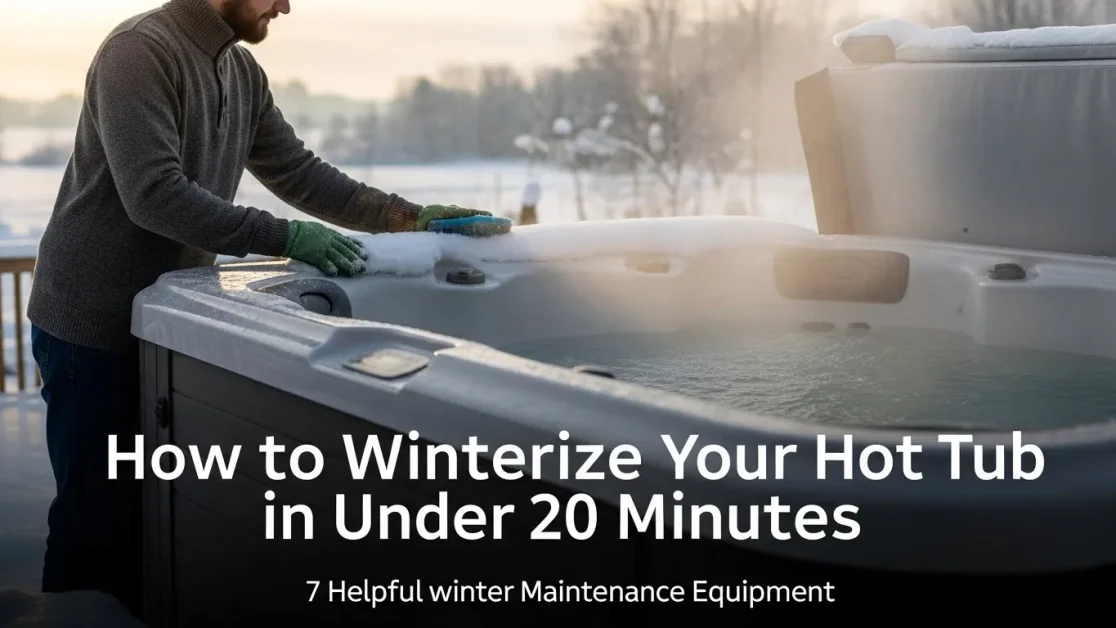
Check for more how to winterize a hot tub.
Tools You’ll Need
• Test strips
• Soft cloth or sponge
• Garden hose (for topping off water)
• Cover cleaner
• Small brush for waterline
Step 1. Check your water chemistry
Use test strips and make sure pH, alkalinity, and sanitizer levels are in range. Balanced water takes less energy to heat and protects your equipment.
Step 2. Top off the water level
Cold weather increases evaporation when you open the cover. Add water until it sits above the skimmer opening so your heater doesn’t run dry.
Step 3. Clean the waterline
Wipe away buildup with a spa-safe cleaner. Oils and grime thicken faster in winter and can clog filters if you ignore them.
Step 4. Rinse the filter
Give your filter a quick hose-off to keep water moving freely. Slow circulation is the first sign a tub might struggle when temperatures drop.
Step 5. Inspect the cover seal
Look around the edges for gaps or heat escaping. Press down gently to check for heavy, waterlogged foam, which means it’s losing insulation.
Step 6. Clear snow or ice from the cover
Brush off any buildup so the weight doesn’t strain your foam core. A few minutes here saves hundreds on premature cover replacement.
Step 7. Confirm your temperature setting
Make sure your thermostat is holding steady. If the temperature drops several degrees overnight, it’s a sign your cover or heater needs attention.