Should You Shower Before or After Using a Hot Tub?

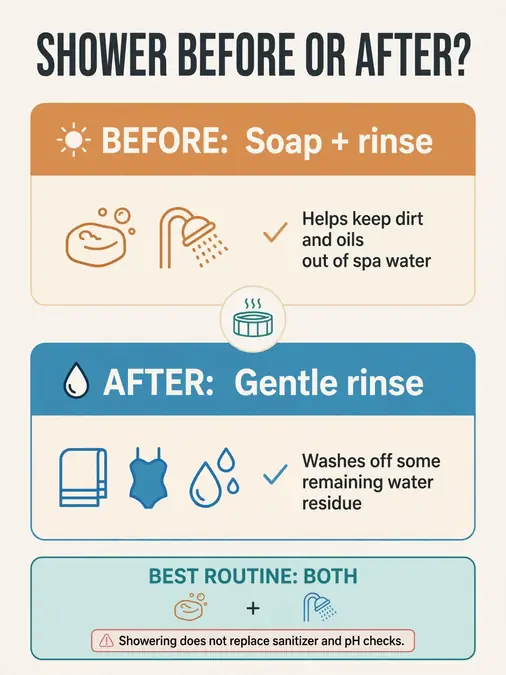
You have a clean swimsuit, a warm hot tub and a few minutes to relax. Do you really need to shower first—or is washing afterward enough? Ideally, do both. A shower before entering helps keep germs, sweat and personal-care products out of the water. A rinse after soaking helps remove remaining spa-water residue from your skin.
If you only remember one step in a shared spa, prioritize showering before entry: the CDC specifically recommends it as part of safe hot tub use. Afterward, a gentle rinse is a practical comfort and skincare step, but it cannot make poorly sanitized water safe retroactively.
Quick answer: before, after, or both?

| When | Why do it? | How to do it |
|---|---|---|
| Before the hot tub | Reduces dirt, personal-care residues and some germs entering shared water | Use a quick soap-and-water wash, rinse thoroughly |
| After the hot tub | Removes sweat and some sanitizer residue from the skin | Choose lukewarm water; cleanse gently if needed |
| Both | Supports water hygiene before and skin comfort afterward | Keep the routine short and gentle |
Why shower BEFORE getting into a hot tub?
Less contamination entering the spa
People carry body oils, sweat, cosmetics, sunscreen, lotions and microbes onto their skin. A shower with soap removes some of these before they are washed into the spa, making it easier for properly maintained sanitizer and filtration to do their jobs. It will not replace the correct disinfectant level.
Less demand on sanitizer
Soap-and-water pre-showering can reduce the amount of material entering the hot tub. Clean water may also remain clearer and develop less foam, although showering alone cannot guarantee perfect water chemistry. See our guide to hot tub foam for related troubleshooting and hot tub hygiene basics for essential maintenance.
Better manners in shared facilities
At a gym, hotel or rental spa, a shower before entering protects other guests as well as your own comfort. Follow posted house rules. Don’t enter with diarrhea or other conditions prohibited by the facility; showers do not make infectious illness harmless.
Why shower AFTER a hot tub?
Rinse spa-water residue off your skin
A post-soak rinse washes off remaining hot tub water and any sweat, sunscreen or personal products that remained. Use a mild fragrance-free cleanser only when needed, especially if skin feels irritated or dry. Pat dry and moisturize if your skin needs it.
Cool off in a gradual, comfortable way
Lukewarm water can feel pleasant after a hot soak. You do not need a freezing blast, and an extremely hot shower may prolong overheating. If you feel faint when leaving the hot tub, stop and sit safely before trying to shower.
Reduce the chance of continued skin irritation
A rinse is a good skin-comfort habit but not a treatment for infection. CDC’s hot tub rash guidance stresses taking off your swimsuit after use and washing it before wearing it again. If you develop a persistent or worsening rash, seek medical advice.
A simple shower and hot tub routine
- Before getting in: remove makeup or heavy products where practical; shower with soap and rinse off shampoo or conditioner completely.
- Check the water: don’t enter if water is cloudy, unusually odorous, or has unverified sanitizer/pH levels.
- Soak conservatively: the CDC sets a 104°F (40°C) maximum, not an ideal temperature target; shorter sessions and lower temperatures may be more comfortable.
- Exit carefully: use steps, hold a rail, and let your body settle before walking to the shower.
- Rinse afterward: use a brief lukewarm shower; use gentle soap if needed.
- Dry your skin and swimsuit: change out of wet swimwear, wash it as directed and let it dry fully.
- Hydrate and rest: drink water and postpone repeat soaks if overheated or unwell.
What soap or body wash should you use?
There is no need for a special “hot tub detox” soap. For most people, a mild cleanser that rinses away cleanly is sufficient. Avoid heavy fragrances if you have sensitive skin. Thoroughly rinse off conditioner, lotion and other products before entering the tub so they don’t end up in your filters.
For children old enough to use hot tubs under appropriate supervision, use a mild product suited to their skin and follow facility and pediatric guidance. The CDC says children younger than five should not use hot tubs. Pregnant users should speak with their healthcare professional before soaking.
What if you’re using a public hotel hot tub?
A pre-soak shower is important, but the water still needs active treatment and management. CDC public guidance says hot tubs should have chlorine at least 3 ppm, or bromine 4–8 ppm, with pH 7.0–7.8; follow posted facility rules and notify staff if levels are out of range.
If you can’t check the chemistry, ask the operator for the latest readings. A strong chemical odor is not proof that the water is extra clean. For a broader checklist see our hotel Jacuzzi safety guide.
What hot tub owners should do in addition to showering
- Test sanitizer and pH using suitable test strips and follow the manufacturer’s treatment schedule.
- Maintain filters and circulation; showering doesn’t replace filtration.
- Keep a rinse area close to the spa with a non-slip path and good drainage.
- Use a secure cover when the spa is not being used, especially around children.
- Plan easy access to clean towels, footwear and a safe step or handrail.
- Do not bring household bubble bath, regular soap, or shampoo into the hot tub itself.
For ongoing maintenance, see how to use hot tub test strips and keeping hot tub water clean.
Mistakes that make the routine less effective
- Only showering after: this removes residue from your skin, but doesn’t reduce what you carried into shared water.
- Applying body lotion immediately before entering: oils and cosmetics can increase spa-water residues and foam.
- Taking a very hot shower while already overheated: use comfortably warm or lukewarm water.
- Skipping swimsuit washing: a post-soak rinse alone doesn’t clean fabric.
- Thinking showering fixes contamination: active sanitizer and proper water balance are still essential.
Frequently asked questions
Is rinsing with just water before a hot tub enough?
A rinse helps, but showering with soap can better remove body oils and other residues. The CDC recommends showering before hot tub use; follow your facility’s posted rules.
Should I shower with soap after using a hot tub?
Not necessarily every time. A thorough lukewarm rinse removes some water residues, while a gentle soap can help if you still feel sticky or have sunscreen on your skin.
Should you wash your hair after a hot tub?
If your hair got wet in treated water, rinsing it can remove lingering water and products. Shampooing depends on your hair and scalp needs; there is no universal requirement.
Is a cold shower better after a hot tub?
Not necessarily. Lukewarm or comfortably cool water is fine. Avoid sudden extreme cold if you have heart, circulation, or blood-pressure risks.
Will a shower prevent hot tub rash?
A shower is good hygiene but doesn’t guarantee protection. Proper sanitizer, pH and maintenance are essential, and a worsening rash may need medical attention.
Can you use a hot tub if you are sick?
Stay out if you have diarrhea and follow your clinician’s advice for fever or other illnesses. A pre-shower won’t remove the risks of using shared water when ill.
Bottom line
Shower before and after if you can. Before matters most for keeping shared water cleaner. After helps rinse away residue and make your skin comfortable. Neither step substitutes for a properly maintained, tested hot tub.