
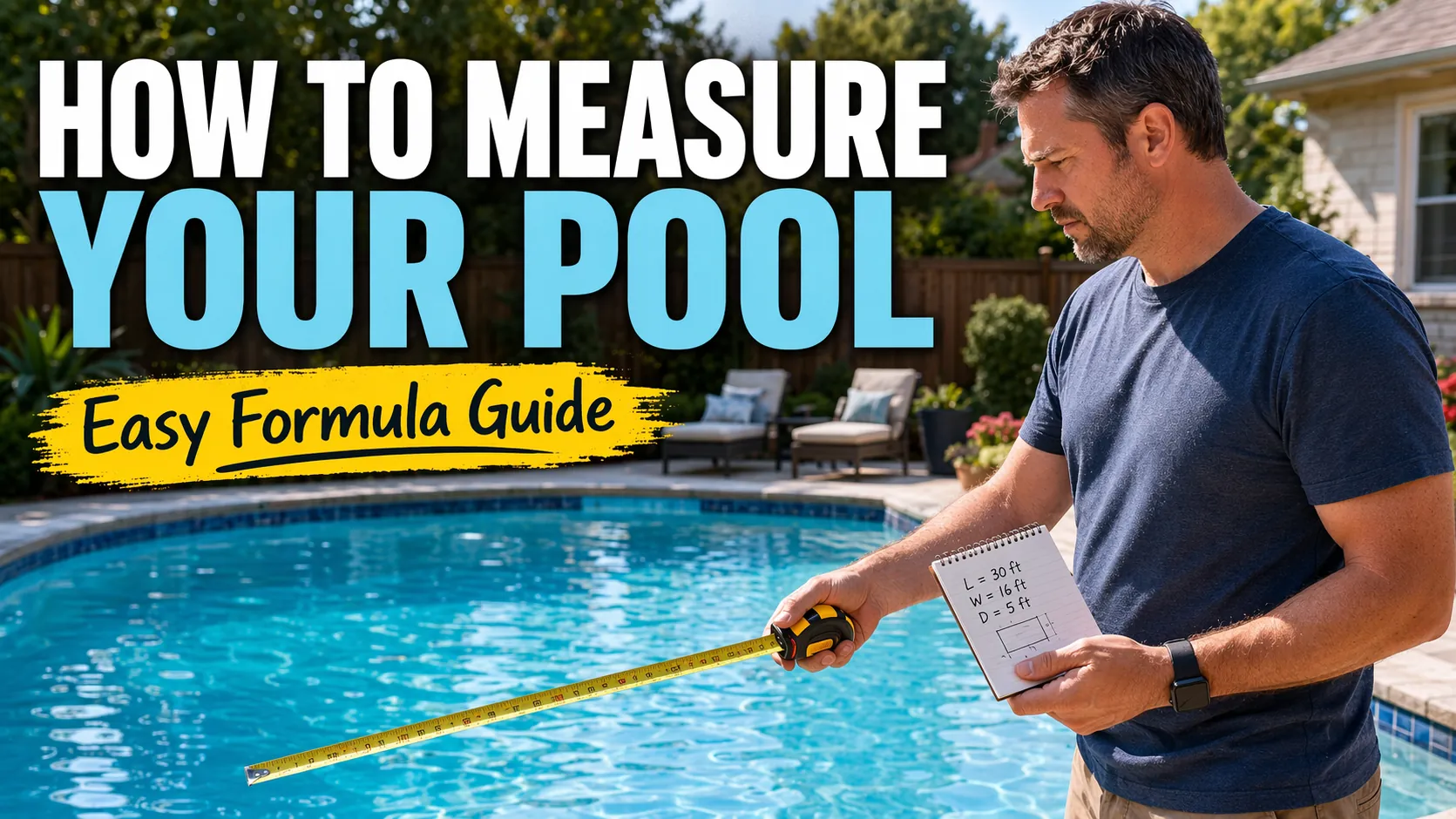
How to Measure a Pool in Gallons (Easy Step-by-Step Guide)

Trying to figure out how many gallons your pool holds can feel confusing at first. You might be guessing, adding chemicals blindly, or just hoping everything balances out.
The good news is, it’s actually pretty simple once you know the basics.
In this guide, I’ll walk you through exactly how to measure your pool in gallons, step by step. You’ll also get easy formulas, real examples, and a built-in calculator so you can get accurate results in minutes.
Quick Answer: Pool Volume Formula Explained
If you just want the fast answer, here it is:
- Rectangular pool:
Length × Width × Average Depth × 7.5 - Circular pool:
Diameter × Diameter × Average Depth × 5.9 - Oval pool:
Length × Width × Average Depth × 6.7
These formulas give you your pool volume in gallons.
If you want the easiest method, you can also use our pool and hot tub calculation tools to skip the math entirely.
Why Knowing Your Pool Gallons Actually Matters
This isn’t just about numbers. It directly affects how your pool performs.
Here’s why it matters:
- Chemical accuracy
Adding too much or too little chlorine, baking soda, or shock can mess up your water fast - Water balance
Proper gallons help keep pH and alkalinity stable - Save money
You won’t waste chemicals by guessing - Protect equipment
Pumps and filters work better when water is balanced
If you’re planning to adjust alkalinity, this becomes even more important. Here’s a helpful guide on using baking soda in a pool once you know your volume.
Enter your pool’s dimensions and select the shape to calculate the volume in gallons.
Step-by-Step Guide to Measure Your Pool
Let’s break this down into simple steps you can follow right now.
Step 1: Identify Your Pool Shape
Start by figuring out what shape your pool is:
- Rectangular
- Circular (round)
- Oval
- Irregular (kidney or custom shapes)
Your shape determines which formula you’ll use.
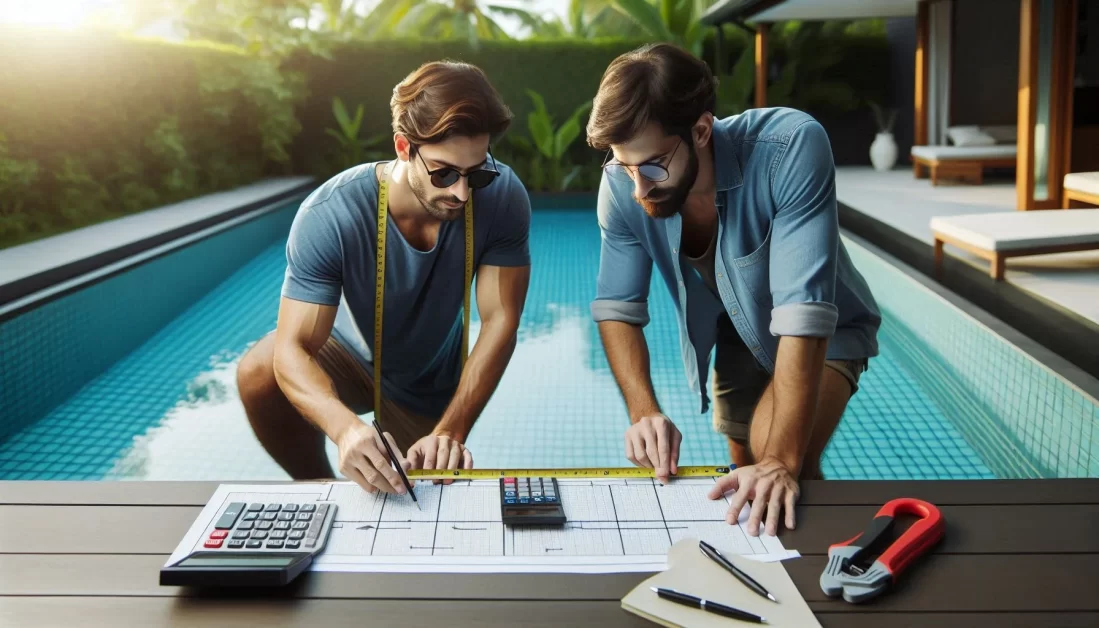
Step 2: Measure Your Pool Dimensions
Grab a tape measure and note these:
- Length (feet)
- Width or diameter (feet)
- Depth
👉 The most important part here is average depth
If your pool has a shallow and deep end:
Average depth = (Shallow depth + Deep depth) ÷ 2
This gives you a more accurate result.
Step 3: Calculate the Volume
Now just plug your numbers into the correct formula.
Don’t worry, we’ll go through examples next so it’s super clear.
Pool Volume Formulas by Shape (Detailed Guide)
Here’s how each pool type works in real life.
Rectangular Pools
Formula:
Length × Width × Average Depth × 7.5
Example:
- Length = 20 ft
- Width = 10 ft
- Depth = 5 ft
👉 20 × 10 × 5 × 7.5 = 7,500 gallons
Circular Pools
Formula:
Diameter × Diameter × Depth × 5.9
Example:
- Diameter = 15 ft
- Depth = 4 ft
👉 15 × 15 × 4 × 5.9 = 5,310 gallons
Oval Pools
This is where many guides fall short, but it’s important.
Formula:
Length × Width × Depth × 6.7
Example:
- Length = 30 ft
- Width = 15 ft
- Depth = 4 ft
👉 30 × 15 × 4 × 6.7 = 12,060 gallons
Irregular-Shaped Pools
For custom pools, don’t overthink it.
Break the pool into smaller shapes like rectangles or circles.
Then:
- Calculate each section
- Add them together
This gives you a close and usable estimate.
Use This Pool Volume Calculator (Fastest Method)
If you don’t feel like doing math, this is the easiest way.
Just enter your pool dimensions below and get instant results.
👉 This tool is especially helpful if you’re adjusting chemicals regularly.
It saves time and reduces mistakes, especially when working with water balance or sanitizer levels.
Example Pool Volume Calculations
Let’s look at a few real-world examples.
Example 1: Small Backyard Pool
- 12 ft × 8 ft × 4 ft
👉 12 × 8 × 4 × 7.5 = 2,880 gallons
Example 2: Round Above-Ground Pool
- 18 ft diameter, 4 ft depth
👉 18 × 18 × 4 × 5.9 = 7,646 gallons
Example 3: Large Oval Pool
- 33 ft × 18 ft × 4.5 ft
👉 33 × 18 × 4.5 × 6.7 = 17,910 gallons
Pool Volume Chart (Quick Reference)
Here’s a quick cheat sheet you can use:
| Pool Size | Avg Depth | Gallons |
|---|---|---|
| 12×24 ft | 4 ft | 8,640 |
| 15 ft round | 4 ft | 5,300 |
| 18 ft round | 4 ft | 7,600 |
| 20×40 ft | 5 ft | 30,000 |
| 30×15 oval | 4 ft | 12,000 |
This is perfect if you just want a quick estimate.
Common Mistakes When Measuring Pool Volume
A lot of people get this wrong at first, and it leads to water problems.
Watch out for these:
- Using maximum depth instead of average
- Mixing feet and meters
- Guessing measurements
- Using the wrong formula for shape
These small mistakes can throw off your chemical balance completely.
If your water chemistry feels off, it’s often tied to incorrect volume calculations. You can learn more about proper balance in this pool water alkalinity guide.
How Pool Gallons Help You Add Chemicals Correctly
Once you know your pool volume, everything gets easier.
You can:
- Add the exact amount of chlorine
- Adjust alkalinity with confidence
- Avoid over-shocking your pool
- Maintain clear, safe water
Most chemical instructions are based on gallons, so this step is essential.
Final Thoughts
Measuring your pool in gallons might seem tricky at first, but once you know the formulas, it becomes second nature.
Take a few minutes to measure properly, and you’ll save yourself a lot of frustration later.
If you want the easiest route, just use the calculator and skip the guesswork.
Clear, balanced water starts with knowing your numbers.
Frequently Asked Questions
How do I calculate pool gallons quickly?
Use the formula for your pool shape or enter your dimensions into a pool volume calculator for instant results.
How many gallons is a 24 ft round pool?
A 24 ft round pool with 4 ft depth holds around 13,500 gallons.
Can I estimate pool volume without measuring?
You can estimate, but it won’t be accurate. Even small errors can affect your chemical balance.
Why is average depth important?
Average depth gives a realistic measurement of your pool volume. Using max depth will overestimate gallons.
How accurate does pool volume need to be?
Within 5–10% accuracy is usually fine for most pool maintenance and chemical adjustments.



One Comment
Comments are closed.