Adding a hot tub to your backyard sounds relaxing, but there’s one big question most homeowners overlook.
Can your deck or patio actually support the weight of a filled spa?
A typical hot tub can weigh 4,000 to 6,000 pounds once filled with water and people. That’s roughly the weight of a small truck sitting in one spot. If the structure underneath isn’t designed for that load, problems like sagging decks, cracked patios, or structural damage can happen.
Start with our hot tub deck comprehensive guide for expert tips. Not sure if your existing deck works? We’ll help you figure it out, even for lighter options like an inflatable hot tub on deck. Here’s what you’ll learn:
- Best materials for strength and style.
- How to calculate weight load safely.
- DIY plans for 8×8 or 10×10 decks.
- Cost estimates to plan your budget.

Can You Put a Hot Tub on a Deck?
Yes, you can place a hot tub on a deck if the structure is reinforced to support at least 100–150 pounds per square foot (psf). Most standard decks are built for only 40–60 psf, so additional joists, beams, and footings are usually required before installing a filled spa.
Can a Deck Support a Hot Tub?
Most standard residential decks cannot safely support a filled hot tub without reinforcement.
Typical decks are designed for about 40–60 pounds per square foot (psf). A hot tub, however, usually requires 100–150 psf because of the concentrated weight.
That means if you place a hot tub on a deck without structural upgrades, the framing may not handle the load.
Several factors determine whether your deck can support a spa:
- Joist size and spacing
- Beam strength
- Post size and spacing
- Footing depth
- Overall deck design
If you’re planning a new spa installation, reviewing a full hot tub installation guide can help you understand electrical and placement requirements before construction begins.
How Much Does a Hot Tub Weigh?
Hot tub weight depends on three main factors:
- Empty tub weight
- Water volume
- Number of people using it
Here’s a typical example.
| Component | Weight |
|---|---|
| Empty hot tub | 900 lbs |
| Water (400 gallons) | 3,320 lbs |
| 6 occupants | 1,200 lbs |
| Total | ~5,420 lbs |
Water is the biggest contributor.
Each gallon weighs about 8.34 pounds, so even a medium-size spa quickly becomes extremely heavy once filled.
For sizing and capacity planning, the hot tub size and dimensions guide explains typical spa sizes and water capacities.
Real Example: 6-Person Hot Tub Deck Load
Let’s say you install a medium-size spa with these specs:
| Component | Weight |
|---|---|
| Hot tub shell | 900 lbs |
| Water (400 gallons) | 3,320 lbs |
| 6 bathers | 1,200 lbs |
| Total | 5,420 lbs |
If the spa footprint is 6×6 feet (36 sq ft):
Total load per square foot:
\frac{5420}{36} \approx 150 \text{ psf}
Deck Load Capacity Requirements
Understanding deck load capacity is essential before placing a spa outdoors.
Standard residential decks are designed for:
- 40 psf live load (people, furniture)
- 10 psf dead load (deck materials)
Hot tubs require much more.
A safe spa deck should support:
100–150 pounds per square foot
Additional factors to consider include:
- movement from bathers
- water sloshing
- long-term structural stress
If your existing deck isn’t designed for that load, reinforcement or a new foundation may be necessary.
Many homeowners choose a patio installation instead, especially after learning the best base for a hot tub options.
This ensures your deck or patio meets the demand. Check and use our calculator for weight and local building codes, as cities like Seattle or Miami may require specific permits or inspections.
6 Best Base Options for a Hot Tub
The best base for a hot tub is a reinforced concrete slab because it provides the highest load capacity, excellent durability, and long-term stability.
If concrete isn’t practical, a reinforced deck, properly installed paver patio, crushed stone base, modular spa pad, or plastic tile system can also provide a safe foundation when installed correctly.
A filled hot tub can weigh 3,000 to more than 6,000 pounds, depending on its size and the number of occupants. Choosing the right foundation helps prevent settling, protects your spa, and extends its lifespan.
Compare the Most Popular Hot Tub Base Options
| Base Type | Best For | Cost | DIY Friendly | Durability |
|---|---|---|---|---|
| Concrete Slab | Permanent installations | $$$ | No | ⭐⭐⭐⭐⭐ |
| Reinforced Deck | Elevated or built-in spas | $$$ | No | ⭐⭐⭐⭐⭐ |
| Paver Patio | Finished backyard landscapes | $$ | Sometimes | ⭐⭐⭐⭐☆ |
| Crushed Stone Base | Budget-friendly installations | $ | Yes | ⭐⭐⭐⭐☆ |
| Modular Spa Pad | Quick DIY projects | $$ | Yes | ⭐⭐⭐⭐☆ |
| Plastic Tile Base | Temporary or portable spas | $$ | Yes | ⭐⭐⭐☆☆ |
1. Concrete Slab (Best Overall)
A reinforced concrete slab is the gold standard for hot tub installations. It provides excellent support for both acrylic and fiberglass spas while requiring very little maintenance over the years.
Best for
- Permanent hot tubs
- Large family spas
- New backyard installations
Pros
- Highest weight capacity
- Long-lasting and durable
- Won’t shift or settle when installed correctly
- Suitable for almost every hot tub model
Cons
- Higher upfront cost
- Permanent installation
- Requires curing time before use
Installation Tips
- Allow the concrete to fully cure before placing the spa.
- Pour a slab at least 4 to 6 inches thick.
- Reinforce it with steel rebar or wire mesh.
- Ensure the surface is completely level.
Concrete patios are often recommended when homeowners ask can I put a hot tub on my patio.
2. Reinforced Deck (Best for Elevated Installations)
A reinforced deck creates a beautiful integrated spa area while maximizing backyard space. However, not every deck is strong enough to support a filled hot tub.
Best for
- Elevated decks
- Walk-out basements
- Built-in outdoor living areas
Pros
- Attractive appearance
- Great views from elevated spaces
- Easy access from the home
Cons
- Usually requires structural reinforcement
- Professional engineering may be needed
- More expensive than ground-level options
Installation Tips
Your deck should include:
- Larger joists
- Reinforced beams
- Additional blocking
- Deep concrete footings
- Verification that it can safely support the spa’s filled weight
A common mistake is assuming a standard residential deck can handle a hot tub without modifications.
This design is popular for backyard hot tub layouts, which you can explore in our backyard hot tub ideas guide.
3. Paver Patio (Best for Decorative Landscapes)
A professionally installed paver patio combines strength with curb appeal. When installed over a properly compacted base, pavers can safely support most residential hot tubs.
Best for
- Backyard entertainment areas
- Decorative patio designs
- Existing paved landscapes
Pros
- Attractive finish
- Excellent drainage
- Individual pavers are easy to replace
- Complements landscaping
Cons
- Poor installation can cause settling
- Requires a solid foundation underneath
Installation Tips
A proper paver base includes:
- Compacted crushed stone
- Bedding sand
- Edge restraints
- Heavy-duty pavers designed for outdoor use
4. Crushed Stone Base (Best Budget Option)
A crushed stone base offers an affordable and effective solution for many portable and inflatable hot tubs.
Unlike loose pea gravel, compacted crushed stone locks together, creating a much more stable foundation.
Best for
- Inflatable hot tubs
- Portable spas
- Budget-conscious homeowners
Pros
- Affordable
- Excellent drainage
- DIY friendly
- Easy to level
Cons
- Requires occasional leveling over time
- Not ideal for very large luxury spas
Installation Tips
- Excavate the area first.
- Add 4–6 inches of crushed stone.
- Compact each layer thoroughly.
- Install edging to keep the stone contained.
This option works best with smaller spas like those explained in the inflatable hot tubs guide.
5. Modular Spa Pad (Best DIY Solution)
Modular spa pads are made specifically for hot tubs and assemble quickly without pouring concrete.
They’re becoming increasingly popular because they’re lightweight, durable, and easy to install.
Best for
- Portable hot tubs
- Homeowners who don’t want concrete
- Fast installations
Pros
- Quick installation
- Good drainage
- Low maintenance
- Some systems can be relocated
Cons
- Costs more than gravel
- Still requires a level base underneath
Installation Tips
Even modular pads need compacted ground below them. Never place them directly on soft soil or grass.
6. Plastic Tile Base (Best for Temporary Installations)
Interlocking plastic tiles create a lightweight platform suitable for smaller portable spas and inflatable models.
While not as strong as concrete, they provide better stability than placing a spa directly on the ground.
Best for
- Portable spas
- Rental properties
- Temporary backyard setups
Pros
- Easy to assemble
- Good drainage
- Can be moved later
- Minimal site preparation
Cons
- Lower weight capacity than concrete
- Not recommended for large permanent hot tubs
Can You Put a Hot Tub on an Existing Concrete Patio?
Yes if the patio is in good condition.
Before installing your hot tub, inspect the patio for:
- Major cracks
- Uneven surfaces
- Poor drainage
- Thin or deteriorating concrete
- Signs of settling
A structurally sound concrete patio is often all that’s needed for a safe installation.
Bases You Should Avoid
Some surfaces may seem convenient but can create safety and maintenance problems.
Avoid placing a hot tub directly on:
- Grass
- Bare soil
- Loose pea gravel
- Sand
- Asphalt that softens in hot weather
- Uneven brick or pavers
- Standard wooden decks that haven’t been reinforced
- Wooden pallets or railroad ties
These surfaces can settle, shift, or fail under the tremendous weight of a filled hot tub.
Which Hot Tub Base Is Right for You?
Use this quick guide to narrow down the best option for your situation.
| If you have… | Recommended Base |
|---|---|
| New backyard installation | Concrete slab |
| Existing concrete patio | Existing patio (if structurally sound) |
| Inflatable hot tub | Crushed stone or modular spa pad |
| Built-in deck design | Reinforced deck |
| Decorative outdoor living space | Paver patio |
| Rental property or temporary setup | Plastic tile base or modular spa pad |
When deciding, consider:
- Your hot tub’s filled weight
- Soil conditions
- Local climate
- Budget
- Whether the installation will be permanent or temporary
- Future maintenance and drainage needs
5 Best Materials for a Hot Tub Decks
The best material for a hot tub deck depends on your budget, maintenance preferences, and local climate. Since hot tubs create constant moisture, choose decking that provides a strong structure, good slip resistance, and long-term durability.
Here’s how the most popular materials compare.
Compare Hot Tub Deck Materials
| Material | Best For | Maintenance | Lifespan | Cost |
|---|---|---|---|---|
| Pressure-Treated Wood | Budget projects | High | 15–20 years | $ |
| Cedar or Redwood | Natural appearance | Medium | 20–25 years | $$ |
| Composite Decking | Low maintenance | Low | 25–30 years | $$$ |
| PVC Decking | Wet climates | Very Low | 30+ years | $$$ |
| Aluminum Decking | Maximum durability | Very Low | 30+ years | $$$$ |

1. Pressure-Treated Wood (Best Budget Option)
Pressure-treated lumber is one of the most affordable decking materials for hot tub installations. It’s widely available and works well for homeowners building their own deck.
Average cost: $10–$20 per sq. ft.
Pros
- Budget friendly
- Easy to find
- DIY friendly
- Strong structural performance
Cons
- Requires sealing or staining every 1–2 years
- Can crack, warp, or splinter over time
- Needs regular maintenance in wet climates
Pressure-treated wood is a practical choice if you’re comfortable with routine upkeep.
2. Cedar or Redwood (Best Natural Wood)
Cedar and redwood are naturally resistant to moisture, insects, and decay, making them popular choices for premium wood hot tub decks.
Average cost: $18–$35 per sq. ft.
Pros
- Beautiful natural appearance
- Naturally resists rot and insects
- Cooler under bare feet than composite
- Less prone to warping than treated lumber
Cons
- Higher cost
- Requires periodic sealing
- Color fades without maintenance
For homeowners who prefer real wood, cedar is often considered the best balance between beauty and durability.
Composite decking is widely used in modern spa patios and pairs well with hot tub landscaping ideas.
3. Composite Decking (Best Overall)
Composite decking combines recycled wood fibers with plastic to create a durable, low-maintenance surface that performs exceptionally well around hot tubs.
Average cost: $20–$40 per sq. ft.
Pros
- Minimal maintenance
- Won’t splinter
- Excellent moisture resistance
- Long lifespan
- Available in many colors and textures
Cons
- Higher upfront cost
- Can become warm in direct sunlight
- Premium brands cost more
Composite decking is one of the most popular choices for modern hot tub decks because it balances appearance, durability, and ease of maintenance.
4. PVC Decking (Best for Wet Climates)
PVC decking contains no wood fibers, making it highly resistant to water, mold, mildew, and stains.
Average cost: $25–$45 per sq. ft.
Pros
- Extremely moisture resistant
- Doesn’t rot
- Easy to clean
- Very low maintenance
Cons
- More expensive than composite
- Less natural appearance
- Can expand slightly in extreme heat
PVC decking is an excellent choice for humid climates or hot tubs used year-round.
5. Aluminum Decking (Most Durable)
Although less common, aluminum decking offers exceptional strength and weather resistance.
Average cost: $35–$60+ per sq. ft.
Pros
- Won’t rot or rust
- Fire resistant
- Excellent slip resistance
- Extremely long lifespan
- Virtually maintenance free
Cons
- Highest installation cost
- Limited design options
- Professional installation is usually required
Aluminum is often chosen for luxury installations where longevity is the top priority.
Which Deck Material Should You Choose?
| If you want… | Choose… |
|---|---|
| Lowest upfront cost | Pressure-treated wood |
| Natural wood appearance | Cedar or redwood |
| Best overall value | Composite decking |
| Lowest maintenance | PVC decking |
| Maximum durability | Aluminum decking |
When selecting a decking material, don’t focus on appearance alone. Consider how much maintenance you’re willing to perform, your local weather conditions, and whether your deck has been engineered to support the weight of a fully loaded hot tub. A durable surface is important, but the deck’s structural framing is what ultimately keeps your spa safe.
How to Reinforce a Deck for a Hot Tub
If you plan to install a hot tub on a deck, reinforcement is usually required.
Here are the most common structural upgrades.
1. Upgrade Joists
Use larger joists such as:
- 2×10
- 2×12
Spacing should be 12 inches apart instead of the typical 16 inches.

1. Strengthen Beams
Support beams should be large enough to distribute the weight.
Common upgrades include:
- doubled beams
- engineered lumber
- additional support posts
1. Install Larger Posts
Deck posts supporting a spa should typically be 6×6 pressure-treated lumber.
These posts distribute the load to the foundation.
1. Add Concrete Footings
Footings must extend below frost depth in cold climates.
Typical footings are:
- 12–24 inches deep
- reinforced with concrete
Proper structural reinforcement is one of the most important steps in safe hot tub setup planning.
Patio Foundation Requirements
If you’re installing a hot tub on a patio, the base still needs preparation.
A proper patio foundation should include:
- compacted gravel base
- reinforced concrete slab
- drainage for rainwater
Drainage is especially important in wet climates where water accumulation can weaken the soil.
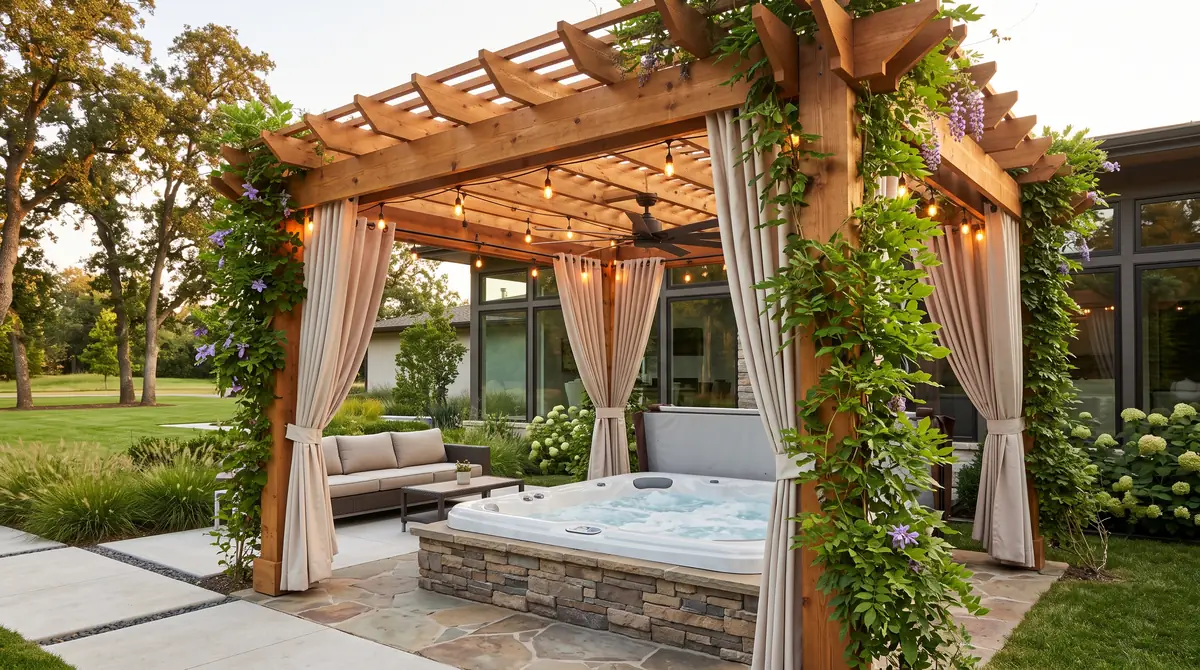
Many homeowners combine patios with landscaping features like pergolas or screens using ideas from how to increase privacy for your hot tub.
Sunken Hot Tub Structural Requirements
Sunken spas create a sleek backyard design but require additional engineering.
Key requirements include:
- excavated foundation
- reinforced concrete base
- retaining walls around the spa
- proper drainage system
Sunken hot tubs often increase installation complexity and cost but provide a luxury spa appearance similar to built-in spa designs shown in built-in hot tub ideas.

Common Hot Tub Deck Mistakes to Avoid
Homeowners frequently underestimate the structural demands of a spa.
Common mistakes include:
- underestimating water weight
- using undersized joists
- poor drainage around the base
- skipping engineering consultation
- ignoring local building codes
Avoiding these mistakes can prevent expensive structural repairs later.
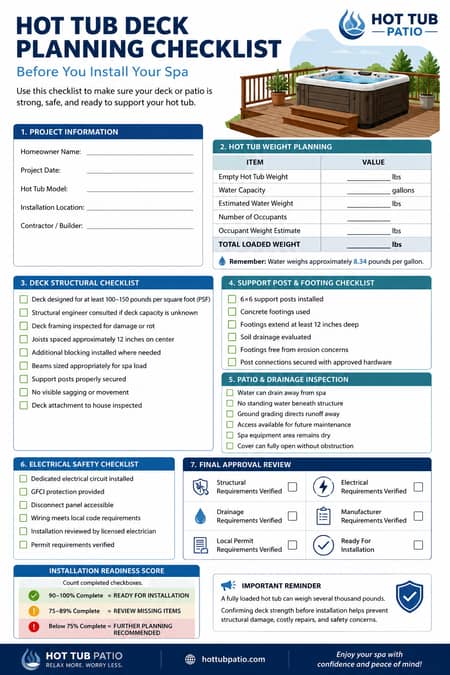
Hot Tub Deck Planning Checklist
Before installing a spa on a deck or patio, confirm the following.
Your structure should include:
- Deck supports 100–150 psf load capacity
- Joists spaced 12 inches apart
- 6×6 posts for support
- Concrete footings 12+ inches deep
- Drainage around the spa
- Electrical access meeting local codes
Following this checklist helps ensure your spa installation is safe and long-lasting.
FAQs
Can a regular deck support a hot tub?
Most standard decks cannot support a filled hot tub without reinforcement. Structural upgrades are usually needed to safely handle the weight.
Is a concrete patio better than a deck for a hot tub?
A concrete patio is often safer because it distributes weight evenly and requires less structural reinforcement.
How much weight does a filled hot tub hold?
Most hot tubs weigh 4,000 to 6,000 pounds when filled with water and people.
What is the best base for a hot tub?
A reinforced concrete slab is usually the most reliable base because it provides excellent support and durability.
Do I need permits to build a hot tub deck?
Many cities require permits for deck construction or spa installation. Always check local building codes before starting your project.
Should You Use a Deck or Patio for Your Hot Tub?
Here’s a quick comparison.
| Option | Best For | Pros | Cons |
|---|---|---|---|
| Deck | Elevated backyard layouts | Great views, flexible design | Needs structural reinforcement |
| Concrete patio | Ground-level installation | Strong and durable | Permanent structure |
| Paver patio | Decorative backyard spaces | Custom designs | Requires strong base |
Planning a Hot Tub Deck?
Tell us in the comments:
- Your hot tub model
- Deck size
- Backyard layout
Our team can help estimate the structural load your deck needs.