Hot Tub Greenhouse: Setup, Ventilation & Safety Guide

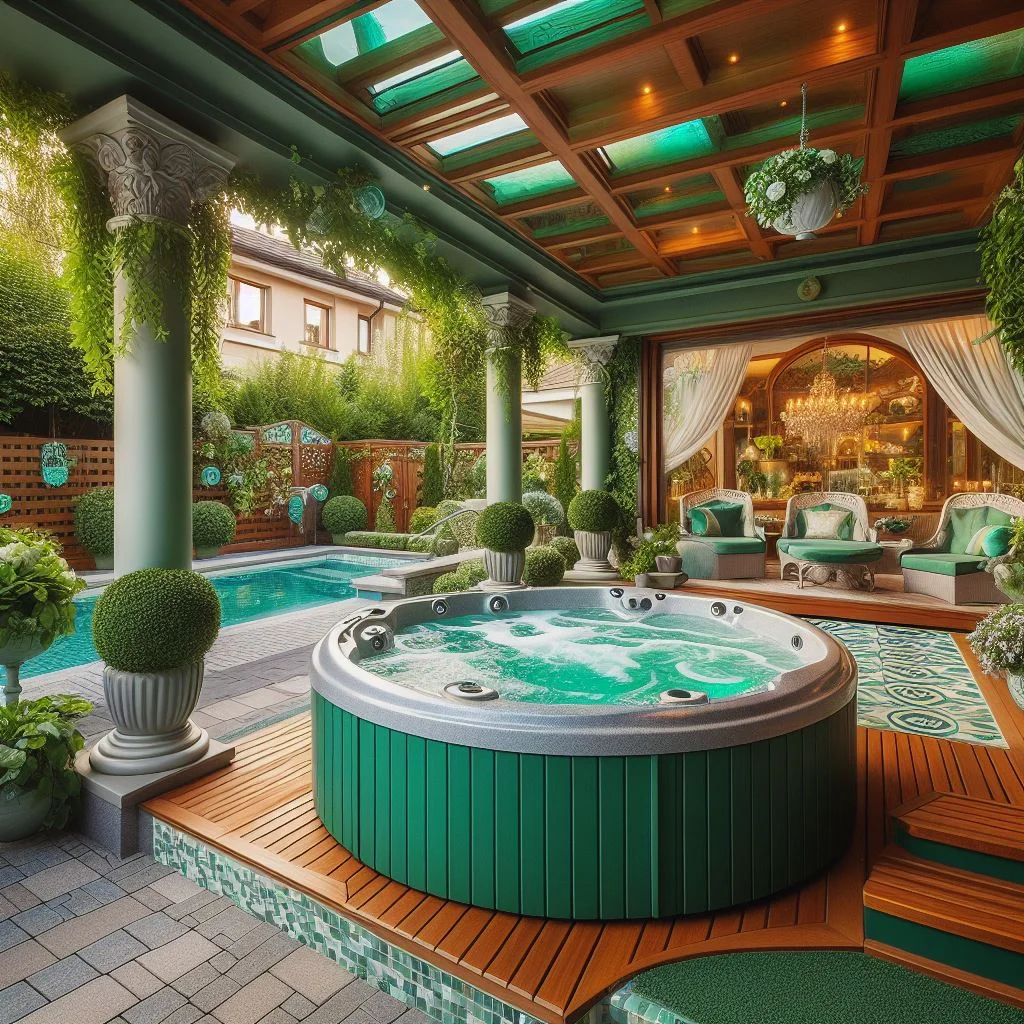
Yes, you can put a hot tub in a greenhouse, but the space needs to be planned for moisture, heat, weight, electricity, drainage, and service access. A greenhouse can create privacy and weather protection, but it also traps heat and humidity, so a basic plant greenhouse is not automatically ready for a spa.
Before buying materials, confirm the hot tub dimensions, filled weight, electrical requirements, delivery route, and the clearances required by the spa manufacturer. If you are still comparing enclosure styles, our hot tub enclosure guide shows other ways to add shelter and privacy.
Can You Put a Hot Tub in a Greenhouse?
A hot tub can work inside a greenhouse when the floor can support the loaded spa and the enclosure has a plan for ventilation, drainage, safe electrical service, delivery, and future repairs. The biggest mistake is treating the greenhouse like a decorative shell around the tub.
Hot tubs release a large amount of moisture while they are open and in use. Master Spas notes that enclosed installations need ventilation and humidity control because moisture can damage walls, ceilings, and finishes over time. Its pre-installation guidance also recommends planning for drainage and slip-resistant flooring. See the Master Spas pre-installation guide.
Hot Tub Greenhouse Pros and Cons
| Potential advantage | What to plan for |
|---|---|
| Protection from rain, snow, and wind | The greenhouse still needs drainage for splashing, cleaning, and water changes |
| More privacy than an open patio | Walls and glazing can trap steam and condensation |
| Year-round covered access | Solar gain can make the enclosure too hot on sunny days |
| Plants and natural light around the spa | Plants must tolerate the actual temperature and humidity, and should stay out of the splash zone |
| Less debris falling directly into the water | You still need enough room for the cover, lifter, filters, equipment panel, and repairs |
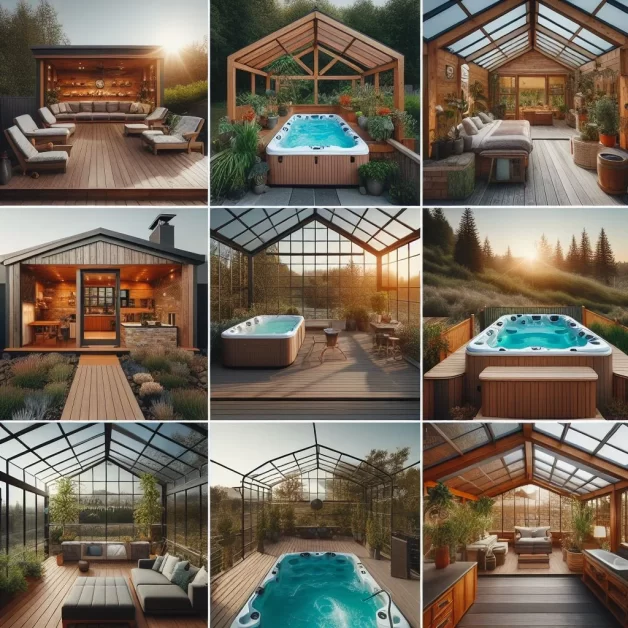
1. Make Sure the Base Can Support the Filled Hot Tub
The hot tub must sit on a stable, level surface designed for its full loaded weight. Water, the spa shell, equipment, and bathers can put several thousand pounds on a relatively small area.
Do not assume a greenhouse floor, paver layout, or raised platform is strong enough just because it looks solid. Use the exact filled-weight specification from your hot tub manufacturer and have a qualified contractor or engineer evaluate any raised floor or deck. Our hot tub patio setup guide covers base, drainage, access, and layout planning in more detail.
2. Plan Ventilation and Condensation Control
Ventilation is one of the most important parts of a hot tub greenhouse. Steam from an open hot tub can condense on glazing, framing, doors, fasteners, ceilings, and nearby furnishings.
Operable roof or side vents may help in mild weather, but a powered exhaust fan or another mechanical ventilation plan can be more reliable when the structure is closed. Hot Spring notes that the more enclosed a hot tub structure becomes, the more important ventilation is because steam can collect and condense overhead. Hot Spring’s enclosure guidance also recommends planning ventilation as part of the structure rather than adding it after moisture problems appear.
Choose finishes and framing details that can tolerate repeated humidity. Watch for persistent condensation on the glazing, musty odors, wet framing, peeling finishes, or water collecting where it should not.
3. Expect More Heat Than an Open Hot Tub Area
A greenhouse can overheat even when the outdoor air feels comfortable. Sunlight passing through the glazing creates heat gain, while the hot tub adds more warmth and moisture.
The University of Georgia Cooperative Extension explains that greenhouses require ventilation to control temperature and humidity, and that high humidity can cause condensation on cool surfaces. Its greenhouse heating, cooling, and ventilation guidance also notes that solar heat buildup can become excessive without adequate ventilation and shading.
For a backyard hot tub greenhouse, practical controls can include operable vents, an exhaust fan, circulation fans, exterior or interior shade designed for greenhouse use, and a thermometer or temperature alarm. The right setup depends on the enclosure size, glazing, climate, and sun exposure.
4. Treat Electrical Planning as a Safety Requirement
Do not improvise hot tub electrical work inside a damp greenhouse. Water, condensation, and electrical equipment share the same space, so the installation should be designed and inspected by a qualified electrician who understands spas and local code requirements.
The U.S. Consumer Product Safety Commission recommends GFCI protection for electrical equipment used with pools, hot tubs, and spas, and advises having a qualified electrician inspect installations in accordance with applicable local codes and the National Electrical Code. See the CPSC electrical safety guidance. For site-specific planning, our guide to hiring a hot tub electrician explains what to discuss before work begins.
5. Leave Enough Room for Delivery, the Cover, and Repairs
A greenhouse can make a hot tub difficult or impossible to deliver, remove, or service if clearances are planned too tightly. Measure the spa, door openings, turns, roof height, and delivery route before the greenhouse is completed.
Jacuzzi recommends checking gates, doorways, sidewalks, turns, and overhead clearance before delivery. The same logic applies to a greenhouse entrance. You also need working room around the equipment compartment and enough space for steps and the cover or cover lifter. Review your exact model’s service-clearance requirements rather than relying on a generic number. If you are still choosing a spa, the hot tub size and dimensions guide can help you estimate how much enclosure space you will need.
6. Plan Drainage and Wet-Surface Safety
Expect water on the floor. Bathers drip water, covers shed condensation, maintenance creates splashes, and the spa eventually needs to be drained.
Plan where that water will go before construction. A floor drain may be appropriate in some installations, while others use a hose or pump directed to an approved discharge location. Use a surface that remains slip resistant when wet, and keep standing water away from electrical equipment and the spa equipment compartment.
7. Check Permits, Barriers, and Local Requirements
Permit and barrier rules vary by location, so there is no single U.S. greenhouse-hot-tub rule that applies everywhere. A permanent enclosure may trigger building requirements, while the spa itself can involve electrical, safety-barrier, setback, or zoning rules.
Jacuzzi’s pre-installation checklist specifically tells owners to check city or county requirements and notes that some jurisdictions require gates, fencing, or other barriers. Before building, contact the local authority having jurisdiction and verify any HOA rules that also apply.
Can You Grow Plants Around a Hot Tub in a Greenhouse?
Yes, but choose plants for the actual greenhouse conditions instead of assuming every tropical plant will thrive. Temperature, humidity, winter ventilation, direct sun, and the amount of space around the tub all matter.
- Keep pots and soil where they cannot spill into the spa or block equipment panels.
- Place plants outside the normal splash zone.
- Do not let vines or dense foliage block vents, doors, fans, electrical equipment, or the service side of the tub.
- Select plants based on the real temperature and humidity range in the enclosure, especially in summer.
- Ask a local nursery which plants suit your climate and greenhouse conditions.
Greenhouse vs Gazebo vs Solarium for a Hot Tub
| Structure | Best fit | Main concern |
|---|---|---|
| Greenhouse | Owners who want plants, daylight, and weather protection | Heat gain, humidity, condensation, and plant-space conflicts |
| Gazebo or pavilion | Shade and weather protection with simpler airflow | Wind-driven rain, privacy, and winter exposure |
| Solarium or sunroom | A more finished, house-like enclosure | Moisture control, building integration, permits, and higher project complexity |
A greenhouse is not automatically the best choice just because it is transparent. Choose the structure that fits the main goal: plants and sunlight, simple weather protection, or a finished indoor-style room.
Hot Tub Greenhouse Planning Checklist
- ☐ Confirm the spa’s exact dimensions and filled weight.
- ☐ Verify the base can support the full load.
- ☐ Measure the complete delivery route before closing in the greenhouse.
- ☐ Leave manufacturer-required access to the equipment compartment.
- ☐ Leave room for steps, cover removal, and the cover lifter.
- ☐ Plan operable vents and, when needed, powered exhaust or dehumidification.
- ☐ Use moisture-tolerant finishes and slip-resistant flooring.
- ☐ Decide how splash water and drain water will leave the enclosure.
- ☐ Have spa electrical work designed and completed by a qualified electrician.
- ☐ Check local building, electrical, barrier, setback, and HOA requirements.
- ☐ Plan summer shading and temperature control.
- ☐ Keep plants clear of vents, electrical equipment, and service panels.
Common Hot Tub Greenhouse Mistakes
- Building the greenhouse first: the finished doorway may be too small for the spa.
- Relying only on roof vents: moisture may remain high when weather forces the greenhouse to stay closed.
- Blocking the equipment panel: repairs become difficult and more expensive.
- Ignoring summer heat: a sunny greenhouse can become uncomfortable even when the hot tub is not running.
- Using an unverified floor or deck: the base must support the spa at full operating weight.
- Adding electrical accessories casually: lighting, fans, heaters, and receptacles around a spa require careful wet-location planning.
Frequently Asked Questions
Can I put a hot tub in a plastic greenhouse?
Possibly, but the greenhouse must still provide a load-bearing base, safe electrical installation, drainage, ventilation, delivery clearance, and service access. A lightweight greenhouse kit by itself does not prove the space is suitable for a hot tub.
Do I need a fan in a hot tub greenhouse?
Many enclosed hot tub spaces benefit from mechanical exhaust because the spa creates substantial humidity. The exact ventilation design depends on enclosure size, glazing, climate, and how much natural ventilation is available.
Will a hot tub heat a greenhouse in winter?
A hot tub releases some heat into the enclosure, but it should not be treated as a designed greenhouse heating system. Greenhouse temperature depends on outdoor weather, glazing, air leakage, ventilation, solar gain, and any dedicated heating system.
Will a greenhouse make my hot tub cheaper to run?
Do not assume a fixed energy saving. Wind protection and a warmer enclosure may reduce some heat loss in certain conditions, but solar gain, ventilation, cover quality, insulation, climate, and spa settings all affect energy use.
Do I need a permit for a hot tub greenhouse?
Possibly. Requirements vary by city and county and may cover the enclosure, electrical work, setbacks, safety barriers, or other site conditions. Check with your local authority before construction.
Bottom Line
A hot tub greenhouse can work well when it is designed as a moisture-heavy spa enclosure, not just a greenhouse with a tub placed inside. Start with the spa’s weight and dimensions, then solve ventilation, electrical safety, drainage, delivery, service access, summer heat, and local requirements before choosing plants or finishes.