Cold Shower vs Hot Shower After Sauna: Which Is Better?

You step out of the sauna, your skin is still warm, and the shower has two tempting settings: icy cold or wonderfully hot. Which one actually makes sense? For most healthy adults, a comfortably cool or lukewarm shower after a short rest is the practical middle ground. Cool water can help you feel refreshed; lukewarm water rinses off sweat without adding much more heat. Neither an ice-cold blast nor a steaming-hot rinse is necessary.
A cold shower is an option, not a test of toughness. And a genuinely hot shower right after a hot sauna can make it harder to cool down. What matters most is how you feel, whether you have any medical risks, and giving yourself enough time to recover from the heat.
Quick answer: cold or hot shower after sauna?
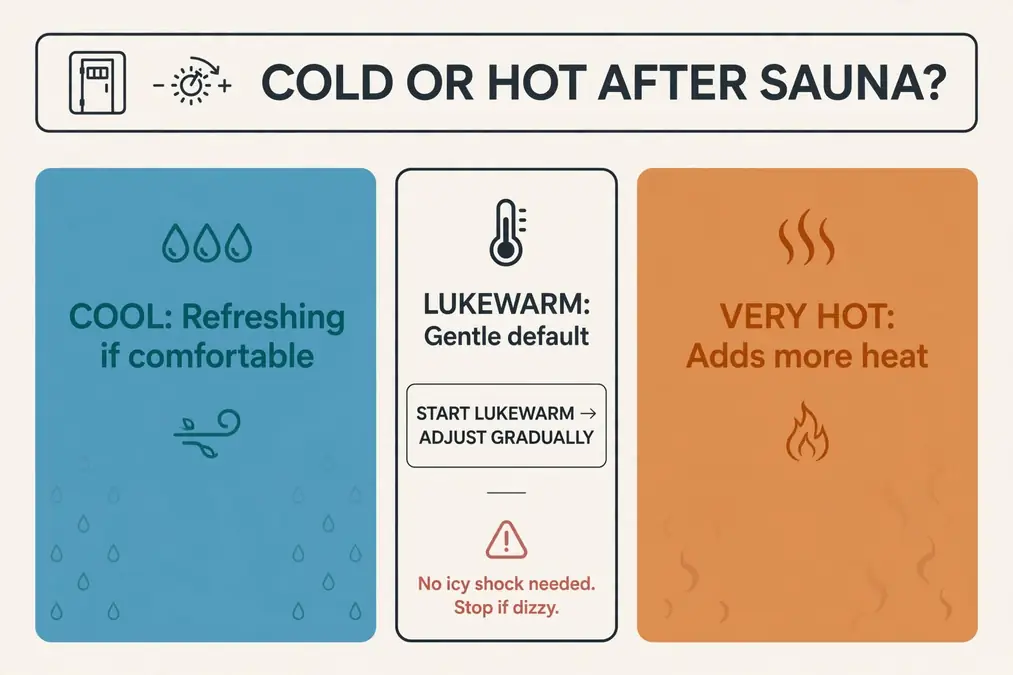
- Choose cool water if you are feeling well, want to cool off, and enjoy a refreshing rinse. Start at lukewarm and lower the temperature only to a comfortable level.
- Choose lukewarm water if you are new to sauna, dislike cold water, or want a gentle post-sauna wash.
- Skip a very hot shower immediately afterward if you are still flushed or sweating heavily; it adds heat when the goal is to cool down.
- Skip temperature extremes and seek individualized advice if you have a heart or blood-pressure condition, are pregnant, take medicines that affect circulation, or have another condition that changes your heat/cold tolerance.
- Do not shower standing up if you feel faint. Sit or lie down somewhere safe, get help if needed, and treat persistent or serious symptoms as a medical issue.
These are general comfort and safety recommendations, not results from a clinical trial directly proving one post-sauna shower temperature is best. Medical sources consistently stress gradual cooling, hydration, and caution with abrupt temperature changes. See Harvard Health’s sauna safety guidance and the National Collaborating Centre for Environmental Health’s sauna risk review.
Cold shower vs hot shower after sauna: at a glance

| What matters | Cool shower | Hot shower |
|---|---|---|
| Cooling down | Usually more helpful for removing surface heat; start gently. | Can prolong feeling overheated, especially if it is very hot. |
| How it feels | Refreshing or stimulating for some; uncomfortable for others. | Comforting for some, but potentially unpleasant when already overheated. |
| After-sweat | May help you feel cooler; persistent sweating can still happen. | May leave you feeling warmer or sweating longer. |
| Safety | Abrupt icy exposure is risky for susceptible people. | Extra heat may aggravate lightheadedness or heat strain. |
| Practical choice | Comfortably cool after an initial rest, if tolerated. | Prefer lukewarm rather than very hot for the final rinse. |
Important distinction: “Warm” and “hot” are not the same. A mild lukewarm shower is a sensible alternative to cold water; a steaming, very hot shower is not usually the ideal first step after intense sauna heat.
What happens to your body when you leave a sauna?
Sauna heat causes skin blood vessels to widen, increases sweating, and usually raises heart rate. When you stand up and move out of the hot room, your circulation and temperature regulation do not instantly return to baseline. Some people feel fine; others feel tired, lightheaded, or still very hot.
That is why Harvard Health recommends cooling down gradually rather than stepping straight into another temperature extreme. A shower can help wash off perspiration and adjust comfort, but it does not replace a proper rest break or drinking water.
If you often feel woozy after heat exposure, see our guide to dizziness after sauna. Dizziness is a reason to stop and assess symptoms, not a cue to force a colder shower.
Benefits and trade-offs of a cool shower after sauna
1. You can cool the skin more comfortably
Compared with hot water, cooler running water can feel better on skin that is still heated from sauna use. The exact temperature that feels comfortable varies with the person, room conditions, and shower setup. A shower is not the same as full-body cold-water immersion, so do not apply ice-bath study results directly to it.
2. You may feel more awake
Cool water often feels invigorating. That does not mean there is proof that a cold shower immediately after sauna delivers extra long-term health benefits, boosts immunity, or burns meaningful amounts of fat. Cleveland Clinic notes that evidence for many cold-shower health claims remains limited.
3. It offers an adjustable contrast without a plunge pool
If you enjoy the hot-to-cool sensation, a shower allows you to adjust the water gradually and step away quickly. That flexibility is useful for a home sauna or a gym shower. Still, rapid cooling can stress the cardiovascular system, and discomfort is a sign to stop.
Wondering whether a shower is comparable to a plunge tub? Our cold plunging guide explains the differences in exposure and practical safety considerations.
4. The downside is an abrupt cold shock
An unexpectedly cold spray may trigger gasping and a sudden cardiovascular response, particularly in someone already hot and dehydrated. A 2026 public-health review reports that rapid cold exposure after sauna can increase cardiovascular stress and identifies special risks for people with hypertension or other health conditions (source).
If a cool shower feels unpleasant, there is no need to push through it. Choose lukewarm water and let yourself settle.
Is a hot shower after sauna bad?
Not automatically. If you mean a pleasantly warm, nearly lukewarm rinse after you have cooled down, it can be comfortable and useful for washing off sweat. But if you mean standing under very hot water immediately after a very hot sauna, you are adding heat when your body is trying to recover.
Continued heat exposure can leave you feeling flushed or lightheaded, especially if you have low blood pressure, are dehydrated, or have been exercising. Hotter does not mean cleaner, and it does not “lock in” sauna benefits. There is no established requirement to finish a sauna session with hot water.
A practical compromise is to pause outside the sauna, then rinse with lukewarm water. If that feels good and you want a cooler finish, lower the temperature slightly. If not, stop there.
How to shower after a sauna: a simple, safer routine
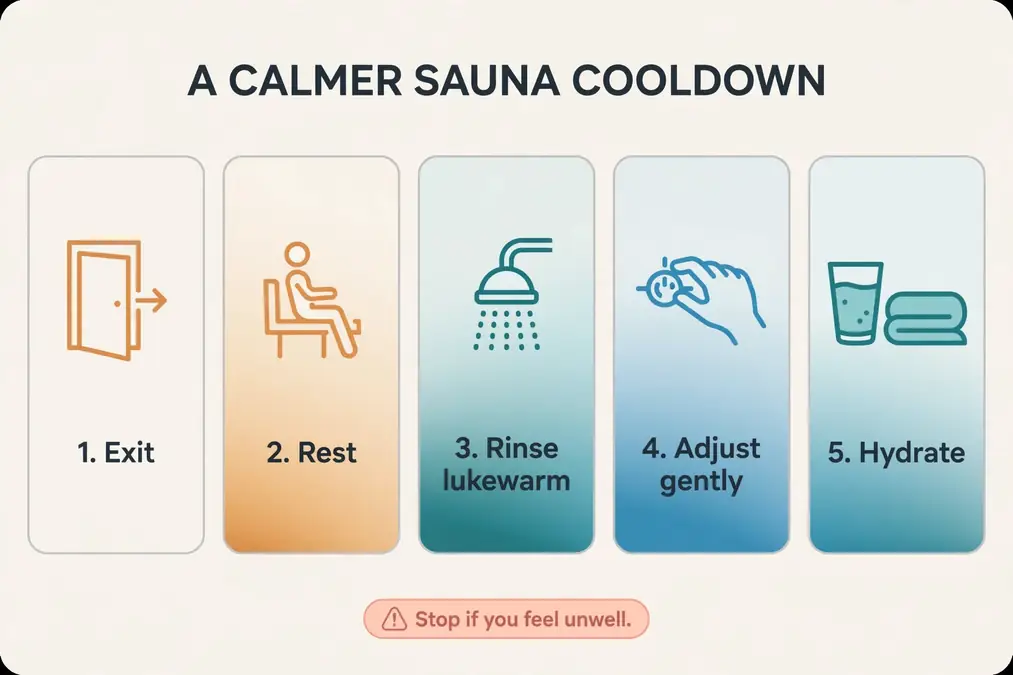
You do not need an exact minute-by-minute contrast protocol. Think of this as a comfort-first sequence for a generally healthy adult rather than a medical prescription.
- Exit the sauna before you feel unwell. Follow the facility’s instructions and choose a session length appropriate for your experience. Beginners should start conservatively. For a fuller explanation, read how long to stay in a sauna.
- Pause somewhere cooler. Sit or stand comfortably, breathe normally, and let the initial wave of heat settle. Stand up slowly if you are feeling a little unsteady. Do not hurry into a shower just to meet a timer.
- Take stock before stepping under running water. If you feel faint, weak, nauseated, or have chest discomfort, do not continue a shower routine. Move to safety and follow the warning-sign guidance below.
- Begin lukewarm. Rinse sweat from your body with a gentle stream. Avoid water so hot that it leaves you more flushed or water so cold that it makes you gasp.
- Adjust only if comfortable. Lower the temperature toward cool if you enjoy it. You do not need to end icy cold, keep your whole body under cold water, or follow a fixed countdown.
- Dry off, rest, and drink water. Sit somewhere comfortable, allow your temperature and breathing to return toward normal, and replace fluids lost through sweating.
You can also follow our sauna hydration and electrolytes guide for an overview of fluid replacement after heavy sweating.
Which shower should you choose for your goal?
If you want to feel refreshed
Try a short, comfortable cool rinse after resting. There is no requirement to go to the coldest setting. If the water triggers breathlessness or intense discomfort, warm it up or stop.
If you want to unwind before bed
A lukewarm rinse may feel calmer than a sharp blast of cold water, but sleep responses vary. There is not strong direct evidence that either post-sauna shower choice consistently produces better sleep. Give yourself time to cool and settle before getting into bed. Read our sauna-before-bed guide for routine and timing considerations.
If you just finished a workout
Avoid piling on extra heat if exercise already left you overheated. Rest, rehydrate, and use lukewarm or comfortably cool water. Research about cold-water immersion for exercise recovery cannot be treated as proof that a quick shower after sauna improves athletic recovery.
If you are new to sauna
Choose the least dramatic approach: a short sauna visit, a cool-room break, then a lukewarm shower. You can experiment with slightly cooler water another day if you feel well and have no reasons to avoid it.
If you are using a sauna and hot tub together
Do not treat a hot tub as an automatic cooling step just because its water feels cooler than sauna air. It still exposes you to substantial heat. Take a true cooling break, shower off sweat, and only consider another heat session if you feel completely recovered. See our sauna and Jacuzzi sequence guide.
Who should avoid sudden cold showers after sauna?
A cold shower is different from an ice plunge, but it can still create abrupt temperature stress. Speak with your healthcare professional before sauna-to-cold routines if you have heart disease, an arrhythmia, poorly controlled blood pressure, a history of fainting, or other problems affecting circulation. Pregnancy, older age, and certain medications also call for individualized guidance.
Brown University Health specifically warns people with heart disease against sudden ice-water exposure after sauna; Cleveland Clinic also advises caution with cold showers for people with heart-rhythm concerns. The safest choice for any individual depends on their clinical circumstances.
People with reduced temperature sensation or poor balance should also avoid experimenting with extreme settings without appropriate medical guidance. A routine that feels invigorating to a healthy person may not be appropriate for someone with neuropathy or reduced ability to sense the water temperature.
Red flags: when shower temperature is not the main issue
- Chest pain, significant shortness of breath, fainting, or new confusion: seek urgent medical care.
- Severe headache, worsening nausea, marked weakness, or persistent dizziness: stop the heat exposure, move somewhere safe, and get medical assessment promptly.
- If you suspect heatstroke (especially confusion or collapse), call emergency services and begin immediate cooling while help is arranged. Do not delay treatment to follow a gradual shower routine. See the American Heart Association’s first-aid guidance.
For prevention and other sauna warning signs, use our sauna safety checklist.
Common post-sauna shower mistakes
- Going from extreme heat straight to icy water: skip the shock approach, especially if you have a cardiovascular risk.
- Taking another very hot shower because it feels relaxing: this can delay cooling and may prolong discomfort.
- Forcing yourself to finish a timer: no particular number of seconds under cold water is required.
- Ignoring dizziness: sitting down and addressing symptoms is safer than standing under water.
- Skipping fluids: even the perfect shower temperature cannot replace sweat losses.
- Assuming contrast makes a sauna medically therapeutic: evidence for many dramatic wellness claims remains limited.
Frequently asked questions
Should you take a cold shower immediately after sauna?
Not necessarily. A short cooling break first is a sensible default. Begin with lukewarm water and go cooler only if comfortable and appropriate for your health. Avoid sudden icy exposure if you have heart or blood-pressure concerns.
Is a warm shower better than a cold shower after sauna?
A lukewarm shower is often the easiest, most tolerable option for beginners or people who dislike cold water. A comfortably cool rinse may feel more refreshing. Neither has been proven universally best for everyone.
Do cold showers cancel the benefits of a sauna?
There is no good evidence that a brief, comfortable cool rinse “cancels” sauna use. However, there is also insufficient evidence to promise that cold showers add special health benefits. Aim for a safe, enjoyable recovery rather than a particular physiological effect.
How cold should the shower be after sauna?
There is no established medically optimal shower temperature after sauna. Start lukewarm, lower the temperature gradually if desired, and stop well before the water feels shocking or uncomfortable. Medical risks matter more than a target number.
How long should I wait to shower after sauna?
There is no one-size-fits-all waiting time. Pause until your breathing is comfortable, you feel steady, and the initial sensation of overheating has eased. Longer breaks may be needed after a hotter session or strenuous exercise.
Why am I still sweating after a shower?
After-sweating can happen because the body remains warm after the sauna, especially if you shower quickly or use hot water. Spend more time in a cooler room, choose lukewarm or comfortable cool water, and rest before dressing. If sweating comes with dizziness, weakness, or other concerning symptoms, seek medical advice.
Should I shower before sauna as well?
Yes. In shared facilities, showering beforehand is good hygiene, and you should follow posted rules. A post-sauna rinse can remove sweat before you dress or use another shared facility. Read our sauna etiquette guide.
Is alternating hot and cold water after sauna necessary?
No. Some people enjoy contrast showers, but there is no medical requirement to alternate temperatures. Repeated extremes may increase stress rather than help, particularly for anyone with cardiovascular or heat-tolerance concerns.
The bottom line
After sauna, choose comfort and gradual cooling—not the hottest or coldest setting. For many healthy adults, the best default is a short rest followed by a lukewarm shower, with the option to make it comfortably cool. Very hot water can delay cooling; icy water can be an unnecessary shock.
You can make the rest of your routine as simple as this: sauna, cool-room break, gentle shower, water, and rest. That is a more useful goal than trying to prove you can tolerate extremes.
Sources and further reading
- Harvard Health — Can regular sauna sessions support a healthy heart? (Dec. 2025): cardiovascular responses and gradual-cooling guidance.
- Cleveland Clinic — Sauna Benefits (medical review): dehydration, session limits, and warning signs.
- Cleveland Clinic — Does Taking Cold Showers Benefit Your Health? (Feb. 2024): limited claims and heart-rhythm cautions.
- Brown University Health — Saunas and Your Heart (clinical advice): abrupt cold exposure in heart disease.
- National Collaborating Centre for Environmental Health — Sauna Safety Rapid Review (2026): rapid cooling and cold-shock risks.
- UNSW Sydney — Five Tips to Enjoy Sauna Safely (Aug. 2025): conservative, symptom-led cooling advice.
Medical information note: This article is general education, not individual medical advice. If you have cardiovascular or blood-pressure problems, are pregnant, or use medication affecting heat tolerance, ask a qualified healthcare professional what is safe for you.