
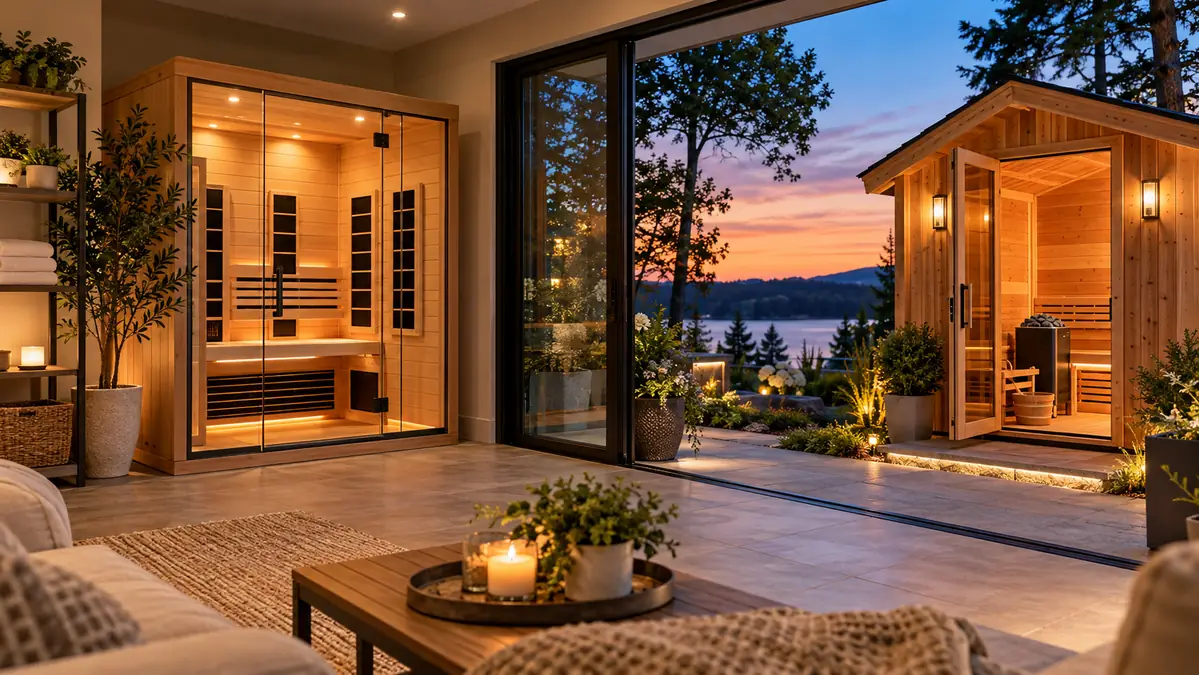
Home Sauna Buying Guide: How to Choose the Best Sauna for Your Space, Budget & Heat Style

Buying a home sauna looks simple until you start comparing heat types, electrical requirements, cabin sizes, installation needs, and total project cost. A model can look perfect online and still be the wrong fit for your room, breaker panel, or daily routine.
The smartest way to shop is to make the big decisions in the right order: location → heat style → usable size → electrical requirements → total installed budget → warranty and support. This guide walks through each step so you can choose a sauna that fits your home instead of forcing your home to fit the sauna.
Before You Shop: Decide What You Actually Want From a Sauna
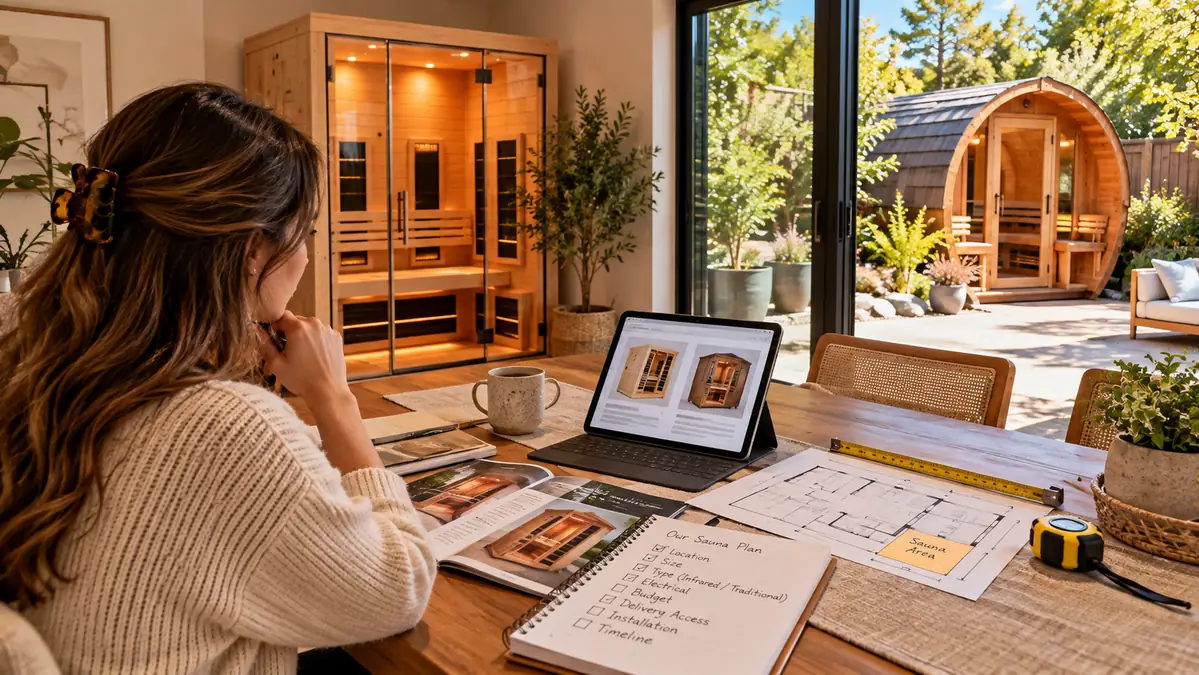
Start with the experience you want, not a brand name. Two people can spend the same amount of money and need completely different saunas.
For gentle, convenient daily heat
An infrared cabin can make sense if you want a lower-air-temperature experience, quicker warm-up, and a compact indoor setup. Many smaller infrared units are designed for straightforward residential installation, though you still need to verify the exact electrical specification before buying.
For traditional high heat and steam
A traditional sauna is the better match if you want hotter air, a heater with stones, and the ability to pour water on the rocks for bursts of steam. This style usually asks more from the installation, especially when you move into larger electric heaters or dedicated outdoor cabins.
For solo use, couples, or family use
Do not trust the “1-person,” “2-person,” or “4-person” label by itself. What matters is the actual interior bench width, legroom, heater placement, and whether you want to sit upright or stretch out. A cabin sold as a two-person sauna may technically fit two adults but still feel cramped for longer sessions.
For indoor convenience or a backyard retreat
An indoor sauna is easy to use year-round and can become part of a normal evening or post-workout routine. An outdoor sauna gives you more freedom with size and atmosphere, but it adds questions about foundation, weather exposure, delivery access, and electrical distance.
If temperature is part of your decision, use the site’s sauna temperature guide to compare the heat ranges of different sauna styles without turning this buying guide into a temperature manual.
Infrared vs Traditional Sauna: Which Fits Your Home Better?
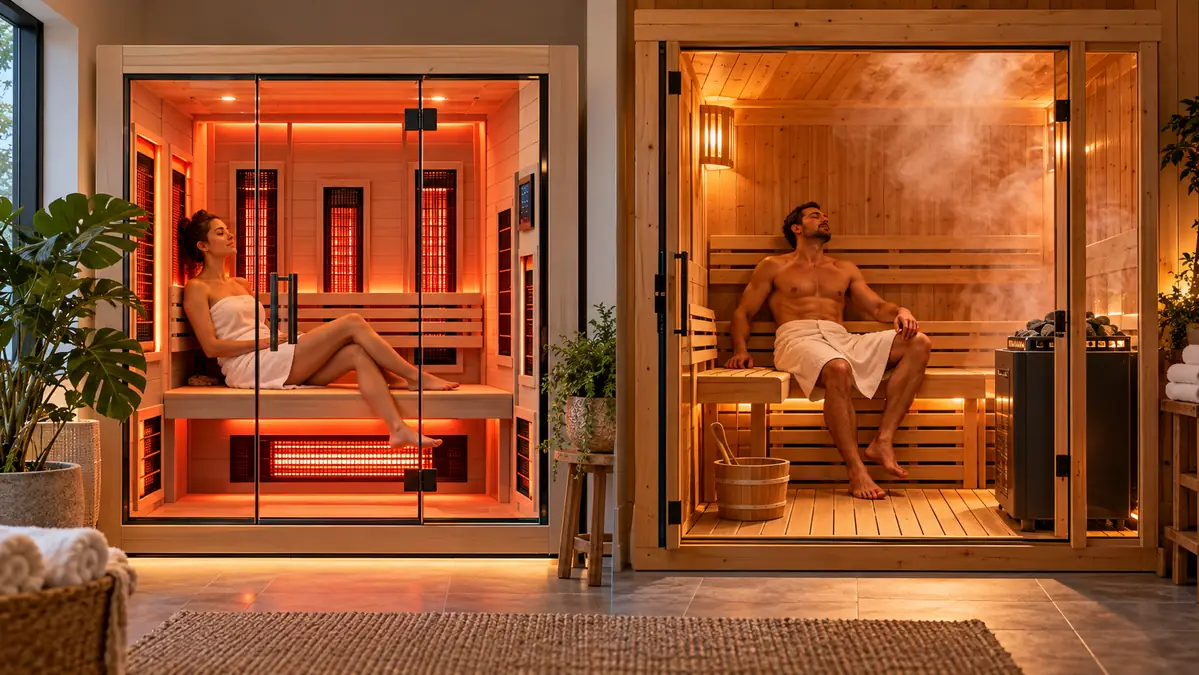
This is the first major fork in the buying process. Infrared and traditional saunas are not simply “budget” and “premium” versions of the same thing. They create heat differently and lead to different installation and ownership experiences.
Infrared sauna: what changes for the buyer
Infrared panels warm the body more directly while the cabin air stays cooler than a traditional sauna. For many homeowners, that means a gentler session and a compact cabin that is easier to place indoors. Some smaller units can use standard household power, while larger or higher-output models may require a dedicated circuit.
When comparing infrared models, look beyond maximum temperature. Heater placement, lower-body coverage, interior width, panel quality, controls, and warranty support often matter more in day-to-day use.
Traditional sauna: what changes for the buyer
A traditional sauna uses a heater to warm the air and sauna stones. You get the classic hot-room experience and, where the heater is designed for it, the option to add water to the stones for steam. The tradeoff is that you need to think more carefully about heater sizing, clearances, ventilation, and electrical requirements.
If you want a deeper explanation of the classic setup, see the site’s traditional sauna guide. For heater-specific planning, use the sauna heater guide.
Infrared vs traditional at a glance
| Factor | Infrared | Traditional |
|---|---|---|
| Heat feel | Gentler air temperature; radiant heat | Hotter room; classic sauna feel |
| Warm-up | Often faster | Usually longer |
| Steam from stones | No | Yes, with a suitable heater |
| Small-space options | Strong | More limited |
| Installation complexity | Often lower | Often higher |
| Best fit | Convenience and compact indoor use | Traditional high-heat experience |
Do not choose between them based on exaggerated wellness promises. Choose the heat style and installation profile you are most likely to use consistently.
Measure the Space Before You Fall in Love With a Model
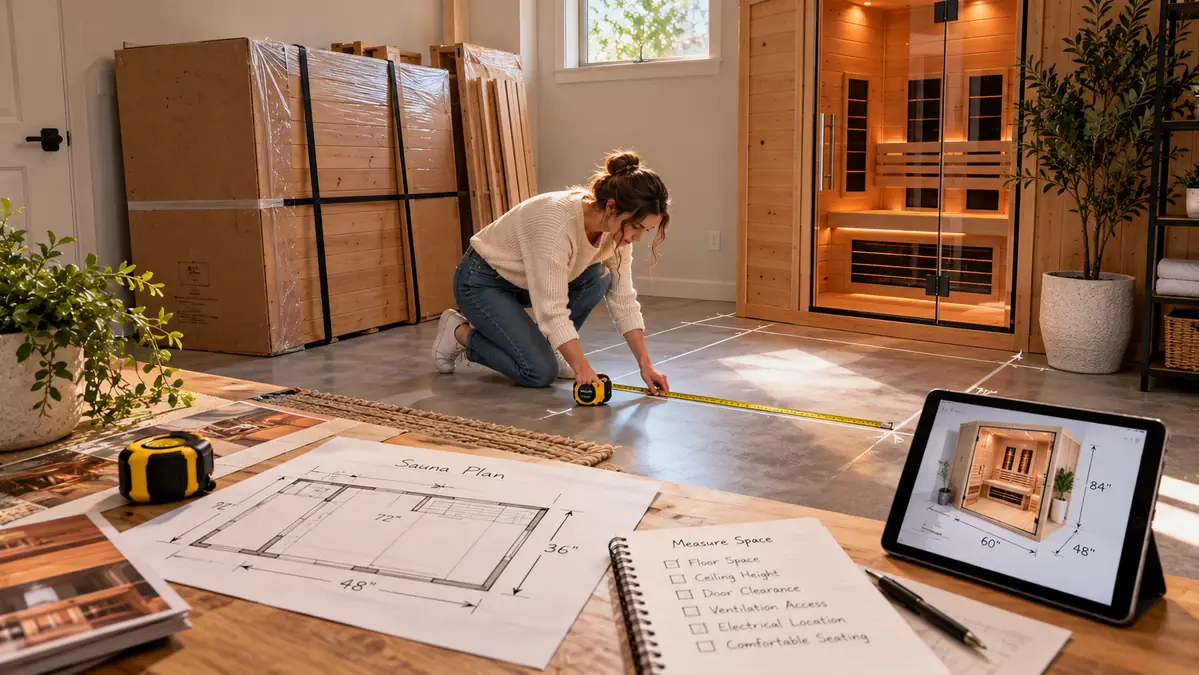
Space problems are expensive because they often appear after the sauna has already been purchased. Measure the installation area first, then measure the route the sauna has to travel to get there.
Measure usable floor space
Record the available width, depth, and ceiling height. Then compare those measurements with the sauna’s exterior dimensions, not just the interior bench size.
Also check:
- Door swing and entry clearance
- Recommended wall clearances
- Access to controls and service panels
- Room for the heater and safety clearances
- Floor suitability
- Ventilation requirements
Measure the delivery route
A sauna that fits the final room can still be impossible to deliver. Measure exterior doors, hallways, stairwells, basement turns, and any tight corners. Find out whether the sauna arrives as flat panels, large wall sections, or a mostly assembled cabinet.
Think about comfort, not advertised capacity
If you want to lie down, stretch your legs, or sit beside another adult without touching shoulders, size up. Interior dimensions are far more useful than a marketing label.
Indoor placement checklist
- Suitable, level floor
- Enough clearance around the unit
- Convenient electrical access
- Appropriate ventilation for the sauna type
- A location you will actually use regularly
Outdoor placement checklist
- Level pad, slab, or suitable foundation
- Drainage around the structure
- Weather exposure and roof protection
- Distance to electrical service
- Privacy and walking access
- Room for delivery and assembly
Check the Electrical Requirements Before You Order
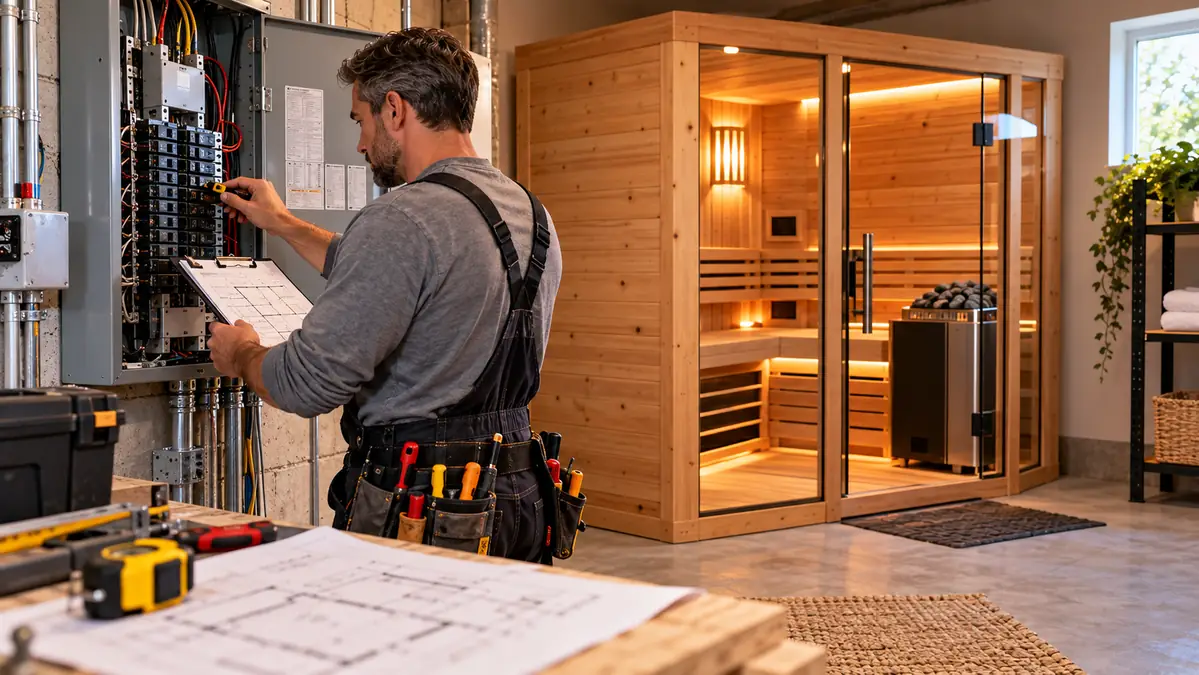
Electrical requirements are one of the most common surprise costs in a home sauna project. The safest rule is simple: never assume the power requirement from the sauna type alone.
Standard outlet vs dedicated circuit
Some compact infrared cabins are designed for standard household power. Larger infrared units and many traditional electric saunas require dedicated higher-voltage circuits. The exact requirement depends on the model, heater output, amperage, and manufacturer instructions.
Check the breaker panel first
Before ordering, verify:
- Required voltage
- Required amperage
- Whether a dedicated circuit is required
- Whether your panel has available breaker capacity
- Whether local electrical code adds requirements
If the sauna needs electrical work, get an electrician’s quote before placing the order. That prevents a “good deal” on the cabin from becoming an unexpectedly expensive installation.
Heater sizing matters too
For traditional electric saunas, the heater must be matched to the cabin volume and construction. An undersized heater can struggle to reach or maintain the intended heat; an oversized heater can create its own installation and control problems. Follow the sauna and heater manufacturer’s sizing requirements rather than using a generic rule alone.
What Will a Home Sauna Really Cost?
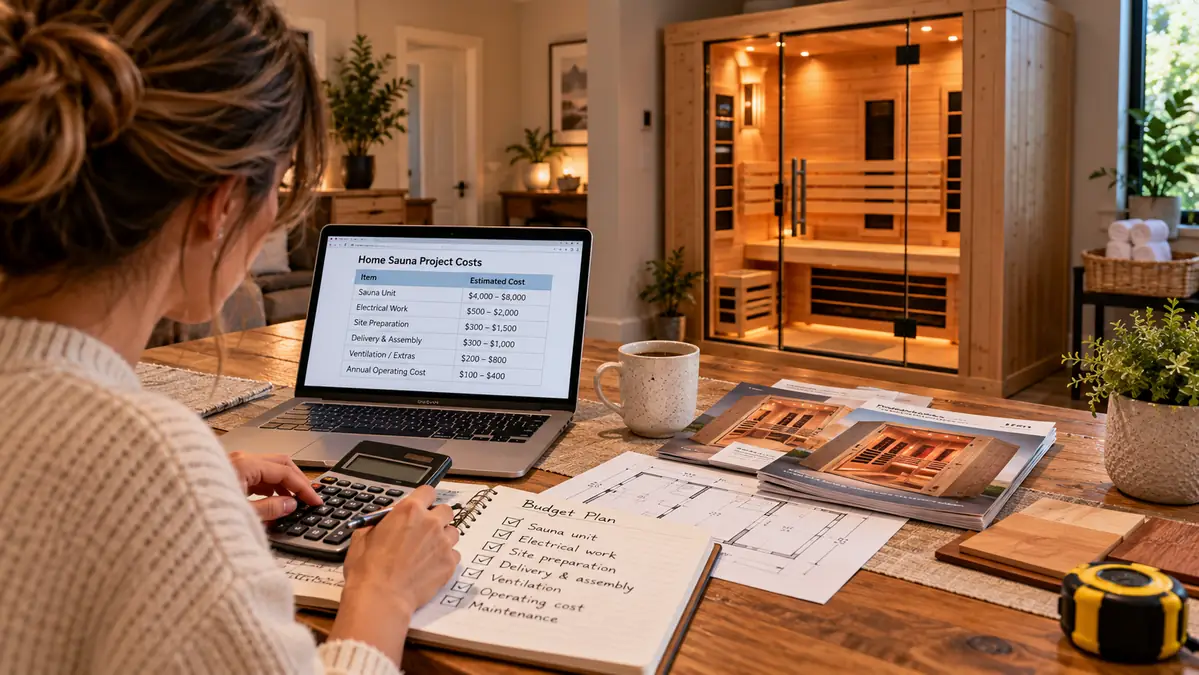
The sticker price is only one line in the budget. A realistic home sauna budget includes the unit, delivery, electrical work, site preparation, assembly, and ongoing operating cost.
Purchase price
In the current U.S. market, small and mid-size home saunas span a wide range. One- to two-person infrared cabins often start in the low-thousands, while larger premium infrared models, traditional rooms, and outdoor cabins can climb well beyond that. Materials, heater system, insulation, glazing, capacity, and warranty all affect price.
Electrical work
If a new dedicated circuit is required, include the electrician in your budget from the beginning. Long wire runs, panel upgrades, outdoor trenching, or difficult access can increase cost.
Site preparation
Outdoor installations may need a concrete pad, pavers, deck reinforcement, drainage work, or a weather-ready base. Indoor installations may need flooring preparation, ventilation improvements, or a more suitable location.
Delivery and assembly
Large panels, steep stairs, narrow gates, and long carry distances can all turn “delivery included” into a more complicated project. Ask what happens from the curb to the final installation location.
Running and maintenance cost
Operating cost depends on heater wattage, local electricity rates, warm-up time, session length, insulation, and how often you use the sauna. For a dedicated breakdown, use the site’s sauna cost-to-run guide.
Buying tip: compare total installed cost, not just purchase price. A slightly more expensive sauna that fits your existing electrical setup may cost less overall than a cheaper model that requires major upgrades.
How Many People Should Your Sauna Actually Fit?
Capacity labels are useful for browsing, but they are not enough for a buying decision.
1-person sauna
A one-person cabin works well when floor space is tight and sessions are almost always solo. Check shoulder room, knee clearance, and whether the heater or infrared panels make the seat feel narrower than the exterior dimensions suggest.
2-person sauna
A two-person sauna can be a good couple’s setup, but “fits two” does not always mean “comfortable for two.” Compare the actual bench width with the body space you want during a 15- to 20-minute session.
3- to 4-person sauna
Larger cabins are useful if you want extra legroom, occasional family use, or enough bench length to stretch out. Remember that more interior volume can also increase heater and electrical requirements.
Choose interior dimensions over the label
When two models have the same advertised capacity, choose using the interior measurements, bench depth, heater position, and door layout. That information predicts comfort better than the marketing name.
Indoor vs Outdoor Home Sauna
Where the sauna lives changes how often you use it and how complicated the project becomes.
Indoor sauna advantages
- Easy access in every season
- No direct rain or snow exposure
- Convenient for daily routines
- Often shorter electrical runs
Indoor sauna limitations
- Uses valuable interior floor space
- Delivery can be difficult
- Ventilation and clearances still matter
- Large traditional rooms may require more planning
Outdoor sauna advantages
- More freedom with cabin size and style
- Strong backyard-spa atmosphere
- Keeps the sauna separate from living areas
- Works well with traditional cedar cabin designs
Outdoor sauna limitations
- Foundation or pad requirements
- Longer electrical runs may cost more
- Weather durability matters
- Delivery equipment needs access
- You may use it less often if the route is inconvenient
For outdoor planning, the same principle used in good hot tub layouts applies: make the path easy, private, safe, and comfortable enough that you will use the space frequently.
What Features Are Actually Worth Paying For?
Home saunas now come with long feature lists, but only a few features consistently affect everyday use.
Heater quality and output
The heating system is the heart of the sauna. Look for clear specifications, an appropriate output for the cabin, straightforward controls, replacement parts, and a warranty that actually covers the important components.
Bench comfort and heater placement
A beautiful cabin is frustrating if the bench is too shallow or the heater takes up your legroom. In infrared cabins, pay attention to where panels are located around the back, sides, legs, and lower body.
Insulation and construction
Check wall construction, door fit, glazing, hardware, floor design, and weather resistance where relevant. Outdoor saunas should be built for their climate rather than simply placed outside because the listing photo shows a backyard.
Controls you can actually use
Temperature, timer, and lighting controls should be simple and easy to reach. App control can be useful, but it should not compensate for awkward physical controls or weak core performance.
Warranty and replacement parts
Read the warranty before buying, not after something fails. Check coverage for the heater, infrared panels, electrical controls, structure, glass, labor, and shipping. Also confirm how replacement parts are supplied several years after purchase.
Nice-to-have features
- Bluetooth speakers
- Chromotherapy or colored lighting
- Exterior accent lights
- App controls
- Decorative accessories
These can improve the experience, but they should come after fit, heater quality, electrical compatibility, bench comfort, and warranty.
Be cautious with dramatic wellness marketing
Sauna use is popular for relaxation and heat exposure, but product marketing often stretches far beyond what a buying guide can responsibly promise. Do not pay extra simply because a manufacturer uses terms such as “medical grade,” “detox technology,” or another proprietary phrase without meaningful specifications behind it.
If health benefits are part of your interest, use a dedicated evidence-focused resource rather than letting a sales page make the decision for you. Hot Tub Patio’s sauna benefits guide is a better place to explore the broader wellness discussion.
Best Home Sauna Setup by Buyer Type
Instead of asking for one universal “best sauna,” match the setup to the buyer.
Best setup for small spaces
Prioritize compact exterior dimensions, usable interior width, realistic door clearance, and an electrical setup your home can support without major work. A small sauna that fits comfortably is better than a larger model squeezed into the wrong room.
Best setup for beginners
Prioritize simple controls, comfortable heat, clear safety instructions, strong customer support, and easy access. Beginners are more likely to build a consistent routine with a sauna that feels straightforward rather than intimidating.
Best setup for couples
Look for generous bench width and legroom rather than the smallest model labeled “2-person.” If both people will use it together regularly, comfort is worth the extra footprint.
Best setup for backyard use
Prioritize outdoor-rated construction, a proper base, weather protection, delivery access, and a realistic electrical plan. Think about the route from the house to the sauna in bad weather, not just how good it looks in summer.
Best setup for traditional steam lovers
Choose a true traditional sauna with a correctly sized heater and stones, then make sure the room, ventilation, clearances, and electrical system match the manufacturer requirements. If the steam ritual is the reason you want a sauna, do not compromise it away by buying a different heat style because it is easier to install.
8 Home Sauna Buying Mistakes to Avoid
- Buying before checking electrical requirements. The circuit can change the total project cost significantly.
- Trusting the capacity label. Check interior measurements and bench width.
- Measuring the room but not the delivery path. Doorways and stairs can stop the project before installation starts.
- Budgeting only for the sauna. Include delivery, site prep, electrical work, and assembly.
- Choosing by maximum temperature alone. Heat quality, heater placement, comfort, and control matter more than one headline number.
- Ignoring warranty exclusions. Read what is covered, for how long, and who pays freight or labor.
- Paying heavily for features you will rarely use. Core build quality comes first.
- Buying on health marketing instead of fit and usability. The best sauna is the one that works safely in your home and that you will actually use.
Final Home Sauna Buying Checklist
Before you place an order, confirm every item below:
- Installation location chosen
- Exterior sauna dimensions fit
- Interior bench size is comfortable
- Door swing and service clearances work
- Delivery path has been measured
- Infrared vs traditional heat style is decided
- Voltage and amperage requirements are verified
- Breaker capacity has been checked
- Electrical quote obtained if required
- Ventilation and site preparation considered
- Total installed budget calculated
- Warranty terms read
- Replacement parts and customer support checked
- Return and damage policies reviewed
- Your realistic usage frequency justifies the purchase
Once the sauna is installed, use the correct temperature and session length for your experience level. The site’s guide on how long to stay in a sauna is a useful next step for safe first sessions.
FAQs
What should I look for when buying a home sauna?
Start with the installation location, heat type, usable interior size, electrical requirements, total installed cost, and warranty. Features such as speakers and lighting should come after those basics. Measure both the final space and the delivery route before ordering.
Is an infrared or traditional sauna better for home use?
Neither is universally better. Infrared usually suits buyers who want gentler heat, compact indoor options, and potentially simpler installation. Traditional saunas suit buyers who want hotter air, sauna stones, and the classic steam experience. Choose based on the experience and installation your home can support.
Do home saunas need 240V power?
Not all home saunas need 240V. Some smaller models are designed for standard household power, while many larger infrared units and traditional electric saunas require a dedicated higher-voltage circuit. Always check the exact manufacturer specification and have an electrician verify the circuit when required.
How much space do you need for a home sauna?
You need enough room for the sauna’s exterior dimensions plus the manufacturer’s required clearances, door movement, service access, and ventilation. You should also measure every doorway, hallway, stair, and turn on the delivery route.
Is a 2-person sauna comfortable for two adults?
It can be, but the label alone does not guarantee comfort. Check the actual interior bench width, depth, legroom, and heater placement. If two adults will use the sauna together regularly, a larger nominal capacity may feel much better.
What extra costs should I budget for when installing a home sauna?
Possible extra costs include electrical work, delivery, assembly, foundation or floor preparation, outdoor trenching, ventilation improvements, permits where required, and ongoing electricity. Compare total installed cost rather than the cabin price alone.
Is a home sauna worth it?
A home sauna is more likely to be worth the investment when you have a suitable location, expect to use it regularly, and have budgeted for the full installation rather than only the purchase price. Convenience and consistent use usually matter more than buying the most expensive model.
Bottom Line
The best home sauna is not a single model. It is the sauna that fits your preferred heat style, available space, electrical system, budget, and routine without forcing expensive compromises after delivery.
Choose the location first. Decide between infrared and traditional heat second. Then verify interior comfort, electrical requirements, total installed cost, and warranty support. When those pieces fit, the feature list becomes much easier to judge—and you are far more likely to end up with a sauna you actually enjoy using.