
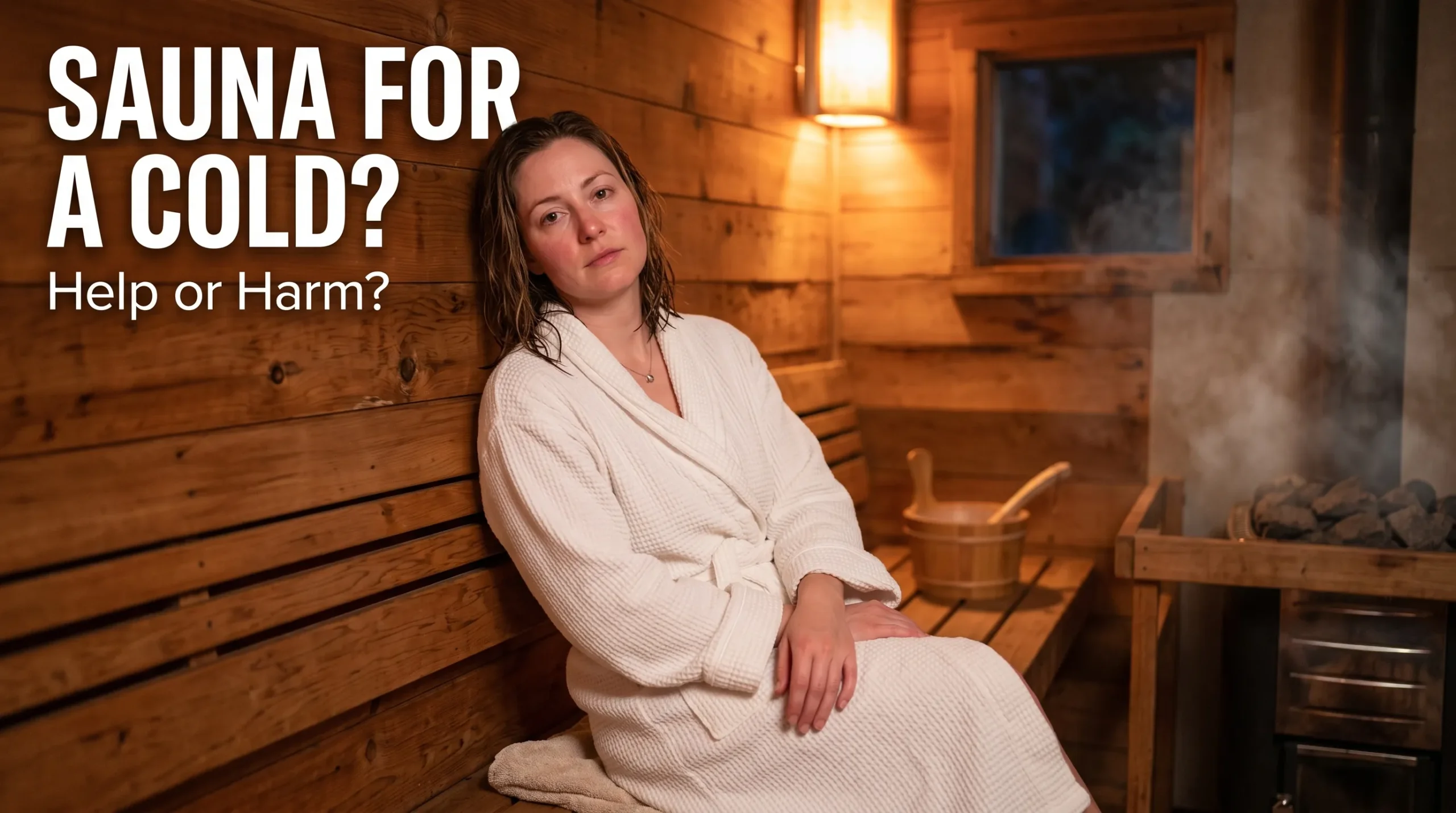
Is a Sauna Good for a Cold? What It Can and Cannot Do

Is a Sauna Good for a Cold? What It Can and Cannot Do
Is sauna good for a cold? When you have a stuffy nose or a mild cold, warmth can feel comforting. A sauna may make some people feel temporarily more relaxed, but that feeling is not proof that heat is treating the infection.
This guide separates temporary comfort from treatment, explains what the evidence does and does not show, and outlines when you should avoid sauna use while sick.
What a Sauna May Help With
Warmth or moisture may temporarily feel soothing for nasal stuffiness in some people. Any relief is subjective and short term. It does not mean that a sauna clears a virus, treats a sinus infection, or makes the illness resolve faster.
If heat makes you feel worse, leave immediately. You do not need to produce sweat to recover, and pushing through discomfort can add unnecessary heat and fluid stress.
What Sauna Heat Cannot Do
- It has not been shown to cure a common cold or influenza.
- It does not remove a virus from your body through sweat.
- It should not replace rest, fluids, prescribed care, or advice from a qualified clinician.
- One sauna session should not be presented as a reliable way to prevent an infection.
A randomized trial found no meaningful improvement in overall cold symptoms from hot dry air. That evidence supports a careful conclusion: sauna may feel pleasant for some people, but it should be treated as optional comfort rather than an infection treatment. See the published sauna and cold-symptom trial for the study details.
Cold Symptoms and Flu Symptoms Are Not a Sauna Treatment
People often use “cold,” “flu,” and “a virus” interchangeably, but the labels do not tell you whether heat is safe. A mild stuffy nose with no fever is different from fever, marked weakness, chest symptoms, or trouble breathing.
Do not use a sauna as a way to treat influenza or another respiratory infection. If you are unsure what is causing your symptoms, or they are severe or worsening, use appropriate medical advice rather than trying to sweat through them.
When to Avoid a Sauna While Sick
Skip the sauna if you have a fever, feel faint or dizzy, are unusually weak, or are dehydrated. Additional heat can increase strain and fluid loss when your body is already working to regulate temperature.
- Fever: Avoid adding heat stress and focus on recovery.
- Dehydration: Do not combine fluid loss from illness with deliberate sweating.
- Dizziness or feeling faint: Leave the heat and cool down safely.
- Significant weakness: Rest instead of testing your heat tolerance.
- Chest pain, chest tightness, or breathing difficulty: Do not use a sauna; seek appropriate medical evaluation.
- Worsening symptoms: Stop and choose rest or medical guidance instead.
If you use medication or have a condition that affects your response to heat, ask your healthcare professional whether sauna use is appropriate. Do not rely on a general online rule for a personal medical decision.
A Practical Decision Table
| Situation | Sauna? | Why | Better next step |
|---|---|---|---|
| Mild stuffy nose, no fever, otherwise stable | Possible temporary comfort for some people | Warmth or moisture may feel soothing, but it is not treatment | Keep it optional and stop if you feel worse |
| Fever | Avoid | Extra heat may increase strain and dehydration risk | Rest and seek appropriate medical advice |
| Dehydration | Avoid | Sweating may increase fluid loss | Recover hydration before considering heat |
| Dizziness or feeling faint | Avoid | Heat may worsen lightheadedness | Leave the heat, cool down, and recover |
| Significant weakness | Avoid | Your body may not tolerate additional heat stress | Rest instead of pushing through |
| Chest pain, chest tightness, or breathing difficulty | Avoid | These symptoms need attention, not heat exposure | Seek appropriate medical evaluation |
| Acute symptoms improving and energy returning | Only consider it when you feel stable | Resume normal activities gradually | Follow the sauna or device instructions and stop if unwell |
If You Choose to Use a Sauna for Mild Symptoms
There is no universal sick-day temperature or session length that is safe for everyone. Follow the sauna or device manufacturer’s instructions, do not push your normal tolerance, and avoid using heat when you feel unwell.
- Drink normally and avoid entering dehydrated.
- Do not combine sauna use with alcohol.
- Leave immediately if you feel dizzy, weak, nauseated, faint, short of breath, or worse.
- Cool down gradually and allow yourself to recover.
- Avoid public saunas while you may be contagious.
For broader preparation and fluid-loss guidance, review our sauna safety guide and sauna hydration and electrolytes guide. If dizziness is a recurring concern, see our guide to dizziness after sauna.
Rest and Recovery Come First
Rest, normal hydration, sleep, and appropriate medical care are more important than trying to create a heavy sweat. A sauna can be left out of your routine while you recover without losing a proven treatment.
For general sauna timing when you are well, follow the manufacturer’s instructions and use our guide to how long to stay in a sauna. That timing information should not be treated as a prescription for sauna use during illness.
Frequently Asked Questions
Is a sauna good for a cold?
A sauna may feel temporarily soothing for some mild nasal symptoms, but it has not been shown to cure a cold or reliably shorten the illness.
Can you sweat out a cold?
No. Sweating does not remove the virus from your body. Any relief after heat exposure is temporary comfort, not proof of treatment.
Can sauna help congestion?
Warmth or moisture may temporarily feel soothing for nasal stuffiness in some people. It does not treat the infection, and relief is not guaranteed.
Can I use a sauna with a fever?
Avoid adding heat stress when you have a fever. Rest and seek appropriate medical advice, especially if symptoms are severe or worsening.
Is sauna safe when you have the flu?
Do not use sauna as a flu treatment. Avoid it when you have fever, dehydration, weakness, chest symptoms, breathing difficulty, or feel generally unwell.
When should I get medical help instead of using a sauna?
For chest pain, breathing difficulty, fainting, severe weakness, or worsening symptoms, seek appropriate medical evaluation rather than using a sauna.
Bottom Line
Sauna heat may provide temporary comfort for some people with mild cold symptoms, but it is not a cure, does not sweat out an infection, and should not replace rest or medical care. Avoid it with fever, dehydration, dizziness, significant weakness, chest symptoms, breathing difficulty, or any worsening illness.