Hot Tub Water Care Troubleshooting Guide

Most hot tub water problems are easier to fix than they first appear. Once you understand the connection between sanitizer, pH, filtration, and regular maintenance, troubleshooting becomes much less stressful.
Start with testing the water before adding chemicals, follow a simple weekly routine, and handle small issues early. Clean, balanced water is much easier to maintain than trying to recover neglected water later.
Hot tub care gets simpler with practice, and a few consistent habits can keep your spa clean, clear, and ready for your next soak.
What Is Hot Tub Water Care Troubleshooting?
Hot tub water care troubleshooting is the process of identifying and fixing problems like cloudy water, foam, odors, algae, and chemical imbalance so your spa water stays clean, safe, and comfortable.
Most water issues happen because hot tubs operate in warm water with heavy circulation and regular bather use. Heat, body oils, lotions, sweat, and sanitizer breakdown all affect water chemistry over time.
You may notice that several problems happen together. For example, low sanitizer can lead to cloudy water, bad smells, and bacteria buildup at the same time.
Learning the basics of hot tub water balance maintenance makes troubleshooting much easier because you can catch small problems before they turn into expensive ones.
Why Water Problems Happen in Hot Tubs
Hot tubs need constant water care because the water stays hot and recirculates in a smaller space than a swimming pool.
Common causes of water problems include:
- Low chlorine or bromine
- Poor filtration
- High or low pH
- High alkalinity
- Body oils and lotions
- Dirty filters
- Old water
- Heavy bather load
- Infrequent shocking
A common mistake hot tub owners make is adding more chemicals before testing the water first. That usually creates even more imbalance.
Quick Hot Tub Water Troubleshooting Chart
| Problem | Most Likely Cause | Quick Fix |
|---|---|---|
| Cloudy water | Low sanitizer or dirty filter | Shock water and clean filter |
| Green water | Algae or metal contamination | Shock and rebalance water |
| Foam | Oils, soap, or lotion residue | Add shock and rinse filters |
| Strong odor | Chloramine buildup | Shock the tub |
| White flakes | Calcium scale buildup | Adjust hardness levels |
| Skin irritation | Improper pH or sanitizer | Rebalance water chemistry |
If you are unsure how much sanitizer or balancing chemical to add, use these helpful hot tub calculation tools to avoid overcorrecting the water.
Water Recovery Process: Fix Bad Hot Tub Water Step by Step
When your hot tub water suddenly turns cloudy, foamy, green, or develops a strong odor, avoid adding several chemicals at once. Following a consistent troubleshooting process helps you identify the real cause and prevents overcorrecting the water.
Step 1: Identify the Problem
Determine exactly what you’re seeing before adding chemicals.
- Cloudy water
- Green water
- Foam
- Strong odor
- White flakes
- Skin or eye irritation
Different symptoms often have different causes, even if they appear together.
Step 2: Test the Water
Measure:
- Sanitizer
- pH
- Total alkalinity
- Calcium hardness (if scale or flakes are present)
Write the results down before making any adjustments.
Step 3: Correct the Biggest Imbalance First
Make adjustments in this order:
- Sanitizer
- Total alkalinity
- pH
- Calcium hardness (if necessary)
Changing one thing at a time makes it easier to identify what solved the problem.
Step 4: Clean the Filter
Dirty filters continue circulating contaminants even after water chemistry has been corrected.
Rinse or deep-clean the filter before moving on.
Step 5: Shock the Water
If body oils, lotions, bacteria, or chloramines are present, add an appropriate shock treatment and run the jets with the cover open for 15 to 20 minutes.
Step 6: Retest
Allow the water to circulate for 30 to 60 minutes before testing again.
Avoid adding more chemicals until the first treatment has had time to work.
Step 7: Decide Whether to Drain and Refill
If the water remains cloudy, foamy, or foul-smelling after repeated corrections, draining and refilling the spa is usually the fastest solution.
Spa Water Troubleshooting Guide
Quick fixes for common hot tub water issues
💡 Always test your water after making adjustments and consult your spa manual for specific instructions.
Check Hot Tub Water Care Guide
Hot Tub Water Troubleshooting Checklist
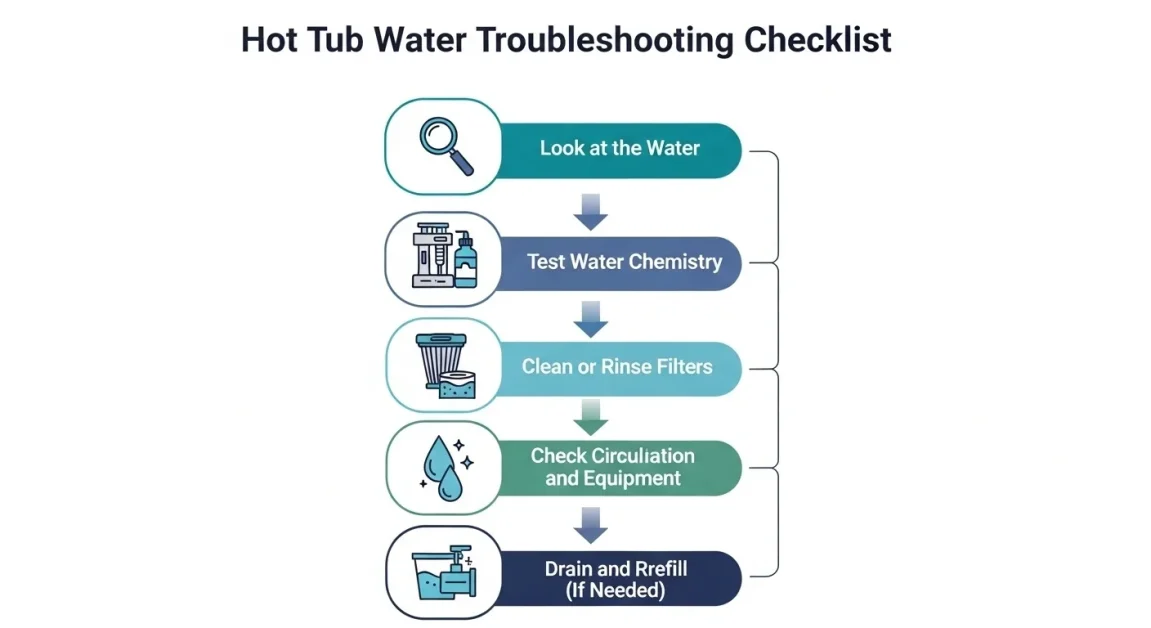
- Look at the Water
- Is it cloudy, foamy, green, or discolored?
- Take note of any strong odors (chlorine, musty, or foul).
- Test Water Chemistry
- Check pH, alkalinity, and sanitizer levels with test strips.
- Compare to the ideal ranges (pH 7.2–7.6, sanitizer 3–5 ppm).
- Adjust Chemicals
- If pH or alkalinity are off, use pH/alkalinity up or down.
- Add sanitizer if chlorine or bromine is low.
- Clean or Rinse Filters
- Remove filters, rinse with hose, or use a filter cleaner.
- Dirty filters are the number one cause of cloudy water.
- Shock the Spa
- Add a chlorine or non-chlorine shock to break down organics.
- Run jets for 15–20 minutes to circulate.
- Check Circulation and Equipment
- Make sure pumps and jets are running properly.
- Look for clogs or reduced water flow.
- Drain and Refill (If Needed)
- If water is still cloudy, foamy, or smelly after treatment, drain, scrub, and refill with fresh water.
Which Water Problems Need Immediate Attention?
Not every water issue requires the same response. Some affect appearance only, while others may make the spa unsafe until the water is corrected.
Fix Immediately
These problems should be addressed before using the hot tub:
- Green water
- Strong musty or rotten odor
- Skin or eye irritation
- Extremely cloudy water that hides the bottom
- Slimy surfaces
Fix Soon
These problems usually don’t require draining the spa immediately but should be corrected within a day.
- Persistent foam
- White flakes
- Mild cloudiness
- Scum around the waterline
Mostly Cosmetic
These issues rarely affect safety but should still be monitored.
- Light staining
- Small calcium deposits
- Slight discoloration after filling
Addressing the most serious problems first helps avoid unnecessary chemical treatments and keeps the water safe for everyone.
9 Water Care Troubleshooting Issues To Fix
1. Cloudy Water
Probable Causes:
- Dirty Filters: Filters that have accumulated dirt and debris can hinder water flow and filtration.
- Excessive Oils or Organic Matter: Lotions, body oils, and other organic materials can cloud the water.
- Improper Sanitizing: Insufficient sanitizer levels can allow bacteria and algae to thrive.
- Suspended Particles or Organic Matter: These can result from inadequate filtration or organic waste.
- Overused or Old Water: Water that hasn’t been changed in a while can accumulate impurities.
Solutions:
- Clean Filters: Use FreshWater Instant Filter Cleaner or FreshWater Filter Cleaner to clean your filters thoroughly.
- Shock the Spa: Add a shock treatment of sanitizer to oxidize and eliminate organic matter.
- Add Sanitizer: Ensure the sanitizer levels are adequate. Follow the manufacturer’s recommended dosage.
- Adjust pH and Alkalinity: Use FreshWater pH/Alkalinity Up or FreshWater Alkalinity Down to bring levels within the recommended range.
- Run Jet Pumps: Operate the jet pumps to circulate the water and help filter out suspended particles.
- Drain and Refill: If the water is old, drain the spa, clean the surfaces, and refill with fresh water.
How to Prevent Cloudy Water
- Test sanitizer two or three times each week.
- Rinse the filter every week.
- Shower before entering the spa.
- Shock the water after heavy use.
- Replace the water every three to four months.
Check Our Guide To Cloudy Hot Tub Water
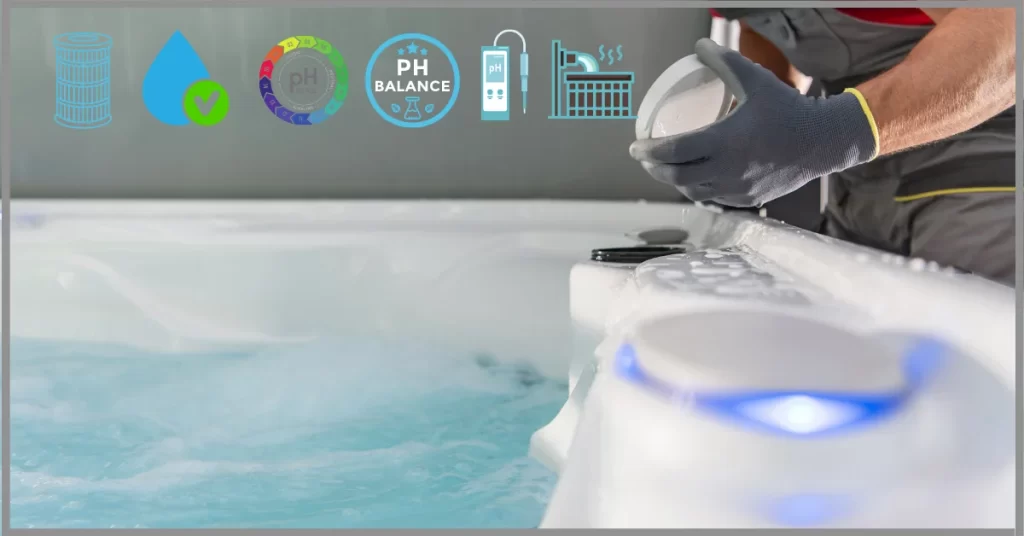
2. Water Odor
Probable Causes:
- Excessive Organics in Water: Accumulated organic matter can cause unpleasant odors.
- Improper Sanitization: Insufficient sanitization can allow bacteria to grow, leading to odors.
- Low pH: Water with a low pH can become more corrosive and odorous.
Solutions:
- Shock the Spa: Use a sanitizer to oxidize and remove organics.
- Add Sanitizer: Ensure sanitizer levels are adequate.
- Adjust pH: Use FreshWater pH/Alkalinity Up to increase the pH to the recommended range.
- Drain and Refill: If odors persist, drain, clean, and refill the spa.
3. Chlorine Odor
Probable Causes:
- High Chloramine Level: Chloramines, formed when chlorine binds with organic matter, can cause a strong chlorine smell.
- Low pH: A low pH can enhance the chlorine smell.
Solutions:
- Shock the Spa: Break down chloramines by adding a shock dose of sanitizer.
- Adjust pH: Use FreshWater pH/Alkalinity Up to bring the pH to the recommended level.
4. Musty Odor
Probable Cause:
- Bacteria or Algae Growth: These microorganisms can produce a musty smell.
Solutions:
- Shock the Spa: Use a sanitizer to kill bacteria and algae.
- Drain, Clean, and Refill: If the odor is persistent or visible, drain the spa, thoroughly clean all surfaces, and refill with fresh water.
5. Organic Buildup/Scum Ring Around Spa
Probable Cause: The buildup of Oils and Dirt: These can accumulate along the waterline, forming a scum ring.
Solutions:
- Wipe Off Scum: Use a clean rag to wipe off the buildup.
- Severe Cases: Drain the spa, clean with FreshWater Spa Shine, and refill.
Check out Dealing with White Particles in Hot Tub: Causes and Solutions.
6. Algae Growth
Probable Causes:
- High pH: Algae thrive in water with high pH levels.
- Low Sanitizer Level: Insufficient sanitizer allows algae to grow.
Solutions:
- Shock the Spa: Use a sanitizer to kill the algae.
- Adjust pH: Lower the pH to the recommended range using FreshWater pH/Alkalinity Down.
- Maintain Sanitizer Level: Keep sanitizer levels steady to prevent future growth.
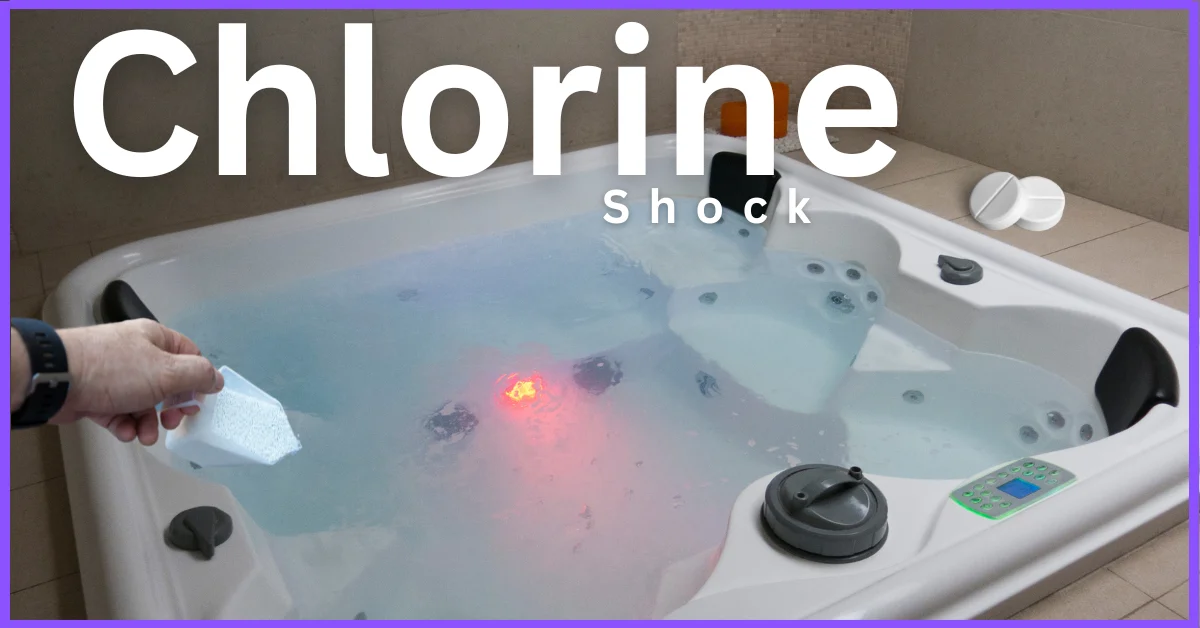
7. Eye Irritation
Probable Causes:
- Low pH: Acidic water can cause eye irritation.
- Low Sanitizer Level: Insufficient sanitizer can lead to bacterial growth and irritation of the eyes.
Solutions:
- Adjust pH: Raise the pH using FreshWater pH/Alkalinity Up.
- Shock the Spa: Use sanitizer and ensure it stays at the proper level.
Skin Irritation/Rash
Probable Causes:
- Unsanitary Water: Lack of proper sanitization can lead to skin irritation.
- High Chlorine Level: Free chlorine levels above 5 ppm can irritate the skin.
Solutions:
- Shock the Spa: Use sanitizer and maintain it at recommended levels.
- Allow Chlorine to Drop: Ensure free chlorine levels drop below 5 ppm before using the spa.
8. Stains
Probable Causes:
- Low Total Alkalinity and/or pH: This can cause metals to precipitate and stain surfaces.
- High Iron or Copper in Source Water: These metals can leave stains.
Solutions:
- Adjust Alkalinity and pH: Use FreshWater pH/Alkalinity Up to the correct levels.
- Use FreshWater Stain & Scale: This product helps inhibit metal stains.
9. Scale
Probable Causes:
- High Total Alkalinity and/or pH: High levels can cause calcium to precipitate as scale.
- High Calcium Content in Water: Excess calcium can lead to scale formation.
Solutions:
- Adjust Alkalinity and pH: Lower levels using FreshWater pH/Alkalinity Down.
- Remove Scale: If needed, drain the spa, scrub off the scale, clean with FreshWater Spa Shine, and refill.
- Prevent Future Scale: Use FreshWater Stain & Scale and maintain balanced water chemistry with FreshWater pH/Alkalinity Up or Down.
Hot Tub Water Color Guide
The color of your hot tub water often provides the first clue about what’s causing the problem. Before adding chemicals, compare what you see with the guide below.
| Water Appearance | Most Likely Cause | Recommended First Step |
|---|---|---|
| Cloudy White | Low sanitizer or dirty filter | Test sanitizer and clean the filter |
| Green | Algae or metal contamination | Shock the water and balance chemistry |
| Brown | Iron, manganese, or rust | Test source water and use a metal sequestrant |
| Blue-Green | Copper contamination | Balance pH and treat for metals |
| Yellow | Organic contamination or pollen | Shock the water and improve filtration |
| White Flakes | Calcium scale or biofilm | Test calcium hardness and inspect plumbing |
Water color alone doesn’t provide a complete diagnosis, but it helps narrow down the most likely cause before making adjustments.
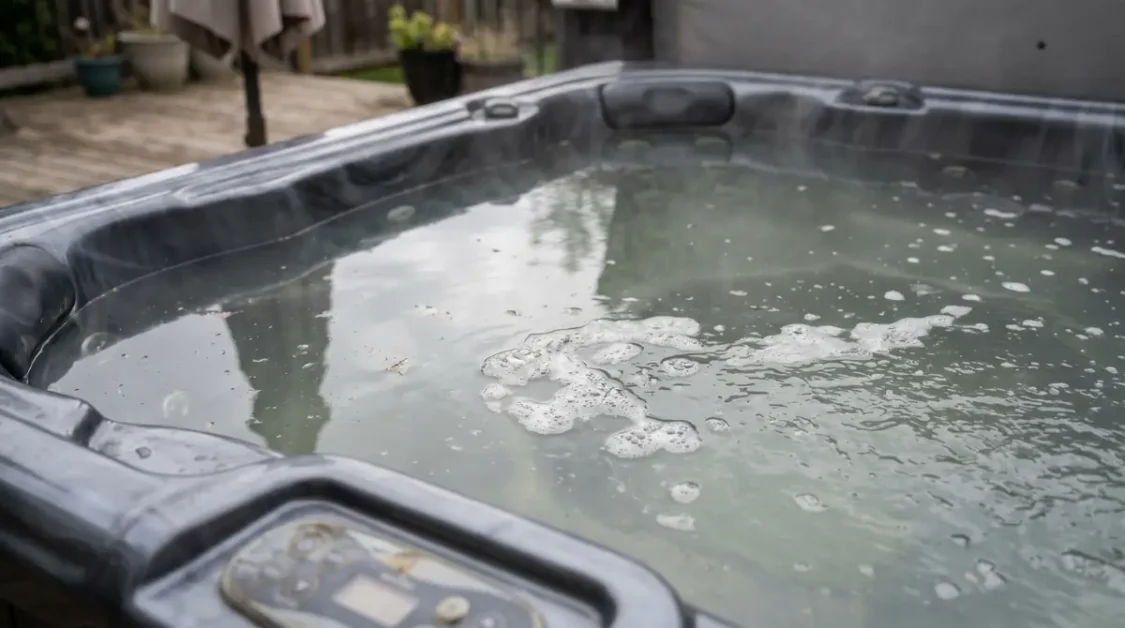
Why Is My Hot Tub Water Cloudy?
Cloudy hot tub water is usually caused by low sanitizer levels, dirty filters, high alkalinity, or buildup from oils and lotions.
Cloudiness is one of the most common problems new owners deal with because several different issues can trigger it at once.
Common Causes of Cloudy Water
- Dirty or clogged filters
- Low chlorine or bromine
- High alkalinity
- Poor circulation
- Heavy hot tub usage
- Old water
- Calcium buildup
How to Fix Cloudy Water
- Test sanitizer levels
- Check pH and alkalinity
- Shock the hot tub
- Clean the filters thoroughly
- Run jets for at least 30 minutes
- Retest the water
In many cases, cloudy water improves within several hours after shocking and filtration.
For deeper troubleshooting steps, follow these tips for fixing cloudy hot tub water fast.
Why Does Hot Tub Water Turn Green?
Green hot tub water is commonly caused by algae, metal contamination, or low sanitizer levels.
If your sanitizer drops too low, algae can begin growing quickly in warm water. Metals like copper or iron may also tint the water green after adding chemicals.
Signs of Green Water
- Green tint in clear water
- Murky green appearance
- Slippery spa surfaces
- Strong odor
- Staining around jets
How to Fix Green Water Fast
- Test and adjust sanitizer
- Shock the water heavily
- Clean filters
- Balance pH and alkalinity
- Run filtration continuously for 24 hours
A lot of owners skip filter cleaning during this process, but dirty filters can hold algae and metals that continue contaminating the water.
This complete guide on why hot tub water turns green explains the most common causes and prevention methods.
What Causes Foam in a Hot Tub?
Foam usually comes from body oils, detergents, lotions, makeup, or low calcium hardness levels.
Foam becomes more noticeable when the jets are running because trapped air mixes with contaminants already in the water.
Common Foam Sources
- Laundry detergent residue in swimsuits
- Body lotions and cosmetics
- Hair products
- Low sanitizer
- Old water
- Cheap defoamer overuse
How to Remove Foam
- Shock the water
- Rinse or clean filters
- Wipe waterline residue
- Add fresh water if needed
- Drain and refill if foam keeps returning
A temporary defoamer may help, but it does not solve the actual cause.
You can learn more about what causes hot tub foam and how to stop it from returning.
Why Does My Hot Tub Water Smell Bad?
Bad hot tub odors are often caused by chloramines, bacteria buildup, dirty filters, or old water.
Ironically, a strong chlorine smell usually means there is not enough active sanitizer in the water. Chloramines form when chlorine combines with contaminants instead of killing them effectively.
Common Hot Tub Smells
Strong Chlorine Smell
Usually caused by chloramine buildup.
Musty or Sour Smell
Often linked to bacteria or biofilm.
Rotten Odor
May indicate old stagnant water or plumbing contamination.
How to Fix Hot Tub Odors
- Shock the water
- Clean the filters
- Test sanitizer levels
- Balance pH and alkalinity
- Drain and refill if water is old
If odor problems keep returning, these common hot tub water odor problems may help you identify the root cause faster.
Why Are There White Flakes or Particles in My Hot Tub?
White flakes are usually calcium scale, biofilm residue, or deteriorating spa components.
Hard water areas commonly experience calcium scaling when water hardness gets too high.
Common Causes
- High calcium hardness
- Scale buildup inside plumbing
- Biofilm loosening after shock treatment
- Aging hot tub components
How to Remove White Flakes
- Test calcium hardness
- Use a scale control product
- Clean filters thoroughly
- Drain and refill if buildup is severe
Many owners first notice flakes after shocking the tub because buildup inside pipes starts breaking loose.
These solutions for white flakes floating in your hot tub can help you clear the water more effectively.
Why Is My Hot Tub Water Irritating My Skin?
Skin irritation is commonly caused by improper pH, excessive sanitizer, bacteria, or poor water hygiene.
Water that is too acidic or too alkaline can irritate eyes and skin even if sanitizer levels look normal.
Signs Your Water Chemistry Is Off
- Itchy skin
- Dryness after soaking
- Burning eyes
- Rash-like irritation
- Strong chemical smell
How to Make Water Safer
- Keep pH between 7.4 and 7.6
- Maintain proper sanitizer levels
- Shower before soaking
- Clean filters regularly
- Change water on schedule
If sensitive skin is a recurring issue, these tips for enjoying a hot tub without itchiness may help.
How to Balance Hot Tub Water Properly
Hot tub water should stay within safe balance ranges to protect both bathers and equipment.
Ideal Hot Tub Water Levels
| Water Element | Ideal Range |
|---|---|
| pH | 7.4 to 7.6 |
| Alkalinity | 80 to 120 ppm |
| Chlorine | 1 to 3 ppm |
| Bromine | 3 to 5 ppm |
| Calcium Hardness | 150 to 250 ppm |
Why Water Balance Matters
Balanced water:
- keeps sanitizer effective
- prevents cloudy water
- protects equipment
- reduces odors
- improves comfort
Low pH can make water acidic and irritating. High pH often causes cloudy water and scale buildup.
A beginner-friendly guide to hot tub pH balance can help you understand how the different water levels work together.
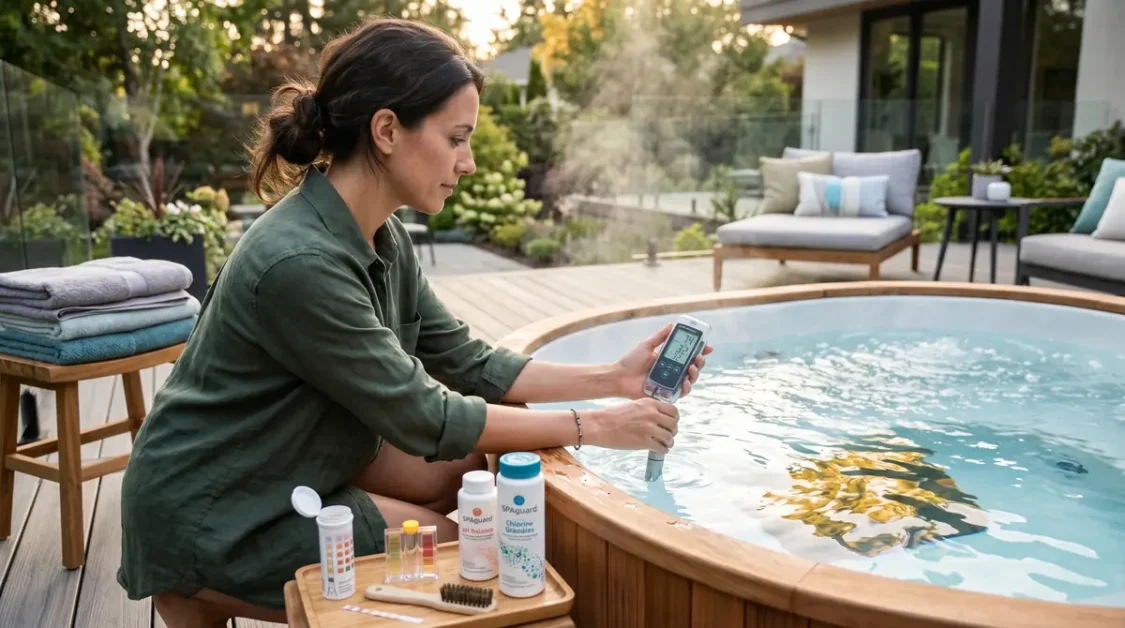
Water Recovery Process: Fix Bad Hot Tub Water Step by Step
When your hot tub water suddenly turns cloudy, foamy, green, or develops a strong odor, avoid adding several chemicals at once. Following a consistent troubleshooting process helps you identify the real cause and prevents overcorrecting the water.
Step 1: Identify the Problem
Determine exactly what’s wrong before making any adjustments.
- Cloudy water
- Green water
- Foam
- Strong odor
- White flakes
- Skin or eye irritation
Different symptoms often have different causes, even when they appear at the same time.
Step 2: Test the Water
Use reliable test strips or a digital tester to measure:
- Sanitizer
- pH
- Total alkalinity
- Calcium hardness (if scale or flakes are present)
Write the results down before adding any chemicals.
Step 3: Correct the Biggest Imbalance First
Don’t adjust every reading at once.
A simple order is:
- Sanitizer
- Total alkalinity
- pH
- Calcium hardness (if necessary)
Making one adjustment at a time helps you see what’s actually fixing the problem.
Step 4: Clean the Filter
A dirty filter can continue circulating contaminants even after the water chemistry has been corrected.
Rinse or deep-clean the filter according to its condition.
Step 5: Shock the Water
If the water contains oils, lotions, bacteria, or chloramines, apply an appropriate shock treatment and run the jets with the cover open for 15 to 20 minutes.
Step 6: Retest After Circulation
Allow the water to circulate for at least 30 to 60 minutes before testing again.
Avoid making additional chemical adjustments until the first treatment has had time to work.
Step 7: Decide Whether to Drain and Refill
If the water remains cloudy, foamy, or foul-smelling after repeated corrections, it may have reached the end of its useful life.
At that point, draining, cleaning, and refilling the spa is often faster than continuing to add chemicals.
Following a simple hot tub maintenance routine helps prevent most troubleshooting issues before they start.
Tailored Action Plan for Easier Water Care
If your water suddenly looks bad, avoid adding random chemicals all at once.
Use this simple troubleshooting order instead.
Fast Water Care Recovery Plan
- Test sanitizer first
- Check pH levels
- Test alkalinity
- Inspect filters
- Shock the water
- Run circulation for 30 to 60 minutes
- Retest everything
Reliable hot tub test strips make troubleshooting much easier because they help you spot issues early.
Common Water Care Mistakes to Avoid
Even experienced owners sometimes create water problems accidentally.
Here are some common mistakes:
- Adding multiple chemicals together
- Ignoring dirty filters
- Skipping regular testing
- Using household cleaning products
- Waiting too long between water changes
- Overusing defoamer products
One overlooked issue can quickly affect the entire water balance system.
This guide on mastering hot tub water chemistry explains how the main chemistry levels work together.
How Long Does It Take to Fix Common Water Problems?
Some water problems improve within a few hours, while others require a full drain and refill. The table below provides general timelines when the recommended troubleshooting steps are followed.
| Water Problem | Typical Recovery Time |
|---|---|
| Cloudy Water | 12–24 hours |
| Foam | 1–2 hours |
| Strong Chlorine Odor | A few hours after shocking |
| Green Water | 24–48 hours |
| White Flakes | Several hours to a few days |
| Mild Skin Irritation | Usually improves after balancing the water |
If the water doesn’t improve within these timeframes, retest the chemistry and inspect the filter before adding more chemicals.
This guide explains how often you should change hot tub water based on usage and tub size.
Frequently Asked Questions
Why does my hot tub water keep getting cloudy?
Cloudy water usually happens because of low sanitizer, dirty filters, high alkalinity, or buildup from oils and lotions.
How often should I test hot tub water?
Most hot tub owners should test water at least 2 to 3 times per week and after heavy use.
What is the fastest way to clear bad hot tub water?
Start by testing the water, balancing sanitizer and pH, shocking the tub, and cleaning the filters thoroughly.
Can low alkalinity cause water problems?
Yes. Low alkalinity can make pH unstable, which often leads to cloudy water, irritation, and sanitizer problems.
Why does my hot tub smell like chlorine?
A strong chlorine smell usually means chloramines have built up and the water needs shock treatment.
Should I shock my hot tub after every use?
Not always. Most owners shock weekly, but heavy use or parties may require extra shocking afterward.
How do I know if my hot tub filter is bad?
A worn-out filter may stay dirty after cleaning, reduce water flow, or fail to keep water clear.
Is foamy hot tub water dangerous?
Foam itself is not always dangerous, but it usually signals contamination or imbalance that should be corrected.