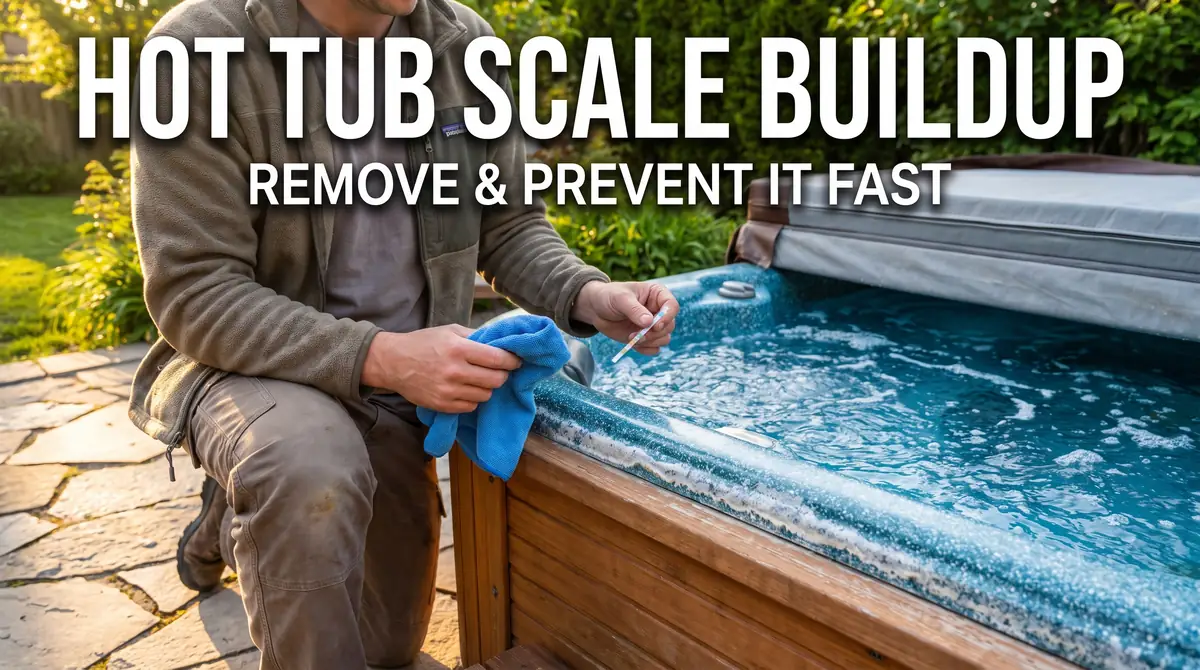
Hot Tub Scale Buildup: Causes, Removal & Prevention Guide

Hot tub scale buildup is usually a sign that your water chemistry has drifted out of balance, but it’s one of the easier maintenance problems to solve.
By identifying the buildup early, choosing the right cleaning method, and keeping your pH and calcium hardness within the recommended range, you can protect your spa and enjoy cleaner, smoother water.
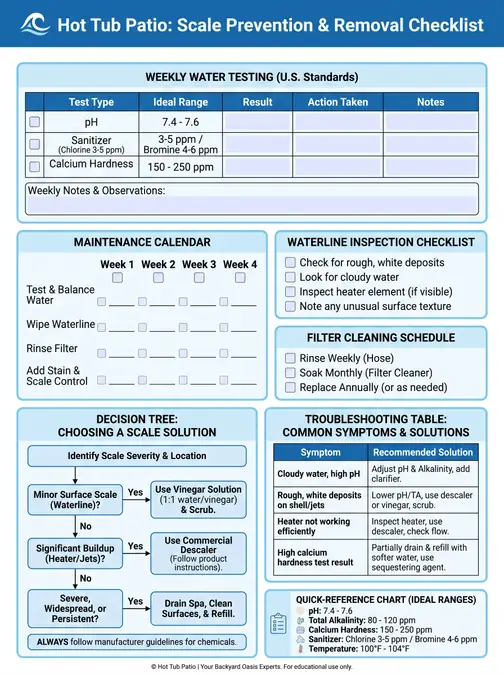
A simple weekly maintenance routine goes a long way. Test your water regularly, clean the filter, wipe down the waterline, and address small mineral deposits before they become stubborn calcium scale.
Consistent care keeps your hot tub looking great and ready for your next soak.
What Is Hot Tub Scale Buildup?
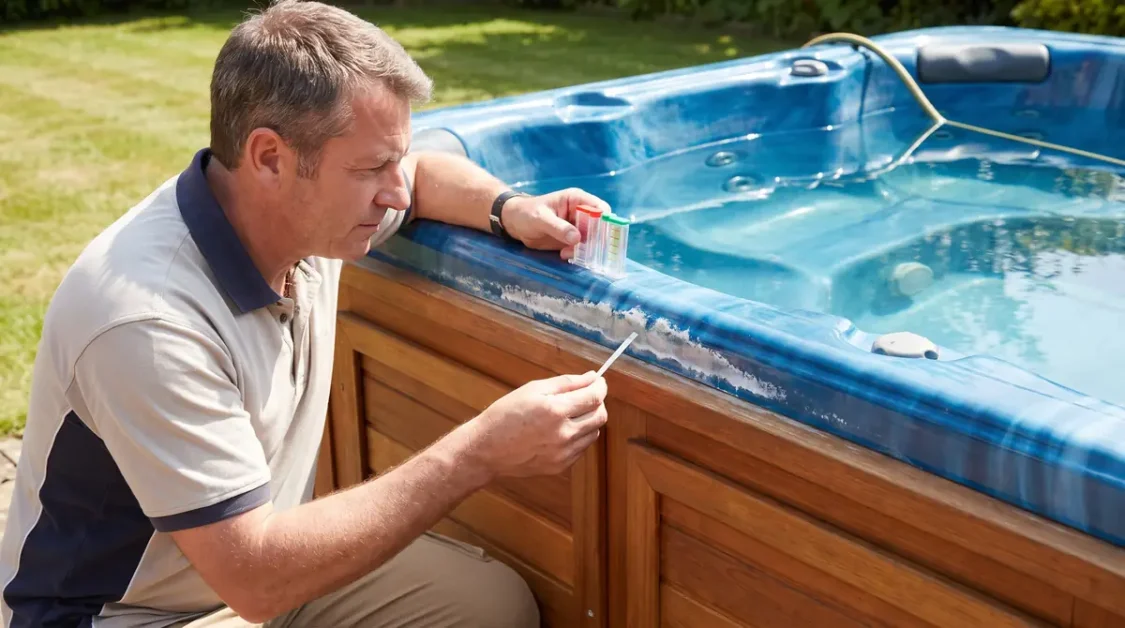
Hot tub scale buildup is a hard mineral deposit that forms when calcium and other dissolved minerals come out of the water and stick to spa surfaces. It most commonly appears as a white or gray crust around the waterline, inside jets, or on heaters.
Unlike dirt or algae, scale doesn’t wipe away easily. It often feels rough, gritty, or like fine sandpaper.
Many new hot tub owners mistake scale for white mold or debris. One easy test is to gently scrape it with a fingernail. If it feels hard and brittle rather than slimy, you’re likely dealing with mineral scale.
If you’re still learning how water chemistry affects your spa, our Hot Tub Water Care Guide explains the basics of balancing your water before problems develop.
What Causes Hot Tub Scale Buildup?
Scale develops when minerals dissolved in the water become oversaturated and settle onto surfaces instead of remaining suspended.
The most common causes include:
High pH
When pH rises above about 7.8, calcium becomes much more likely to precipitate out of the water.
Hot tubs should generally stay between 7.4 and 7.6 for effective sanitizer performance while reducing mineral deposits.
High Calcium Hardness
Calcium hardness helps protect spa equipment, but excessive calcium creates ideal conditions for scaling.
Water supplied from private wells or naturally hard municipal water often contains elevated calcium before it even enters your hot tub.
Warm Water
Hot tubs operate around 100–104°F, which encourages minerals to separate from the water much faster than cooler swimming pools.
Water Evaporation
Water evaporates, but minerals remain behind. Over time, mineral concentration increases until deposits begin forming.
Poor Water Testing
Many owners regularly test sanitizer but forget to monitor calcium hardness and pH together. That’s usually when scale begins appearing unexpectedly.
Signs Your Hot Tub Has Scale Buildup
Scale isn’t always obvious at first. Catching it early makes removal much easier.
Watch for:
- White chalky deposits around the waterline
- Rough shell that feels like sandpaper
- White crust around jets
- Mineral stains on heaters
- Reduced jet pressure
- Cloudy water after balancing chemicals
- White buildup that returns after cleaning
If you’re seeing floating white particles instead of hard deposits, check our guide to white particles in a hot tub because the solution may be different.
How to Remove Hot Tub Scale Buildup
The best way to remove hot tub scale depends on how severe the buildup is. Light deposits can often be cleaned without draining, while heavy calcium buildup usually requires a complete drain and deep cleaning.
For Light Scale
- Test pH and calcium hardness.
- Adjust pH back to 7.4–7.6 if needed.
- Add a spa-safe scale remover according to the label.
- Run the jets for 15–20 minutes.
- Let the water circulate for several hours.
- Wipe affected surfaces with a soft microfiber cloth.
- Clean or rinse the filter.
Light scale often disappears after one or two treatment cycles.
For Heavy Scale
Heavy buildup usually needs a more thorough cleaning.
- Turn off power.
- Drain the spa.
- Apply a spa scale remover to affected areas.
- Allow it to soak according to the product directions.
- Gently scrub with a non-abrasive sponge.
- Flush the plumbing if recommended.
- Refill and rebalance the water.
A common mistake is using steel wool or harsh abrasives. These can permanently scratch the acrylic shell.
When it’s time for a complete water change, follow our step-by-step guide to draining a hot tub to make the process quicker and safer.
How Do I Get Rid of Limescale in My Hot Tub?
For moderate limescale, many spa owners have success using this workflow:
- Add a hot tub descaling product.
- Run the jets for 5–10 minutes.
- Allow the water to circulate through filtration for 12–24 hours.
- Remove and thoroughly rinse the filter.
- Retest the water.
- Repeat if necessary.
How to Descale a Hot Tub Without Draining It
You can descale a hot tub without draining it if the buildup is light or just starting to form. This method works best for mineral deposits inside plumbing lines, around jets, and on the waterline. Thick, hardened calcium deposits usually require draining the spa for a deep clean.
Follow these steps:
- Test your water first. Check the pH, alkalinity, and calcium hardness. If the pH is above 7.6, lower it before adding any descaling product.
- Add a spa-safe scale remover. Follow the manufacturer’s dosage instructions based on your hot tub’s water volume.
- Run the jets for 15 to 20 minutes. This helps circulate the descaler through the plumbing, pump, heater, and jets where scale often hides.
- Let the water filter for 12 to 24 hours. Continuous filtration gives the descaler time to dissolve mineral deposits.
- Clean the filter. Scale particles can clog the filter as they break loose. Rinse it thoroughly or replace it if it’s heavily coated.
- Retest the water. Balance the pH and sanitizer levels before using the hot tub again.
When a No-Drain Method Works Best
A no-drain treatment is a good option if:
- The shell has only a thin white film.
- The jets still operate normally.
- The buildup appeared recently.
- Your water chemistry is only slightly out of balance.
When You Should Drain the Hot Tub
Skip the no-drain approach if you notice:
- Thick, crusty calcium deposits.
- Heavy buildup around the heater or jets.
- A rough shell that feels like coarse sandpaper.
- Scale returning shortly after every cleaning.
Those signs usually mean minerals have accumulated beyond what circulating chemicals can dissolve.
If your water chemistry is difficult to balance after cleaning, our hot tub chemical dosage calculator can help you determine the correct chemical amounts for your spa size.
Will Vinegar Remove Scale in a Hot Tub?
Yes, white vinegar can remove light mineral deposits from hot tub surfaces, but it isn’t the best choice for heavy calcium scale. Vinegar contains mild acetic acid that helps dissolve small amounts of limescale without damaging most acrylic spa shells when used correctly.
It’s most effective for:
- Waterline buildup
- Small white spots
- Light mineral stains
- Cleaning removable spa components
How to Use Vinegar Safely
Mix equal parts distilled white vinegar and water in a spray bottle.
- Spray the affected area.
- Let it sit for 10–15 minutes.
- Wipe with a soft microfiber cloth or non-abrasive sponge.
- Rinse the surface with clean water.
Avoid pouring large amounts of vinegar directly into your filled hot tub. It can temporarily affect water chemistry and isn’t designed to clean plumbing lines the way commercial spa descalers do.
Vinegar vs. Commercial Scale Remover
| Situation | White Vinegar | Spa Scale Remover |
|---|---|---|
| Light waterline deposits | ✅ Excellent | ✅ Excellent |
| Fresh mineral spots | ✅ Good | ✅ Excellent |
| Thick calcium buildup | ❌ Limited | ✅ Best choice |
| Internal plumbing scale | ❌ Not recommended | ✅ Designed for the job |
| Routine shell cleaning | ✅ Good option | Optional |
Many hot tub owners keep distilled white vinegar on hand for weekly cleaning, while using a dedicated descaling product only when heavier mineral buildup develops.
For more cleaning ideas, see our guide on using vinegar to clean your hot tub.
Scale Remover vs. Vinegar: Which Should You Choose?
Choosing the right cleaner depends on how much scale has formed.
| Problem | Best Solution | Why |
|---|---|---|
| Thin white film | White vinegar | Gentle and inexpensive for routine cleaning |
| Waterline deposits | Vinegar or spa cleaner | Both work well for light buildup |
| Rough shell | Commercial scale remover | Stronger formula removes hardened calcium |
| Heater or jet scale | Commercial scale remover | Designed to circulate through plumbing |
| Heavy crusty deposits | Drain and deep clean | Physical cleaning is usually necessary |
A common mistake is waiting until scale becomes thick enough to feel rough under your hand. Cleaning small deposits every few weeks is much easier than removing months of hardened calcium later.
Common Mistakes That Make Scale Worse
Many cases of hot tub scale buildup start with a small water chemistry issue that goes unnoticed. Avoiding these common mistakes can save you time, money, and extra cleaning.
Ignoring High pH
High pH is one of the biggest contributors to scale formation. Once the pH climbs above the recommended range, calcium becomes more likely to settle on your spa surfaces.
Test your water at least two or three times a week and adjust the pH before it gets too high.
Adding Too Much Calcium Hardness Increaser
Calcium hardness increaser is helpful when your water is too soft, but adding more than your hot tub needs creates the perfect conditions for scale.
Always test calcium hardness before adding chemicals rather than guessing.
Waiting Too Long to Clean the Waterline
A thin white film is much easier to remove than thick mineral deposits.
A quick wipe around the waterline every week prevents minerals from hardening into stubborn scale.
Forgetting to Clean the Filter
Your filter traps loosened mineral particles after descaling. If it becomes clogged, water circulation drops and minerals may settle back onto surfaces.
Cleaning the filter every 2–4 weeks also helps your heater and pump work more efficiently.
For a complete maintenance routine, check out our hot tub filter cleaning guide.
How to Prevent Hot Tub Scale Buildup
The best way to prevent hot tub scale is by keeping your water balanced and removing excess minerals before they can settle onto surfaces.
A few minutes of weekly maintenance can prevent hours of scrubbing later.
Keep pH Between 7.4 and 7.6
Maintaining the proper pH range reduces the chance of calcium falling out of solution.
Check pH several times each week, especially after adding chemicals or heavy hot tub use.
Monitor Calcium Hardness Monthly
Calcium hardness should stay within the range recommended by your hot tub manufacturer. If levels become too high, partially replacing the water may be the easiest solution.
Test Your Water Regularly
A complete water test should include:
- pH
- Total alkalinity
- Calcium hardness
- Sanitizer level
Testing only chlorine or bromine won’t reveal the chemistry issues that lead to scale.
Use a Stain and Scale Control Product
If your home has naturally hard water, adding a stain and scale inhibitor during every refill can help keep minerals suspended instead of allowing them to stick to your spa.
Change Water on Schedule
Even balanced water accumulates dissolved minerals over time. Most residential hot tubs benefit from a complete drain and refill every 3 to 4 months, depending on usage.
If you’re dealing with consistently hard water, our guide to managing calcium hardness in your hot tub offers additional tips for preventing future mineral deposits.
Quick Hot Tub Scale Prevention Checklist
Use this checklist during your regular maintenance routine.
| Task | Frequency |
|---|---|
| Test pH | 2–3 times per week |
| Test sanitizer | 2–3 times per week |
| Check calcium hardness | Monthly |
| Wipe the waterline | Weekly |
| Clean the filter | Every 2–4 weeks |
| Inspect jets for buildup | Monthly |
| Drain and refill the hot tub | Every 3–4 months |
| Add stain and scale control (if needed) | At every refill |
Many experienced hot tub owners find that spending just 10–15 minutes each week on routine maintenance prevents most scaling problems before they begin.
Scale vs. White Flakes vs. Biofilm
Not every white substance in your hot tub is calcium scale. Identifying the problem correctly helps you choose the right solution.
| Problem | Appearance | Texture | Best Solution |
|---|---|---|---|
| Scale buildup | White or gray crust | Hard and rough | Descaling product and water balancing |
| White flakes | Floating pieces in water | Soft or brittle | Inspect heater, plumbing, and calcium deposits |
| Biofilm | Slimy white or clear coating | Slippery | Plumbing cleaner and sanitizer treatment |
| Dirt or residue | Brown or gray particles | Loose | Vacuum and improve filtration |
A simple inspection often reveals the difference. Scale stays attached to surfaces, while flakes float through the water and biofilm feels slippery instead of gritty.
Action Plan
Follow this simple monthly routine to keep scale from becoming a recurring problem.
Every Week
- Test pH and sanitizer levels.
- Wipe the waterline with a soft cloth.
- Check for rough spots on the shell.
- Inspect the filter for debris.
Every Month
- Test calcium hardness.
- Deep clean the filter.
- Inspect the heater and jets for mineral deposits.
- Remove light scale before it hardens.
Every 3–4 Months
- Drain and refill the spa.
- Clean the shell thoroughly.
- Flush the plumbing if recommended by your manufacturer.
- Rebalance the water before using the hot tub again.
30-Day Scale Prevention Challenge
Try this simple routine for one month:
- □ Test water twice each week.
- □ Wipe the waterline every Sunday.
- □ Record pH and calcium hardness readings.
- □ Clean the filter once during the month.
- □ Inspect jets for early mineral deposits.
Most homeowners notice cleaner surfaces and fewer water chemistry problems after following a consistent routine for just a few weeks.
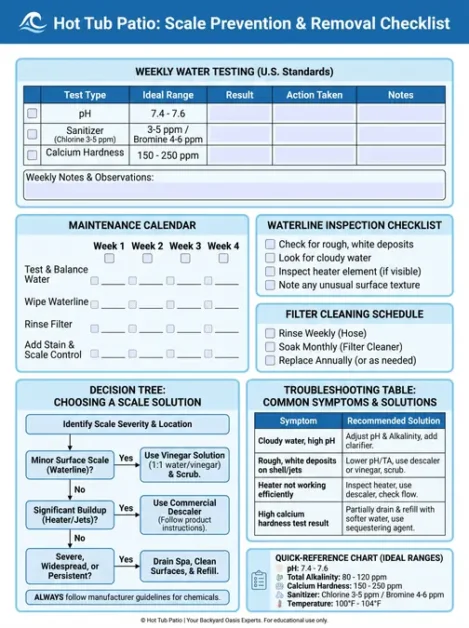
Downloadable Resource
Frequently Asked Questions
How do I get rid of scale buildup in my hot tub?
Start by testing and balancing your water, especially the pH and calcium hardness. For light buildup, use a spa-safe scale remover and let it circulate through the system. Heavy calcium deposits usually require draining the hot tub and cleaning the shell with a dedicated descaling product.
Can I descale my hot tub without draining it?
Yes, if the scale is light. Add a hot tub descaler, run the jets for 15–20 minutes, allow the water to circulate for 12–24 hours, and clean the filter afterward. Thick, hardened scale typically requires a full drain and deep cleaning.
Will vinegar remove hot tub scale?
White vinegar works well for light mineral deposits on the shell and waterline. Mix equal parts distilled white vinegar and water, spray the affected area, let it sit for 10–15 minutes, and wipe clean. For heavy calcium buildup or plumbing scale, a commercial spa descaler is usually more effective.
Why does scale keep coming back?
Recurring scale is usually caused by high pH, excessive calcium hardness, or hard fill water. Regular testing and balancing of your water, along with routine cleaning, will help prevent minerals from building up again.
What pH level prevents hot tub scale?
Keep your hot tub water between 7.4 and 7.6. This range helps prevent calcium from coming out of solution while keeping your sanitizer working effectively.
Can scale damage my hot tub?
Yes. Over time, mineral deposits can clog jets, reduce heater efficiency, restrict water flow, and leave rough deposits on the shell. Removing scale early helps protect your equipment and keeps your hot tub performing efficiently.
How often should I test calcium hardness?
Check calcium hardness at least once a month and anytime you drain and refill your hot tub. Homes with naturally hard water may benefit from more frequent testing.
Is scale buildup harmful to people?
Scale itself isn’t harmful to soakers, but it can make the hot tub harder to clean and reduce the efficiency of pumps, heaters, and jets. It can also indicate that your water chemistry needs attention.