Eczema From a Hot Tub: Causes, Prevention & Rash Differences

A hot tub does not usually cause eczema itself, but it can aggravate eczema-prone skin. Heat, long water exposure, sanitizer residue, fragrances, and poorly balanced water can all irritate a weakened skin barrier. A rash after soaking can also be something different, especially hot tub folliculitis caused by Pseudomonas aeruginosa.
The most useful first step is figuring out what kind of reaction you are dealing with. Dry, itchy eczema patches need a different response from a bumpy bacterial hot tub rash.
Can a Hot Tub Cause an Eczema Flare-Up?
Yes, a hot tub can trigger or worsen an eczema flare in some people who already have eczema or very sensitive skin. The combination of heat, prolonged soaking, chemicals, and friction from wet swimwear can leave skin drier and more reactive.
That is different from saying a hot tub causes eczema as a disease. Eczema, including atopic dermatitis, is a chronic inflammatory skin condition. Hot tub exposure is better understood as a possible trigger or irritant for someone whose skin barrier is already sensitive.
Eczema Flare vs Hot Tub Rash vs Chemical Irritation
Not every itchy rash after a soak is eczema. This comparison can help you decide what deserves closer attention.
| Skin reaction | What it may look or feel like | Common clue |
|---|---|---|
| Eczema flare | Dry, itchy, inflamed, rough, or scaly patches | Often resembles your usual eczema pattern and may worsen after heat or irritation |
| Irritant contact dermatitis | Redness, dryness, burning, stinging, or itching | May follow exposure to sanitizer residue, fragrances, or irritating water conditions |
| Hot tub folliculitis | Itchy red bumps, sometimes with pus around hair follicles | Often appears after contaminated hot tub exposure and can be worse under a swimsuit |
The CDC describes hot tub rash as Pseudomonas folliculitis, a bacterial infection linked to contaminated water. It is not the same condition as eczema. If you have acne-like or pus-filled bumps after a soak, see our guide to hot tub folliculitis symptoms rather than assuming your eczema is flaring.
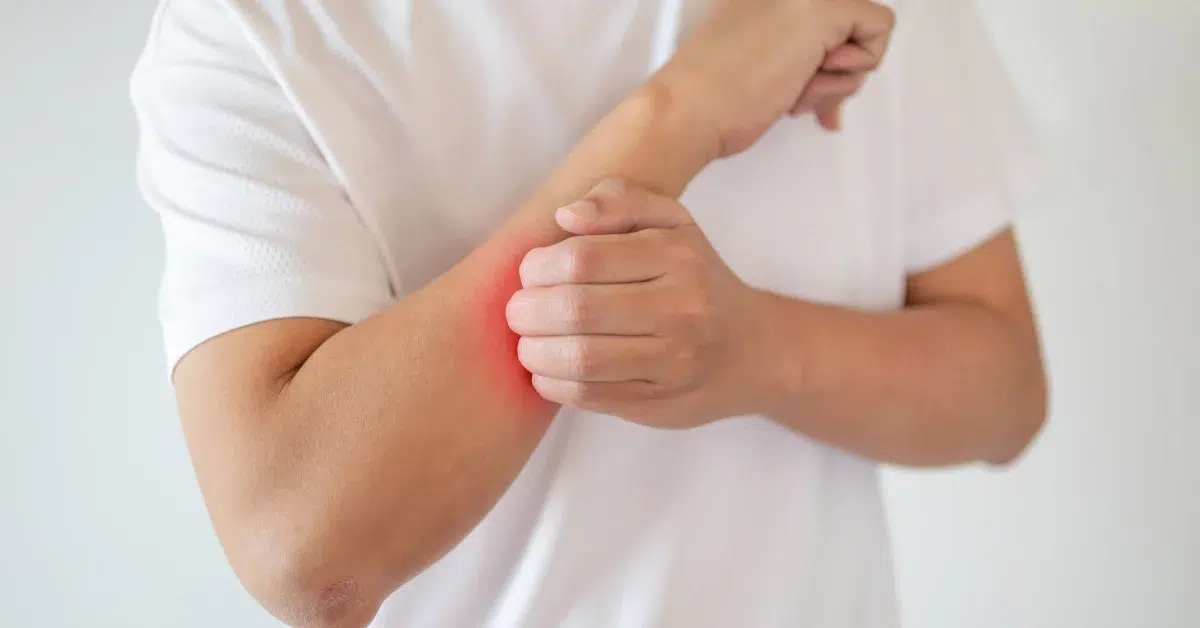
Why Hot Tubs Can Aggravate Eczema-Prone Skin
1. Hot Water Can Dry the Skin
Hot water feels relaxing, but eczema-prone skin already has trouble holding onto moisture. The American Academy of Dermatology recommends short bathing in warm rather than hot water and applying moisturizer while skin is still damp.
A hot tub is warmer than a typical eczema-friendly bath, so long soaking sessions may leave some people feeling tighter, drier, or itchier afterward. If heat consistently makes your eczema worse, use a cooler setting and shorten the soak rather than pushing through discomfort.
2. Sanitizer Residue Can Irritate Sensitive Skin
Chlorine and bromine are important because hot tubs need effective disinfection. The problem is not that sanitizer should be removed from the water. For some people with eczema, residual chlorine or bromine left on the skin after soaking can be irritating.
National Jewish Health recommends rinsing after pool or hot tub use and applying moisturizer afterward if chlorine or bromine irritates eczema-prone skin.
3. Poor Water Balance Can Add Irritation
Sanitizer and pH work together. Water that is poorly maintained can become uncomfortable for skin and can also increase the risk of germs growing in the spa.
CDC guidance for hot tubs recommends at least 3 ppm chlorine, 4 to 8 ppm bromine, and a pH of 7.0 to 7.8. Test the water rather than judging it only by smell or appearance. Our hot tub water care guide explains the basic maintenance routine, and these hot tub test strip tips can help you check the water before soaking.
4. Long Soaks Mean More Heat, Water, and Friction
The longer sensitive skin stays in warm water, the more opportunity there is for dryness and irritation. Wet swimwear can also hold treated water against the skin and rub already sensitive areas.
There is no single eczema-safe soak time that works for everyone. Start conservatively, pay attention to your skin, and get out if you notice burning, increasing itch, or discomfort.
5. Fragrances and Spa Additives May Be the Real Trigger
Scented products can be a problem for some people with atopic dermatitis. The American Academy of Dermatology recommends fragrance-free skin care because fragrance is a common eczema trigger.
If a flare happens after adding a spa scent, bath oil, botanical product, or another additive, stop using it until you know whether it is contributing. Do not assume a product is eczema-friendly simply because it is marketed as soothing or natural.
6. A Bacterial Rash Can Be Mistaken for Eczema
One of the most important distinctions is between eczema and hot tub folliculitis. The CDC says Pseudomonas aeruginosa can cause an itchy, red, bumpy rash, sometimes with pus-filled blisters around hair follicles, after exposure to contaminated hot tub water.
If several people who used the same tub develop a similar rash, or the bumps are concentrated under swimsuit areas, a waterborne rash becomes more concerning. Our guide to Pseudomonas in hot tubs covers the water-maintenance side of the problem.
What to Do if Your Eczema Flares After a Hot Tub
- Get out of the hot tub. Do not keep soaking if your skin is burning, stinging, or becoming increasingly itchy.
- Rinse with clean, lukewarm water. A gentle rinse helps remove residual sanitizer and other irritants.
- Use a mild, fragrance-free cleanser if needed. Avoid aggressive scrubbing.
- Pat the skin gently. Do not rub inflamed areas with a rough towel.
- Apply a fragrance-free cream or ointment while the skin is still slightly damp. This follows standard eczema skin-care guidance from the American Academy of Dermatology.
- Follow your existing eczema treatment plan. If your dermatologist has prescribed medication for flares, use it as directed rather than replacing it with a hot tub remedy.
- Stay out of the hot tub until the reaction settles and you understand the likely trigger.
If your main problem is generalized itching rather than a known eczema flare, our guide to itchy skin after hot tub use covers other common causes.
How to Make Hot Tub Use Gentler on Eczema-Prone Skin
If your eczema is controlled and your healthcare professional has not told you to avoid hot tubs, use a cautious before-during-after routine.
Before the Soak
- Skip the hot tub if your skin is badly flared, cracked, weeping, or appears infected.
- Test sanitizer and pH before getting in.
- Avoid heavily fragranced spa additives.
- Use a comfortable temperature below the 104°F maximum and consider going cooler if heat is one of your triggers.
If you are unsure where to start with heat settings, see our hot tub temperature guide, but let your own eczema response and medical advice take priority.
During the Soak
- Keep the first session brief and watch how your skin responds.
- Get out if you notice burning, stinging, rapidly increasing itch, dizziness, or overheating.
- Do not use a hot tub with visibly cloudy or poorly maintained water.
After the Soak
- Remove the swimsuit instead of sitting in wet treated water.
- Rinse or shower with lukewarm water.
- Pat dry gently.
- Apply a fragrance-free cream or ointment to damp skin.
- Wash the swimsuit before wearing it again.
When a Rash Needs Medical Attention
Do not assume every rash after a hot tub is a harmless eczema flare. Contact a healthcare professional if the rash is worsening, keeps returning, becomes painful, develops pus or significant crusting, spreads quickly, or is accompanied by fever or feeling unwell.
The CDC notes that mild hot tub folliculitis often clears within a few days, but recommends checking with a healthcare provider if the rash gets worse or occurs repeatedly. A dermatologist can also help when you are unsure whether you are dealing with eczema, contact dermatitis, or another skin condition.
Frequently Asked Questions
Can chlorine in a hot tub make eczema worse?
It can irritate some people with eczema or sensitive skin, especially when sanitizer residue remains on the skin or the water is poorly balanced. Rinsing after soaking and moisturizing damp skin may help reduce irritation.
Is hot tub rash the same as eczema?
No. Hot tub rash usually refers to Pseudomonas folliculitis, a bacterial infection of the hair follicles. Eczema is a different inflammatory skin condition, although both can itch and look red.
Should I use a hot tub during an active eczema flare?
If your skin is very inflamed, cracked, weeping, or infected, it is safer to skip the hot tub and follow your treatment plan. Ask your dermatologist for personalized advice if hot tubs repeatedly trigger your eczema.
Should I moisturize before or after using a hot tub?
Standard eczema guidance strongly supports moisturizing after bathing while the skin is still damp. If you want to apply anything before soaking, ask your dermatologist which product is appropriate because creams, oils, and other products can also affect hot tub water.
Why do I get bumps after using a hot tub?
Itchy bumps that appear after a hot tub can have several causes. Pus-filled or follicle-centered bumps, especially under a swimsuit, can point toward hot tub folliculitis rather than eczema.
The Key Difference to Remember
Eczema from hot tub use is usually better described as an eczema flare triggered by heat or irritation, not eczema caused by the hot tub itself. If your usual dry, itchy patches worsen after soaking, focus on reducing heat and irritation, rinsing afterward, moisturizing promptly, and following your eczema treatment plan.
If the reaction looks different from your normal eczema, especially if you develop red follicle-centered bumps or pus-filled spots after using a shared or poorly maintained spa, consider hot tub folliculitis instead. The difference matters because the cause and next steps are not the same.
For dermatologist-backed eczema skin-care guidance, see the American Academy of Dermatology’s atopic dermatitis skin-care recommendations. For bacterial hot tub rash prevention and water targets, see the CDC’s hot tub rash guidance.