

Best Base For Hot Tub:

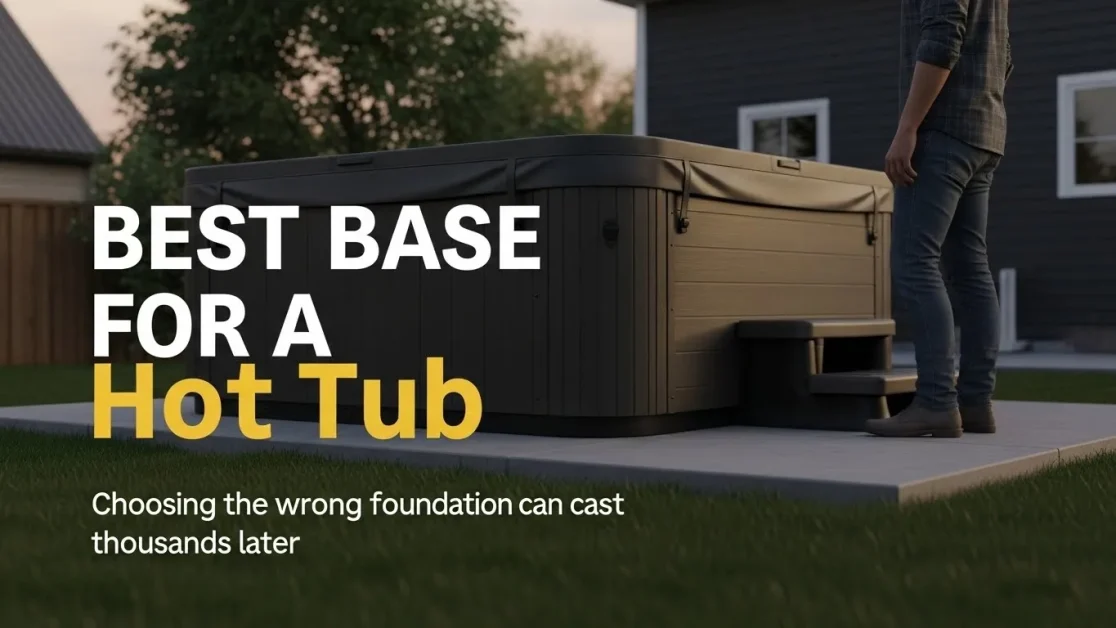
The best base for a hot tub is a stable, level platform that handles 100 to 125 pounds per square foot. Concrete is the most durable, gravel is the easiest DIY option, and spa pads work for renters or portable tubs. The right base prevents shifting, improves drainage, and keeps your hot tub safe long-term.
Worried about your hot tub sinking, shifting, or cracking your shell over time? The right base stops all of that. Most hot tubs weigh between 3,500 and 5,500 pounds when filled, so the ground under it matters just as much as the tub itself.
Here’s the simple answer most installers give, plus how to pick the right base for your yard and your budget.
What’s the Best Base for a Hot Tub?
If you want the safest, longest-lasting base, pick concrete. A 4 to 6 inch slab rated at 3,000 PSI holds the weight easily and stays level for years.
If you want something cheaper, gravel works great when packed well.
If you rent or want a fast setup, go with prefabricated spa pads.
If you want a beautiful backyard look, a reinforced wooden deck can handle it if built correctly.
A stable base prevents sinking, improves drainage, and protects your warranty.
- Best Overall: Concrete (durability)
- Best Budget: Gravel (affordable & DIY-friendly)
- Best for Renters: Prefabricated spa pads
- Best for Looks: Wooden deck
Pro Tip: Always check your hot tub’s manual for manufacturer-recommended bases, some warranties require specific foundations.
What a Hot Tub Base Needs to Support
A hot tub base isn’t just a spot to set the spa. It has to handle:
Weight load:
Most hot tubs require 100 to 125 pounds per square foot of support.
Drainage:
Standing water under a spa leads to mold, rot, and uneven settling.
Level surface:
Even a one-inch tilt puts stress on the shell.
Freeze–thaw durability:
Cold climates push up weak soil and shift gravel if it’s not packed right.
Manufacturer rules:
Some warranties require specific foundations, especially for larger acrylic models.
If you’re setting up your spa for the first time, it’s worth using a guide like the hot tub installation guide to double-check slope, access, and safety clearances.
The 4 Best Bases for a Hot Tub (Ranked & Compared)
Here’s what actually works in real backyards.
1. Concrete Pad (Most Durable & Most Recommended)
If you want the “install it once and forget it” option, this is it.
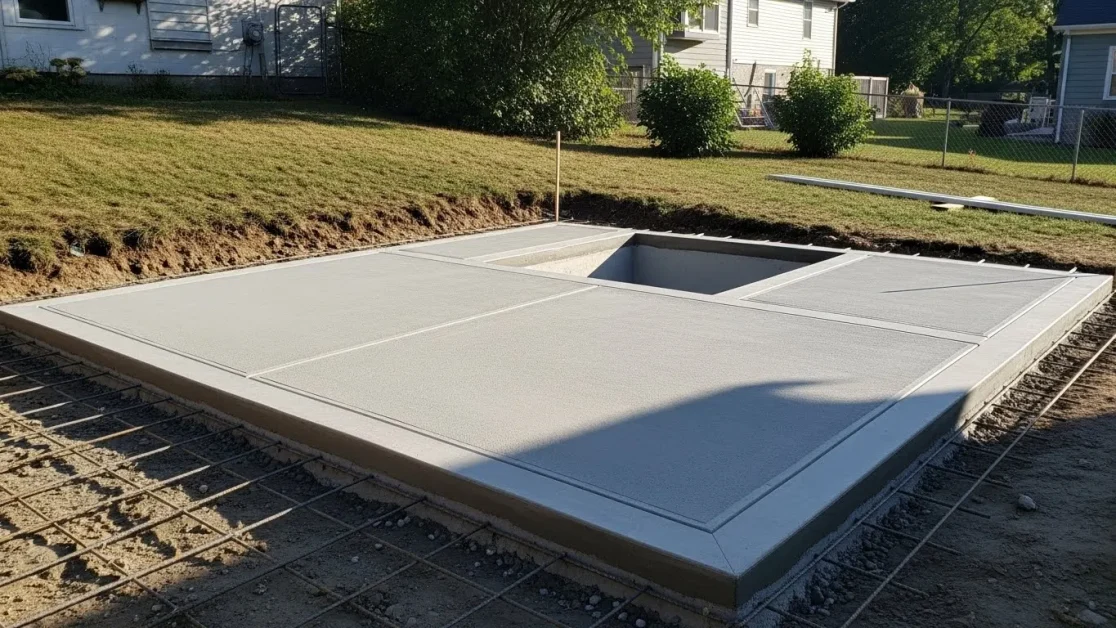
Specs that matter:
• Thickness: 4–6 inches
• Strength: 3,000–4,000 PSI
• Slope tolerance: Less than 1 degree
• Lifespan: 20+ years
Real example:
One homeowner installed a 6-inch slab on a sloped yard. Fifteen years later, the base hasn’t moved a millimeter.
2. Gravel Base (Best Budget Option)
A gravel foundation is cheap, drains well, and you can build it in a weekend.
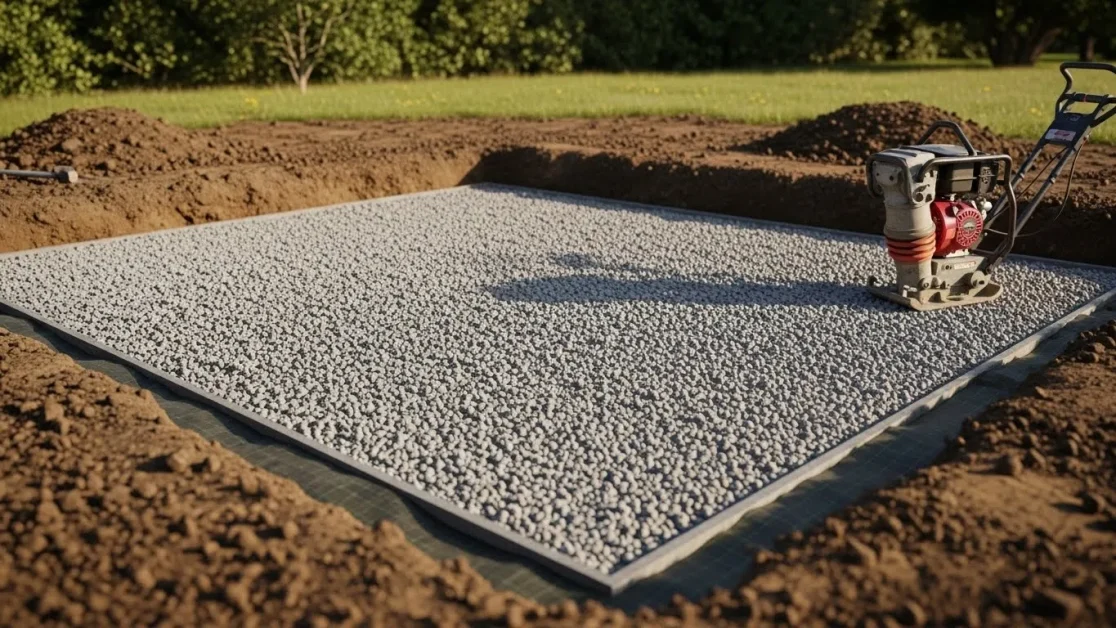
Specs:
• Depth: 4 inches minimum, 6 inches for heavy tubs
• Material: ¾-inch crushed stone
• Needs landscape fabric + compaction
Quick tip: If you don’t know your spa’s weight, the hot tub volume calculator helps you estimate filled weight so you can size your gravel pad correctly.
3. Prefabricated Spa Pads (Best for Renters or Portables)
These interlocking plastic pads snap together and sit on a compacted surface.
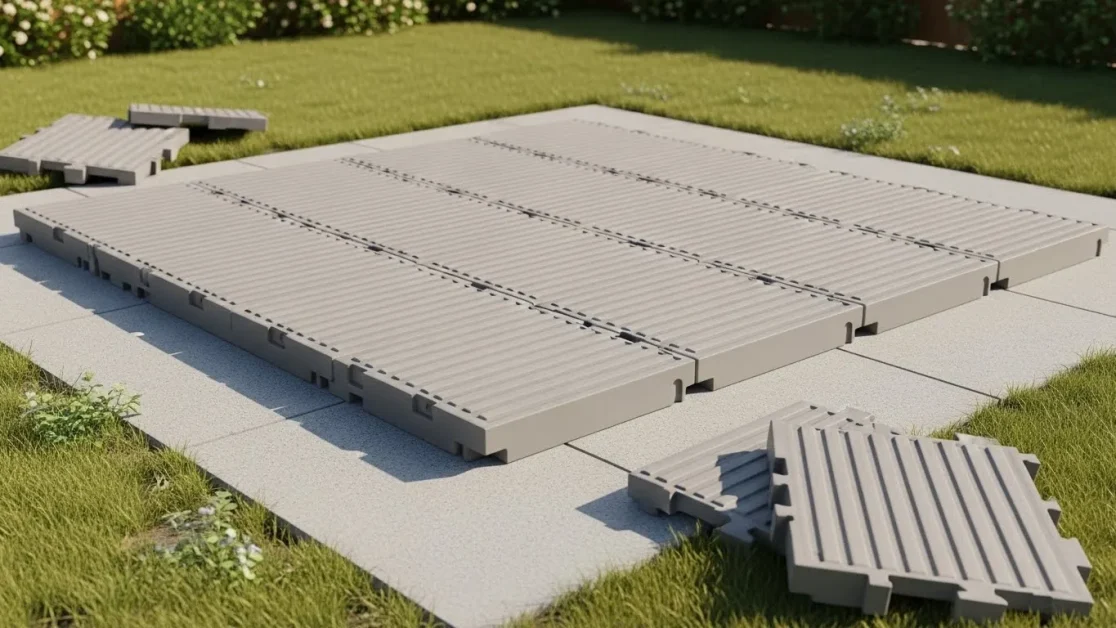
Best for:
• Inflatable hot tubs
• Renters
• Anyone who wants fast setup
Perfect when you want a clean base without pouring concrete.
4. Reinforced Wooden Deck (Best for Looks)
Decks look great and raise the spa for easier access, but they must be built strong.
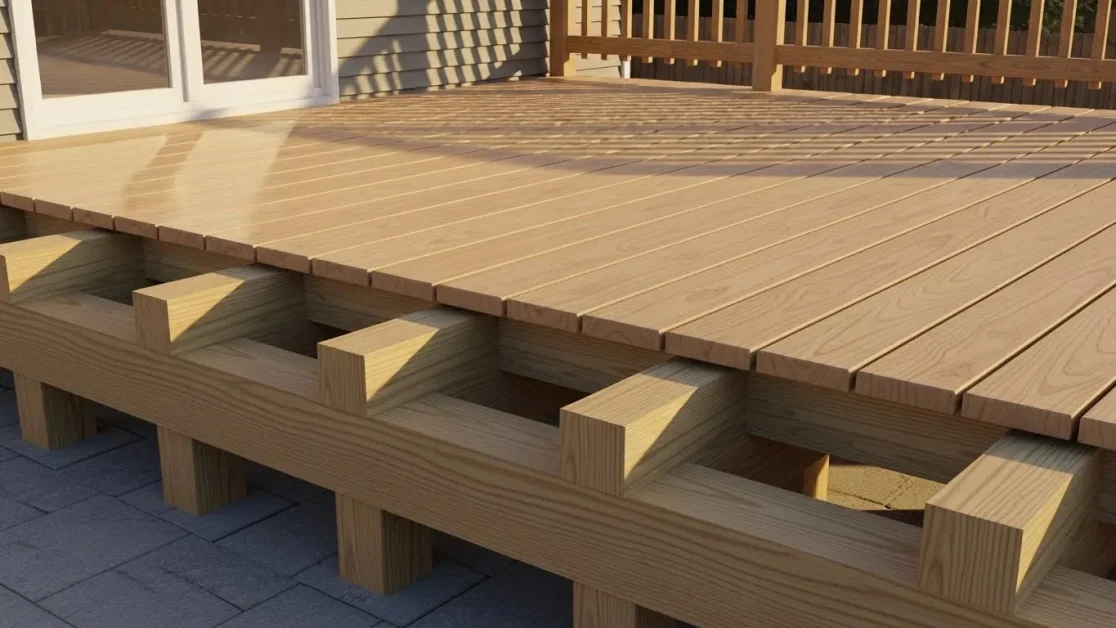
Specs:
• Load rating: at least 100 lb/sq ft
• Joist spacing: 12 inches on center
• Beams must be doubled or tripled under the tub area
If you already have a deck, always confirm load capacity first. Never assume.
Comparison Table: Cost, Durability, Load Capacity, & Difficulty
| Base Type | Cost | Durability | Load Capacity | DIY Difficulty | Best For |
|---|---|---|---|---|---|
| Concrete Pad | $$$ | ⭐⭐⭐⭐⭐ | Excellent | Hard | Permanent installs, heavy tubs |
| Gravel | $ | ⭐⭐ | Good | Easy | Budget builds, good drainage |
| Spa Pads | $$ | ⭐⭐⭐ | Moderate | Very Easy | Renters, inflatable tubs |
| Wood Deck | $$$$ | ⭐⭐⭐⭐ | Excellent (if reinforced) | Moderate | Aesthetic backyard setups |
Why a Proper Hot Tub Base Matters
A hot tub (filled with water and people) can weigh over 5,000 lbs. Without a stable foundation, you risk:
- Uneven settling, leading to cracks or leaks
- Poor drainage, causing water damage or mold
- Structural stress, shortening the tub’s lifespan
Key Requirements for a Good Base:
✔ Level & Stable – Prevents shifting
✔ Durable – Supports heavy weight
✔ Drainage-Friendly – Avoids water pooling
✔ Non-Slip – Safety for wet feet

Considering a hot tub?
Thinking about getting a hot tub? One thing you can’t skip is choosing the right base. It’s what keeps your tub level, safe, and supported.
A solid foundation handles the weight of water and people, helping everything last longer. Before you start the install, make sure you’ve got the base figured out—that step makes all the difference.
Considerations for Hot Tub Installation:
- Choose a suitable location that is easily accessible, level, and protected from excessive sun and wind.
- Prepare the outdoor space by ensuring it is level and has access to an electrical outlet or natural gas if needed.
- Install the hot tub using the provided installation kit and follow the manufacturer’s instructions.
Base Material Options:
- Poured Concrete: Popular choice for hot tub bases due to its durability.
- Precast Concrete: Another option for a sturdy base.
- Brick Patio: Aesthetic choice for a hot tub base.
- Stone Patio: Durable and low-maintenance option using natural stone.
Base Assembly Methods:
- Setting on Level Concrete: Common method, requiring appropriate base height selection and leveling with a concrete level.
- Gravel Base: An alternative option that is cost-effective, easy to level, and allows for drainage.
Choosing the Best Base:
- Prefabricated Concrete Base: Easy-to-use, durable, and eco-friendly option.
- Gravel Base: Cost-effective and versatile, suitable for various surfaces.
Continue reading here: Tips for Choosing the Right Hot Tub Base Pad
Gravel vs. Prefabricated Concrete Base:
- Gravel: Affordable, easy to work with, sturdy, but can be challenging to level. Wear protective shoes, clean up after installation to prevent attracting rodents.
- Prefabricated Concrete: Easy installation, provides a sleek look, sturdy and level, but can be more expensive.
| Gravel Base | Prefabricated Concrete Base |
|---|---|
| Affordable | Can be more expensive |
| Easy to work with | Easy installation |
| Sturdy | Provides a sleek look |
| Challenging to level | Sturdy and level foundation |
| Requires protective footwear | – |
| Clean up needed to prevent rodent attraction | – |
| – | Durable and long-lasting |
Note: The choice between gravel and prefabricated concrete base depends on individual preferences, budget, and specific requirements. Consider the advantages and disadvantages of each option before making a decision.
Pros And Cons Of Concrete Versus Gravel Bases
When it comes to choosing the Ground, there are a few things you need to take into account. The two most popular choices are prefabricated concrete Ground and a gravel base.
Concrete Base vs Gravel Base
For more about What Base To Put Under A Hot Tub: A Comprehensive Guide
Can You Put a Hot Tub on Pavers?
Yes, but:
- Must be interlocking concrete pavers (not brick)
- Requires a compacted gravel base underneath
- Ensure proper weight distribution
Best Material For Homeowner With Pets
If you’ve got pets running around the yard, picking the right base for your hot tub is a big deal. I’ve learned this the hard way, my dog once decided the hot tub cover looked like a trampoline. Spoiler alert: it wasn’t.
In cases like that, concrete is hands-down your safest bet. It’s solid, heavy, and not something your cat or dog is going to nudge out of place. Plus, if your pets tend to wander or dig, concrete isn’t going anywhere. You’re not dealing with shifting gravel or flimsy prefab panels.
And here’s the bonus, concrete’s not going to break the bank. It’s usually one of the more affordable options, especially if you’re doing a simple pad. So if you’re juggling pet chaos and budget limits (welcome to the club), concrete just makes sense.
Best Base for an Inflatable Hot Tub
Inflatable tubs don’t need concrete, but they still need protection from sharp objects and moisture.
Best options:
• Interlocking foam tiles
• Rubber spa pads
• Level gravel topped with a protective mat
Avoid:
Grass, dirt, bare soil. They get muddy and uneven fast.
For extra setup ideas, you can peek at creative options inside the inflatable hot tub ideas and guides section.
Best Base for Uneven or Sloped Yards
If your yard isn’t level, don’t panic. You still have options:
Concrete: Safest choice for steep or unpredictable soil.
Gravel: Works on mild slopes if layered and compacted in steps.
Deck platform: Good if you want the tub raised above a sloped yard.
Signs the slope is too much for gravel:
• Water pools to one side
• Soil feels spongy
• You need more than 6 inches of lift
Can You Put a Hot Tub On…?
Gravel
Yes, as long as it’s compacted and leveled. Use crushed stone, not pea gravel.
Concrete
Yes, and it’s the best long-term choice.
Pavers
Yes, but only if installed over a compacted gravel base. Without that, they shift.
Grass
No. It sinks, rots, and damages the spa bottom.
Dirt
No. Never place a hot tub directly on soil.
Deck
Yes, if reinforced to handle the full weight of the tub, water, and people.
Patio Stones
Only if the stones are thick, level, and supported by compacted gravel.
If you’re not sure your yard can support any of these, the hot tub base and pad ideas page gives a few layout examples.
Concrete vs Gravel vs Spa Pads vs Deck: Which One Should You Choose?
Here’s the quick way to decide.
Choose Concrete If:
• You want the safest, most durable base
• You have a heavy acrylic spa
• Your yard is sloped or soft
Choose Gravel If:
• You want the cheapest solid option
• You like DIY projects
• Your yard drains well
Choose Spa Pads If:
• You rent
• You want no-mess installation
• You have an inflatable or portable tub
Choose a Deck If:
• You want a beautiful raised platform
• You’re already rebuilding or upgrading your patio
• You can reinforce the structure properly
Case Studies (Real Examples)
Case Study #1: Gravel Failure After Heavy Rain
A homeowner built a gravel base but skipped compaction. After the first storm, one corner sank an inch, causing the waterline to tilt. Fixing it required removing the tub and rebuilding the pad.
Case Study #2: Concrete Pad Success After 15 Years
A family installed a 6-inch concrete slab in 2009. Even after seasonal freezes, the slab hasn’t cracked or shifted once.
Case Study #3: Renter Using Spa Pads
A renter used interlocking pads on compacted soil so they could move the hot tub later. The setup took 45 minutes and held up for two years with zero sinking.
Mistakes Homeowners Commonly Make
• Using sand (it washes out quickly)
• Skipping compaction
• Assuming a deck is strong enough
• Ignoring drainage
• Setting the tub on grass or soil
• Forgetting access space for the service panel
If you want a full list of maintenance tips too, the hot tub maintenance guide helps keep everything running smoothly.
How to Build a Gravel Base for a Hot Tub (Simple Step-by-Step)
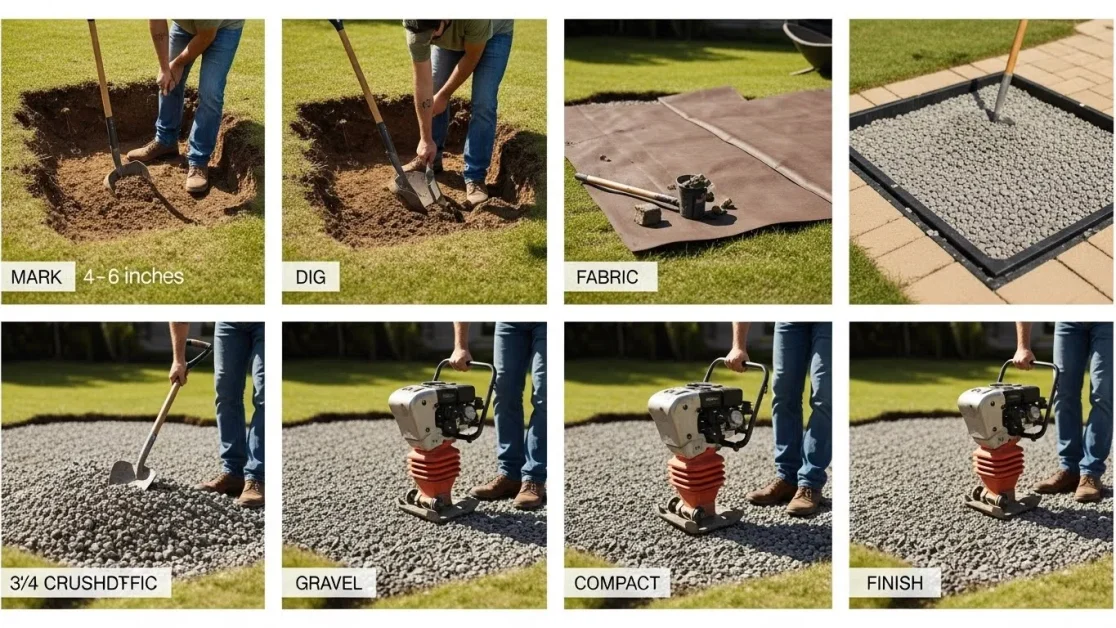
This is the easiest DIY method.
- Mark the area at least one foot wider than the tub.
- Dig down 4 to 6 inches.
- Lay landscape fabric to block weeds.
- Fill with ¾-inch crushed stone.
- Compact with a tamper or plate compactor.
- Re-check level from all sides.
- Add a protective mat before placing the spa.
No matter which material you choose, always make sure the base is level before installing the hot tub. This will ensure that your hot tub stays in place and does not cause any damage to your property.
If you’re doing a full setup from scratch, pairing this with the hot tub setup guide makes the job way easier.
For more resources, check out:
Expert advice and trusted recommendations






2 Comments