
Hot Tub Shells: Materials, Pros, Cons, and Care Guide

If you’ve ever wondered what actually holds your hot tub together, it all comes down to the shell. It’s not just the part you sit in, it’s the core structure that affects comfort, durability, and how long your hot tub lasts.
A lot of people overlook the shell when buying or maintaining a hot tub. Then a few years later, they start dealing with cracks, fading, or stains and wish they had paid more attention earlier.
In this guide, you’ll get a clear breakdown of hot tub shell materials, how to care for them, and how to choose the right one for your setup. Nothing complicated, just practical advice you can actually use.
What Is a Hot Tub Shell and Why It Matters
The hot tub shell is the inner surface of your spa. It’s the part that holds water, supports your body, and connects to the entire system.
But it does more than just “hold water.”
A good shell:
- Supports thousands of pounds of water weight
- Handles heat, chemicals, and pressure
- Keeps your tub comfortable and smooth
- Plays a role in insulation and energy efficiency
If the shell fails, the whole hot tub becomes a problem. That’s why it’s one of the most important parts to understand, especially if you’re planning to keep your tub for years.
Types of Hot Tub Shell Materials (Compared)
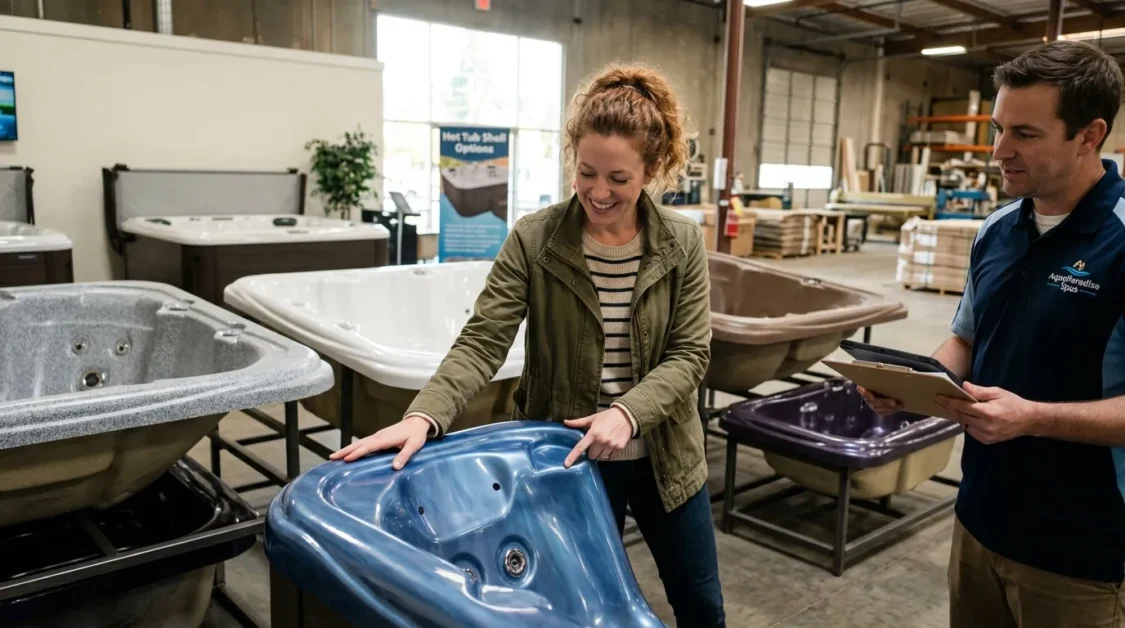
Not all hot tub shells are the same. The material makes a big difference in durability, cost, and maintenance.
Acrylic Hot Tub Shells
Acrylic is the most common material you’ll see, especially in mid-range to high-end hot tubs.
Why people like it:
- Smooth, glossy finish
- Strong and long-lasting
- Resistant to UV rays and chemicals
- Easy to clean
In most backyard setups, acrylic shells last 10 to 15 years or more if you take care of them properly.
This is usually the safest choice if you want something reliable that doesn’t need constant attention.
Fiberglass Hot Tub Shells
Fiberglass is another popular option, especially in budget to mid-range tubs.
What stands out:
- Lightweight and easier to move
- More affordable than acrylic
- Easier to repair if damaged
The downside:
- More prone to fading over time
- Can stain if water chemistry isn’t balanced
- Slightly rougher feel compared to acrylic
It’s a solid option if you’re trying to save money, but it needs a bit more care.
Rotomolded Plastic Shells
These are usually found in entry-level or portable hot tubs.
What you get:
- Lower upfront cost
- Lightweight and easy to install
- Durable against impact
But there are trade-offs:
- Less insulation
- Can fade or wear faster
- Not as comfortable or premium feeling
These are great for temporary setups or if you’re just getting started with hot tubs.
Which Hot Tub Shell Material Is Best?
For most homeowners, acrylic is the best overall choice.
It gives you:
- The longest lifespan
- The easiest maintenance
- The best appearance over time
That said:
- Choose fiberglass if you’re on a tighter budget
- Choose rotomolded plastic if you want something simple and portable
There’s no one-size-fits-all answer, but acrylic tends to be the most balanced option.
Pros and Cons of Hot Tub Shells
Benefits
Hot tub shells offer several advantages that make them essential:
- Durability
A well-made shell can last over a decade with proper care - Comfort
Smooth surfaces and molded seating improve relaxation - Energy efficiency
Better materials help retain heat - Aesthetic appeal
Clean finishes and color options enhance your backyard
Drawbacks
Like anything, there are a few downsides:
- Weight
A full hot tub can weigh thousands of pounds - Cost
Higher-quality shells increase upfront price - Maintenance needs
Requires regular cleaning and proper water balance
How to Clean and Maintain a Hot Tub Shell (Step-by-Step)
Keeping your shell clean isn’t complicated, but consistency matters.
If you already follow a solid hot tub maintenance routine, this becomes much easier.
Weekly Cleaning Routine
- Wipe down the shell with a soft cloth
- Rinse with clean water
- Remove any visible dirt or residue
This prevents buildup before it becomes a problem.
Monthly Deep Cleaning
- Drain the hot tub
- Use a non-abrasive cleaner
- Gently scrub the surface
- Rinse thoroughly
- Refill and rebalance water
Products to Avoid
A common mistake many owners make is using harsh cleaners.
Avoid:
- Bleach-based cleaners
- Abrasive scrub pads
- Household chemicals
These can damage the finish and shorten the life of your shell.
Common Hot Tub Shell Problems and Fixes
Even with good care, issues can still happen.
Cracks and Surface Damage
Small cracks can sometimes be repaired, but larger ones usually need professional help.
If you’re unsure, check this guide on hot tub repair vs replacement to decide what makes sense.
Fading and UV Damage
Sun exposure can dull the surface over time.
Fix:
- Use a cover when not in use
- Keep the tub shaded when possible
Stains and Discoloration
Often caused by poor water balance.
To avoid this, follow a proper hot tub water care guide and keep chemicals in range.
Rough or Worn Surface
This usually happens from:
- Mineral buildup
- Poor cleaning habits
Fix:
- Deep clean regularly
- Maintain proper water chemistry
How Long Do Hot Tub Shells Last?
The lifespan depends on the material and how well you maintain it.
Typical lifespan:
- Acrylic: 10–15+ years
- Fiberglass: 8–12 years
- Rotomolded plastic: 5–10 years
Things that affect lifespan:
- Water chemistry balance
- Sun exposure
- Cleaning routine
- Frequency of use
If you stay consistent with care, your shell can last much longer than expected.
When Should You Replace a Hot Tub Shell?
At some point, repairs stop making sense.
Here are signs it’s time to replace:
- Deep cracks or structural damage
- Persistent leaks
- Severe discoloration
- Rough or peeling surface
If repair costs keep adding up, replacing the shell or even the entire tub might be the better move.
How to Choose the Right Hot Tub Shell
Choosing the right shell comes down to a few practical factors.
Material
- Acrylic for long-term durability
- Fiberglass for budget-friendly options
- Rotomolded for simple setups
Size and Shape
Think about:
- How many people will use it
- Available space in your backyard
- Seating comfort
Features
Some shells include:
- Built-in seating
- LED lighting
- Water features
Choose what actually matters to you, not just what looks nice.
Backyard Fit
Your hot tub should match your space.
If you’re planning a setup, check out ideas for building a relaxing hot tub patio to make everything feel cohesive.
Best Colors for Hot Tub Shells (And What to Consider)
Color might seem like a small detail, but it affects both style and maintenance.
Popular Choices
- White
- Gray
- Blue
- Black
Light vs Dark Colors
Light colors:
- Show less residue
- Easier to maintain
Dark colors:
- Look more modern
- Can show scale and buildup faster
Matching Your Space
Some people match their shell with:
- Patio furniture
- Deck color
- Landscaping
Others just pick what they like.
There’s no wrong answer, just go with what fits your space and style.
Final Thoughts
Hot tub shells don’t get a lot of attention, but they should.
They affect how your tub looks, feels, and performs over time. The good news is, once you understand the basics, it’s pretty easy to make the right choice and keep it in good shape.
Stick with simple maintenance, keep your water balanced, and your shell will stay smooth, clean, and comfortable for years.
Frequently Asked Questions
What is the best material for a hot tub shell?
Acrylic is usually the best choice because it’s durable, easy to maintain, and lasts longer than most other materials.
How do you clean a hot tub shell safely?
Use a non-abrasive cleaner, a soft cloth, and rinse thoroughly. Avoid harsh chemicals or rough scrubbers.
How long does a hot tub shell last?
Most shells last between 5 and 15 years depending on the material and how well you maintain it.
Can a cracked hot tub shell be repaired?
Small cracks can be repaired, but large or structural damage often requires replacement.
Do hot tub shell colors affect maintenance?
Yes. Dark colors tend to show buildup more easily, while lighter colors are easier to keep looking clean.