Hot Tub Load Calculator

A hot tub’s empty weight tells only part of the story. Once water and occupants are added, many spas weigh between 3,000 and 6,000 pounds or more.
Using a Hot Tub Load Calculator before installation helps you understand the real structural demands of your spa and identify potential issues before they become expensive problems. A few minutes of planning today can save a lot of stress later.
After confirming your foundation is ready, follow our complete hot tub setup guide to make sure the rest of your installation goes smoothly.
Hot Tub Load Calculator
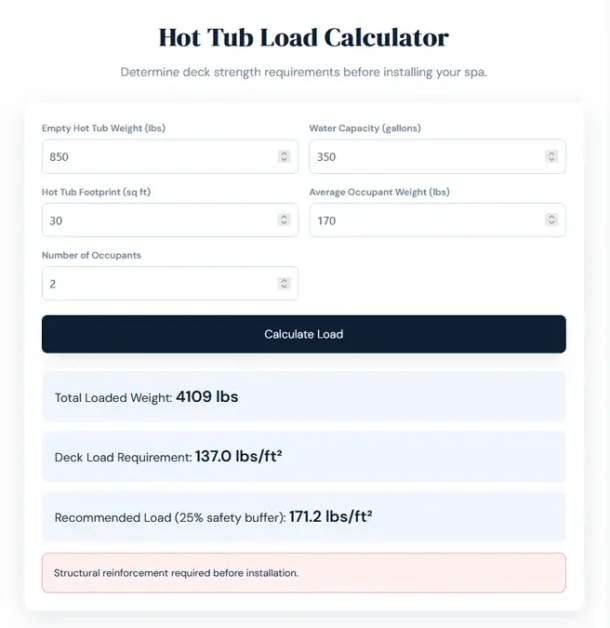
Determine deck strength requirements before installing your spa.
Use the Hot Tub Load Calculator
Place the calculator directly below this section.
The calculator estimates:
- Total loaded hot tub weight
- Pounds per square foot (PSF)
- Recommended load with a 25% safety buffer
- Whether reinforcement may be needed
The calculation includes:
- Empty hot tub weight
- Water weight
- Occupant weight
- Hot tub footprint
This provides a much more realistic estimate than looking at the manufacturer’s empty weight alone.
How Much Does a Filled Hot Tub Weigh?
Most filled hot tubs weigh between 3,000 and 6,000 pounds, although larger models can exceed 7,000 pounds.
Many new owners are surprised by these numbers. The spa shell itself is often only a fraction of the final installed weight.
What Makes Up Hot Tub Weight?
Empty Spa Weight
This includes:
- Shell
- Cabinet
- Pumps
- Heater
- Plumbing
- Equipment compartment
Most portable hot tubs weigh between 500 and 1,200 pounds when empty.
Water Weight
Water is usually the largest contributor.
Each gallon weighs approximately 8.34 pounds.
A 400 gallon hot tub contains:
400 × 8.34 = 3,336 pounds of water
That number alone exceeds the weight of many small cars.
Occupant Weight
People add more load than many homeowners expect.
For example:
- Four adults averaging 185 pounds each
- Total occupant weight = 740 pounds
Example Hot Tub Load Calculation
Let’s look at a common backyard setup:
| Component | Weight |
|---|---|
| Empty hot tub | 900 lbs |
| Water (400 gallons) | 3,336 lbs |
| Four occupants | 740 lbs |
| Total Loaded Weight | 4,976 lbs |
That means a hot tub that appeared to weigh only 900 pounds actually places nearly 5,000 pounds on the structure beneath it.
If you’re planning a spa project, you can also explore our hot tub calculation tools to simplify other parts of the installation process.
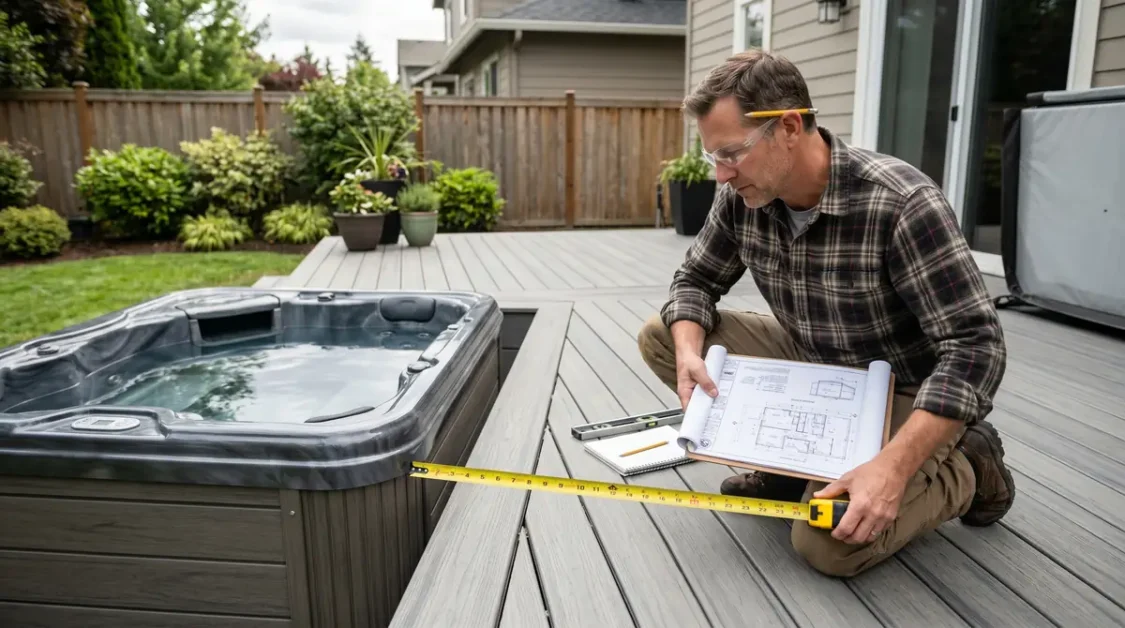
How to Calculate Hot Tub Load Per Square Foot
To calculate hot tub load per square foot, divide the total loaded weight by the hot tub footprint in square feet.
The Formula
Total Loaded Weight ÷ Footprint = PSF
Example:
- Total weight: 4,976 lbs
- Footprint: 36 sq ft
4,976 ÷ 36 = 138.2 PSF
The resulting load is significantly higher than many standard deck designs are intended to support.
Why PSF Matters
PSF stands for pounds per square foot.
Builders and engineers use this measurement to determine how much weight a structure can safely support.
A hot tub’s total weight matters, but the way that weight is distributed matters just as much.
Understanding Load Distribution
Imagine placing a 5,000 pound hot tub on:
- A 25 square foot footprint
- A 49 square foot footprint
The larger footprint spreads the load across more area, reducing pressure on any single section of the deck.
This is one reason hot tub placement should always be planned carefully.
Can My Deck Hold a Hot Tub?
Some decks can safely support a hot tub, while others require reinforcement or redesign before installation.
Many residential decks are designed for roughly 40 PSF live load plus the deck’s own weight. A filled spa often exceeds those values. This is why structural review is frequently recommended before installation.
Typical Residential Deck Ratings
| Deck Type | Typical Design Capacity |
| Standard residential deck | Around 40 PSF live load |
| Reinforced deck | Varies by design |
| Engineered deck | Based on structural calculations |
Warning Signs Your Deck Needs Evaluation
Watch for:
- Visible sagging
- Bouncy or flexible deck boards
- Long joist spans
- Rotting wood
- Loose fasteners
- Water damage
- Older construction methods
If you’re planning a new structure, this guide on building a deck that can support a hot tub explains important design considerations before construction begins.
Hot Tub Weight Chart by Size
The chart below provides typical weight ranges.
| Hot Tub Size | Water Capacity | Approximate Filled Weight |
| 2 Person | 180 to 250 gal | 2,000 to 2,800 lbs |
| 4 Person | 250 to 350 gal | 3,000 to 4,000 lbs |
| 5 to 6 Person | 350 to 450 gal | 4,000 to 5,500 lbs |
| 7 to 8 Person | 450 to 600 gal | 5,500 to 7,500 lbs |
Why Manufacturer Specifications Matter
No two hot tubs are identical.
A common mistake hot tub owners make is relying on average charts instead of checking the actual manufacturer specifications.
Always verify:
- Empty weight
- Filled weight
- Water capacity
- Recommended foundation requirements
What To Do If Your Deck Is Not Strong Enough
Finding out your deck needs reinforcement isn’t bad news. It’s much easier and cheaper to strengthen a structure before installation than after damage occurs.
Option 1: Reinforce the Existing Deck
Common reinforcement methods include:
- Additional support posts
- Larger beams
- Stronger footings
- Reduced joist spans
- Extra bracing
A contractor can evaluate the best approach for your layout.
Option 2: Install on a Concrete Pad
Concrete pads are one of the most popular hot tub foundations because they provide:
- Excellent load capacity
- Long-term durability
- Minimal maintenance
- Stable support
Option 3: Build a Dedicated Spa Platform
In some situations, building a separate structure specifically for the hot tub is the best solution.
If you’re comparing placement options, this guide explains whether your patio can support a hot tub and what surfaces typically work best.
Common Hot Tub Load Calculation Mistakes
Ignoring Water Weight
Water usually contributes more weight than the spa itself.
Forgetting Occupants
A full spa can add hundreds of pounds beyond the manufacturer’s listed weight.
Skipping the Safety Margin
Loads should never be calculated at the absolute limit.
Including a safety buffer helps account for movement, dynamic loads, and long-term wear.
Using Incorrect Measurements
Always measure the actual installation footprint rather than guessing dimensions.
Assuming All Decks Are Equal
Two decks may look identical but have very different load capacities based on:
- Lumber size
- Span length
- Beam spacing
- Footing design
- Age
Hot Tub Load Testing Framework
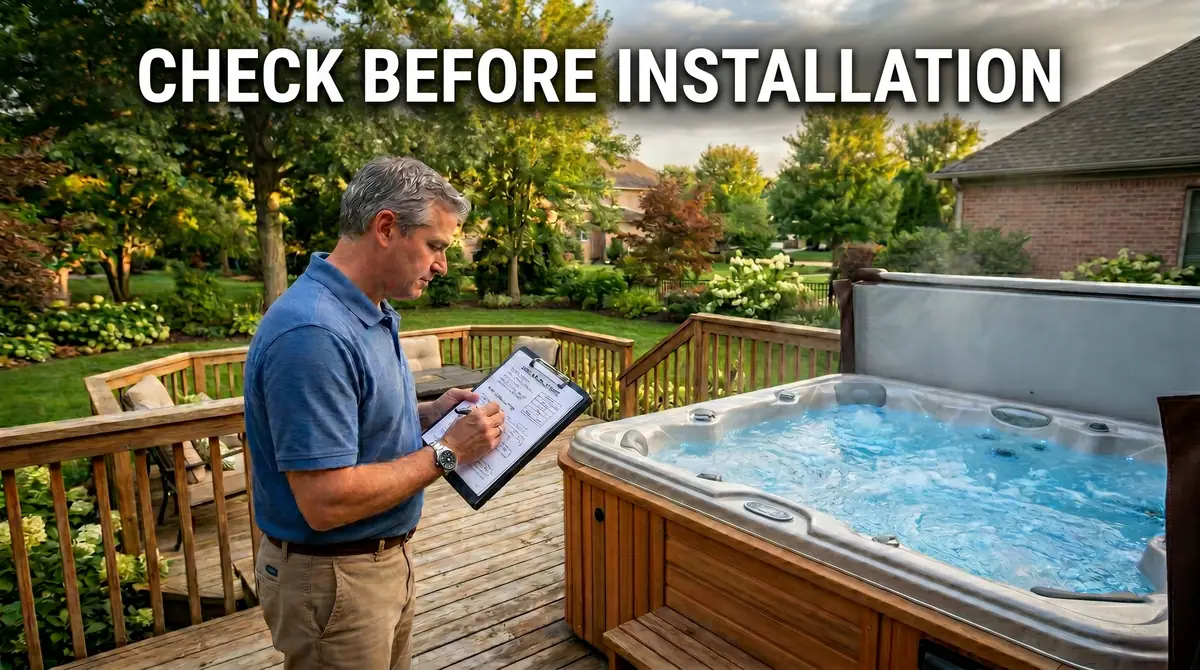
Use this simple planning checklist before purchasing or installing a spa.
Step 1
Verify manufacturer specifications.
Step 2
Measure the actual installation footprint.
Step 3
Run the Hot Tub Load Calculator.
Step 4
Compare results with your deck’s estimated capacity.
Step 5
Schedule a professional review if the results are borderline.
Step 6
Check local permit requirements.
Many homeowners also benefit from following a complete hot tub installation planning guide before finalizing their project.
Tailored Action Plan
Use this framework after running the calculator.
Result Under 50 PSF
Action Items:
- Inspect deck condition
- Verify spa specifications
- Confirm local code requirements
- Continue installation planning
Result Between 50 and 70 PSF
Action Items:
- Schedule a contractor evaluation
- Review joist spacing
- Consider reinforcement options
- Budget for structural upgrades
Result Above 70 PSF
Action Items:
- Obtain structural review
- Expect reinforcement requirements
- Compare concrete pad alternatives
- Delay installation until load concerns are resolved
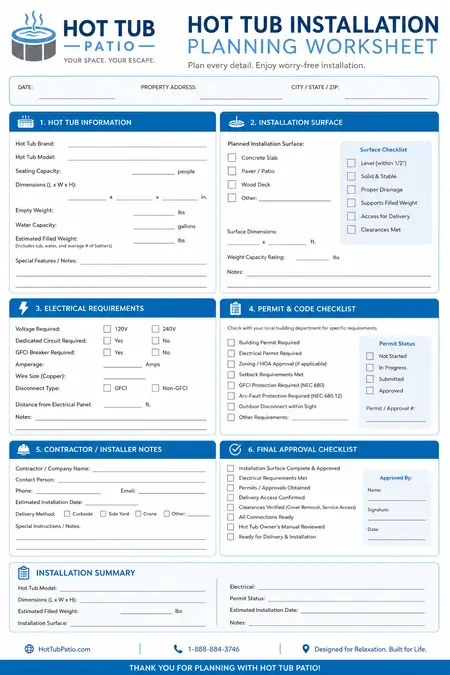
Downloadable Planning Worksheet
When Should You Hire a Structural Engineer?
Professional review is worth considering when:
- The deck is elevated
- The deck is older than 15 years
- Construction details are unknown
- The spa exceeds 5,000 pounds
- You are installing a large 7 or 8 person model
- The calculator shows unusually high PSF values
An engineer can verify load capacity and recommend improvements before installation.
Frequently Asked Questions
Can a deck hold a 2,000 pound hot tub?
Some decks can, but the answer depends on deck design, support structure, and load distribution. Weight alone does not determine safety.
How much does water weigh in a hot tub?
Water weighs approximately 8.34 pounds per gallon. A 400 gallon hot tub contains about 3,336 pounds of water.
What is a safe deck load rating for a hot tub?
Every structure is different. Many residential decks are designed around 40 PSF live load, while hot tubs often require greater support.
Should I hire a structural engineer before installing a hot tub?
For elevated decks, older structures, or larger spas, a professional evaluation is often a worthwhile investment.
Can I place a hot tub on a second-story deck?
Possibly, but second-story installations typically deserve professional review because the consequences of structural failure are much greater.
Does an inflatable hot tub require load calculations?
Yes. Inflatable spas may weigh several thousand pounds once filled with water and occupants.
How do I know if my deck needs reinforcement?
Visible sagging, excessive movement, long spans, or high PSF calculations are common indicators that reinforcement may be needed.
What happens if a deck is overloaded?
Overloaded decks can sag, develop structural damage, loosen fasteners, and create unsafe conditions over time.