Increase Cyanuric Acid in a Hot Tub? What to Do Instead

Trying to increase cyanuric acid (CYA) in your hot tub because the test shows zero or “low”? Do not add stabilizer just to reach a pool-style target. The CDC recommends not using cyanuric acid or chlorine products that contain it in hot tubs, because stabilized chlorine acts more slowly against germs.
CYA protects chlorine from sunlight in outdoor pools, but a hot tub is smaller, warmer, usually covered, and has a different sanitation demand. This guide explains why a low CYA reading is not an automatic problem, what to check on a sanitizer label, and how to respond if CYA is already in your spa.
Should You Increase Cyanuric Acid in a Hot Tub?
No, not as a routine hot tub water-care goal. A pool test strip that labels CYA as “low” does not mean your spa needs stabilizer. That label may be calibrated for outdoor pools. The CDC recommends avoiding CYA and stabilized chlorine products in hot tubs rather than keeping a universal hot-tub CYA target.
Your spa or sanitizer label may have brand-specific instructions, and some spa manufacturers historically recommend certain stabilized chlorine products. If the manual conflicts with public-health guidance, ask the manufacturer or a qualified water-care professional to help select a compatible sanitizer; do not simply add separate CYA.
Why a Pool CYA Target Is Not a Hot Tub Target
| Question | Outdoor swimming pool | Hot tub or spa |
|---|---|---|
| Why is CYA used? | Protects chlorine from UV sunlight where a manufacturer or pool program calls for it. | CDC recommends not using CYA or stabilized chlorine products because they slow disinfection. |
| Does a zero reading require adding stabilizer? | Depends on pool exposure and the pool’s treatment instructions. | No. Check free chlorine or bromine and pH instead of trying to raise CYA. |
| What matters before bathing? | The pool’s approved disinfectant and pH limits. | CDC hot tub targets: at least 3 ppm free chlorine or 4–8 ppm bromine, and pH 7.0–7.8, subject to product and spa instructions. |
Source: CDC residential pool and hot tub treatment guidance and CDC hot tub safety guidance. A public pool’s stabilizer recommendation must not be copied onto a spa.
What to Do if Your Hot Tub CYA Reading Is Low or Zero
- Do not add CYA solely to increase the reading. There is no CDC-recommended routine CYA minimum for hot tubs.
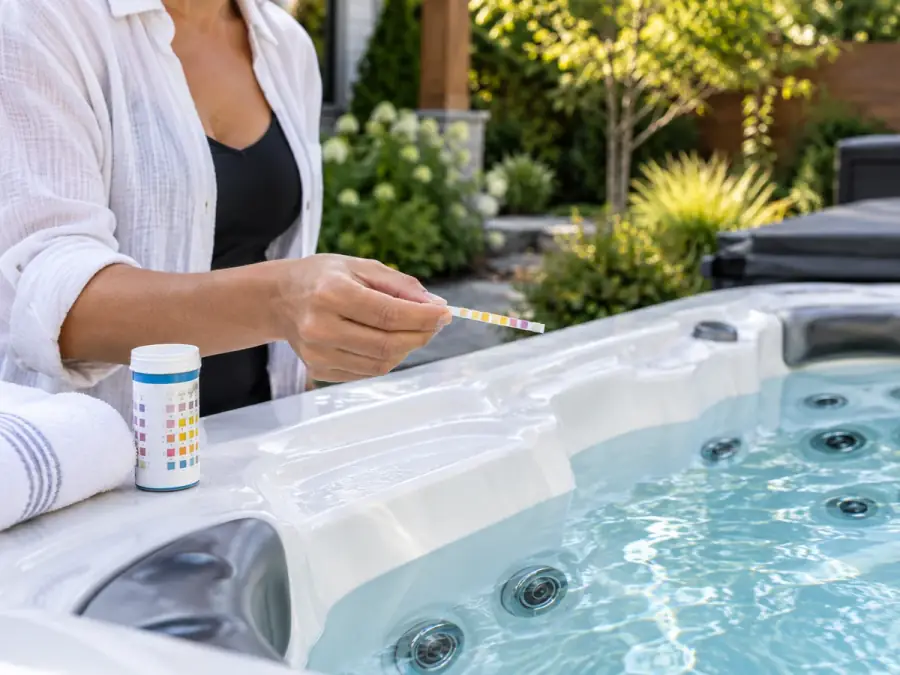
- Test what protects bathers. Check free chlorine or bromine and pH with a suitable, in-date kit and follow its instructions. The CDC lists at least 3 ppm free chlorine or 4–8 ppm bromine, with pH 7.0–7.8 for hot tubs.
- Read your sanitizer ingredients. Cyanuric acid may already be present in stabilized chlorine products such as dichlor or trichlor. A separate stabilizer bottle is not a substitute for sanitizer.
- Follow a compatible treatment plan. Check the spa manual and an EPA-registered sanitizer label. Ask your dealer before changing chlorine or bromine systems, and never mix different chemicals or dosing systems.
- Retest before use. If the sanitizer or pH is out of the operating range, keep bathers out until the water is corrected according to label and manufacturer guidance.
For the ongoing test-and-maintenance routine, see the Hot Tub Water Care Guide. For a refill or water replacement, our hot tub refilling guide explains the practical setup steps.
What if Cyanuric Acid Is Already in Your Hot Tub?
If you have used stabilized chlorine, your water may already contain CYA. A positive result does not by itself prove the water is unsafe, but it does mean that a free-chlorine reading alone may not tell the whole story about disinfection speed. Avoid adding more stabilizer until you understand the product and have verified water quality.
- Confirm the result. Use a test that can measure CYA in the expected range or ask a pool/spa retailer to test a fresh sample. Note the sanitizer name and how long the water has been in use.
- Check sanitation first. Test free chlorine or bromine and pH. Do not soak if the water is poorly sanitized, dirty, or otherwise outside operating limits.
- Review your sanitizer. Read the active ingredient and product label. Discuss an approved unstabilized treatment option with the spa manufacturer or dealer rather than switching products blindly.
- Plan water replacement when appropriate. Draining and replacing a portion of the water with suitably balanced, low-CYA fill water can reduce the concentration. How much to replace depends on the measured reading, fill-water result, spa volume and manufacturer instructions. Avoid draining or refilling into freezing conditions without winterization precautions.
CYA Result: Quick Decision Table
| What you found | What it means | Next action |
|---|---|---|
| CYA 0 or very low; sanitizer and pH acceptable | Not automatically a problem in a hot tub. | Do not add CYA; keep routine sanitizer and pH testing. |
| CYA detected; sanitizer and pH acceptable | There may be stabilized-chlorine residue or another source. | Review product history, verify the reading and plan a manufacturer-compatible approach. |
| CYA detected; sanitizer or pH not acceptable | Sanitation needs attention before anyone soaks. | Keep bathers out; follow product labels, correct water care and seek dealer help if uncertain. |
| CYA level rising with repeated dichlor or trichlor use | The sanitizer choice may be adding stabilizer over time. | Discuss alternatives and a water replacement schedule with your spa dealer. |
Which Sanitizer Should You Use Instead of Adding CYA?
Use a disinfectant specifically registered and labeled for hot tubs and compatible with the spa’s water-care system. Some systems use an unstabilized chlorine product; others use bromine. Product compatibility, dosing, equipment instructions and local requirements matter. The CDC’s hot tub guidance gives minimum sanitizer and pH checks, but it does not replace the label for your chosen treatment.
Frequently Asked Questions
Is 0 ppm cyanuric acid too low for a hot tub?
No. A zero CYA reading is not a reason to add stabilizer to a hot tub under CDC guidance. Focus on disinfectant and pH.
Is 30–50 ppm CYA a safe target for my spa?
Do not use that pool-style range as a generic spa target. The CDC recommends against CYA and stabilized chlorine use in hot tubs.
Does using dichlor add cyanuric acid?
Dichlor is a stabilized chlorine product that can contribute CYA to the water. Check the exact product label and ask the manufacturer about a compatible sanitation plan.
Can I lower CYA with more chlorine or a scale remover?
Adding sanitizer or a scale-control product is not a reliable way to remove dissolved CYA. Confirm your test and follow an approved water-replacement plan if the concentration needs to be reduced.
Does this advice apply to swimming pools too?
No. Some outdoor pools intentionally use CYA to reduce UV chlorine loss. This article addresses hot tubs and spas, which have different CDC recommendations.
Sources and Safety Notes
This page follows the CDC’s residential pool and hot tub testing guidance and its hot tub safety guidance. Follow the current spa manual and the EPA-registered sanitizer label for product-specific instructions. Never mix chemicals directly. This page deliberately does not provide a CYA addition calculator because the former calculator encouraged an unsupported hot-tub target and used incorrect concentration-to-mass math.