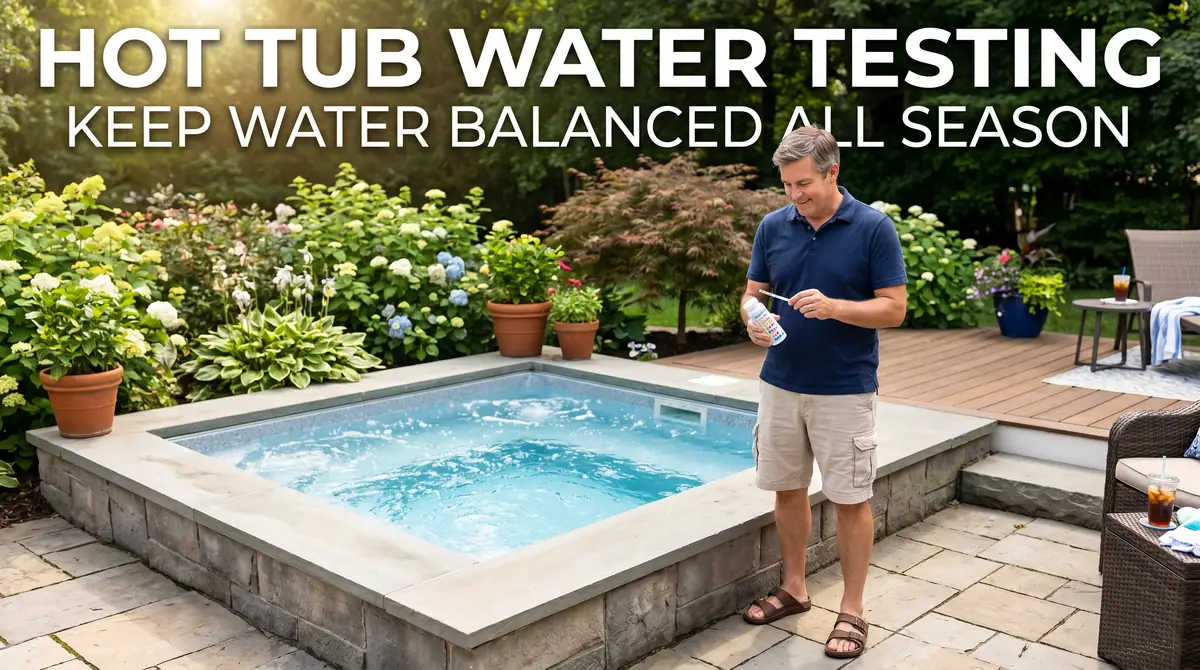
Hot Tub Summer Maintenance Tips to Keep Water Balanced All Season

Summer hot tub maintenance doesn’t have to be complicated. The key is staying consistent with testing, filter cleaning, shocking, and water monitoring before problems develop.
A few minutes of maintenance each week can keep your water clear, balanced, and ready for every summer soak.
Why Summer Creates More Hot Tub Water Problems
Summer conditions can change hot tub water much faster than many owners expect.
Higher temperatures speed up chemical reactions, sunlight reduces sanitizer effectiveness, and extra bathers introduce oils, sunscreen, sweat, and other contaminants into the water.
Summer hot tub water becomes harder to balance because heat, sunlight, and increased use cause sanitizer levels to drop faster while contaminants build up more quickly.
Many new owners notice that water stays balanced easily during cooler months but becomes more difficult to manage in July and August. Understanding these seasonal changes is the first step toward preventing problems.
If you’d like a deeper understanding of water chemistry, this guide on how to balance hot tub water can help you understand what each water parameter does.
Test Your Water More Often During Summer
Regular testing is the foundation of good summer maintenance.
How Often Should You Test Hot Tub Water in Summer?
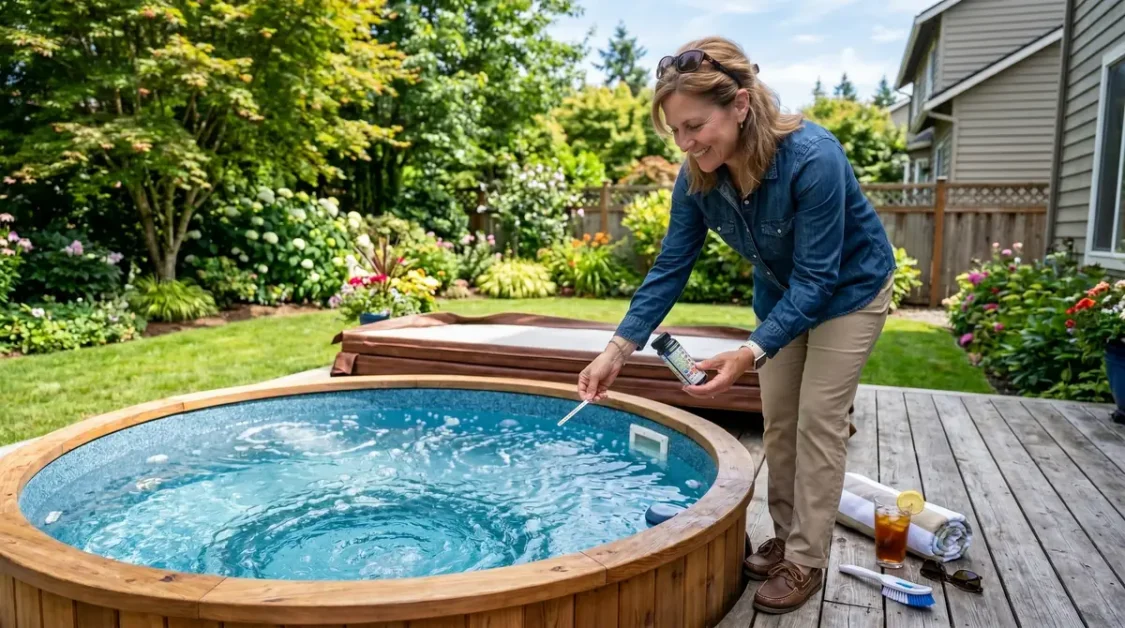
Test your water at least three to four times per week during summer. If several people use the spa over a weekend, test it afterward as well.
A common mistake hot tub owners make is testing only once per week. During hot weather, water chemistry can change significantly in just a few days.
Ideal Summer Water Balance Ranges
| Water Factor | Recommended Range |
|---|---|
| pH | 7.4 to 7.6 |
| Total Alkalinity | 80 to 120 ppm |
| Chlorine | 1 to 3 ppm |
| Bromine | 3 to 5 ppm |
| Calcium Hardness | 150 to 250 ppm |
Simple Summer Testing Routine
- Monday: Full water test
- Wednesday: Check sanitizer and pH
- Friday: Full water test
- After heavy use: Check sanitizer immediately
Reliable hot tub test strips make this process quick and easy.
Shock Your Hot Tub Weekly
Shocking helps remove contaminants that normal sanitizer levels cannot fully eliminate.
Why Summer Requires More Frequent Shocking
Summer brings:
- More bathers
- More sunscreen and body oils
- More organic contaminants
- Faster sanitizer depletion
These factors increase the demand on your water.
Signs Your Hot Tub Needs Shock Treatment
Watch for:
- Cloudy water
- Strong chlorine odor
- Foamy water
- Dull water appearance
- Heavy use during weekends
Best Time to Shock a Hot Tub
The best time to shock your spa is during the evening.
Sunlight can reduce the effectiveness of some sanitizers, so shocking after sunset allows the treatment to work more efficiently.
If you’re unsure about proper shock procedures, follow these step by step hot tub shocking instructions before your next treatment.
Clean Filters More Frequently
Your filter works harder in summer than at any other time of year.
More contaminants mean more debris becomes trapped in the filter media.
Weekly Filter Maintenance
- Turn off the spa.
- Remove the filter.
- Rinse thoroughly with a garden hose.
- Inspect for buildup or damage.
- Reinstall the filter.
Monthly Deep Cleaning
Every four weeks:
- Soak the filter in a filter cleaning solution.
- Rinse thoroughly.
- Allow it to dry if possible.
- Replace damaged cartridges.
Dirty filters can cause:
- Cloudy water
- Poor circulation
- Increased sanitizer demand
- Reduced jet performance
Following a proper hot tub filter cleaning guide helps prevent many summer water issues.
Lower Your Water Temperature for Summer Comfort
Many hot tub owners continue using winter temperature settings throughout summer.
That often makes soaking less enjoyable.
Recommended Summer Temperature
Most people find that 98°F to 100°F provides a comfortable summer soak.
Benefits of Lowering the Temperature
- Improved comfort
- Less overheating
- Reduced evaporation
- Lower energy costs
- Less stress on equipment
In most backyard hot tub setups, reducing the temperature by just a few degrees makes a noticeable difference during hot weather.
You can learn more about ideal seasonal settings in this best hot tub temperature guide.
Keep the Cover Closed When Not Using the Tub
Your cover is one of the most important maintenance tools you own.
Why Covers Matter in Summer
A properly fitted cover helps:
- Block UV rays
- Reduce debris
- Limit evaporation
- Protect sanitizer levels
- Keep insects out
One of the most common summer mistakes is leaving the cover open for hours after using the spa.
While a brief airing out period is fine after shocking, extended exposure to direct sunlight can speed up sanitizer loss and increase water maintenance needs.
If your cover shows signs of wear, these tips for preventing mold on your hot tub cover can help extend its life.
Drain and Refill Water Before Problems Start
Even perfectly maintained water eventually reaches a point where replacement is necessary.
How Often Should Hot Tub Water Be Changed During Summer?
Most hot tubs should be drained and refilled every three to four months.
Heavy summer use may require more frequent water changes.
Signs It’s Time for Fresh Water
- Water won’t stay balanced
- Persistent cloudiness
- Increased foam
- Strong odors
- High total dissolved solids
You may notice that no matter how carefully you adjust chemicals, the water simply doesn’t respond the way it used to. That’s usually a sign that fresh water is needed.
This guide explains when to drain your hot tub and what signs to watch for.
Common Summer Hot Tub Problems and How to Prevent Them
Cloudy Water
Usually caused by:
- Dirty filters
- Low sanitizer
- Heavy bather load
Foamy Water
Often caused by:
- Lotions
- Sunscreen
- Soap residue
Algae Growth
Less common in hot tubs than pools but possible when sanitizer levels drop too low.
Strong Chemical Smell
A strong chlorine smell usually indicates contaminants are overwhelming the sanitizer, not that there is too much chlorine.
Skin Irritation
Can result from:
- Low sanitizer
- High sanitizer
- Improper pH balance
When any of these issues appear, the water care troubleshooting guide can help you identify the cause and fix it quickly.
Tailored Action Plan
If your goal is clear water all summer, focus on consistency rather than large chemical corrections.
Weekly Summer Maintenance Schedule
Monday
- Test pH
- Test sanitizer
- Adjust if needed
Wednesday
- Check alkalinity
- Remove debris
- Inspect water clarity
Friday
- Test full water chemistry
- Check filter condition
Weekend
- Shock after heavy use
- Rinse filter if needed
Monthly Tasks
- Deep clean filter
- Inspect cover condition
- Check jets and circulation
- Review water balance records
- Replace worn test strips
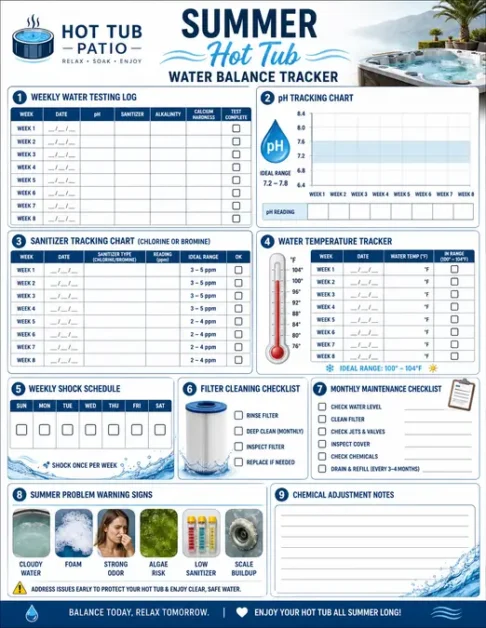
30 Day Water Balance Challenge
Track these values for one month:
- pH
- Alkalinity
- Sanitizer level
- Water temperature
- Water clarity
Most owners quickly identify patterns that make balancing water easier and more predictable.
Downloadable Resource
Frequently Asked Questions
How often should I test hot tub water during summer?
Test your water at least three to four times per week and after periods of heavy use.
Can hot tub water become too warm in summer?
Yes. Hot outdoor temperatures can raise water temperature beyond your preferred setting. Lowering the thermostat to 98°F to 100°F often improves comfort.
How often should I shock my hot tub in hot weather?
Most spas benefit from weekly shocking during summer. Heavy use may require shock treatments twice per week.
Why does my hot tub get cloudy after summer parties?
Extra bathers introduce oils, sweat, sunscreen, and contaminants that quickly overwhelm sanitizer levels and filtration systems.
Should I leave my hot tub cover open during hot weather?
No. Keeping the cover closed when the spa is not in use helps protect water quality and reduce chemical loss.
What is the best summer temperature for a hot tub?
Most hot tub owners find 98°F to 100°F comfortable during summer, though personal preference varies.