

How to Get Your Hot Tub Ready for Summer Use

Getting your hot tub ready for summer mostly comes down to fresh water, clean filters, balanced chemistry, and a simple weekly routine. Once everything is cleaned and balanced, summer maintenance becomes much easier and your water stays clearer for longer.
A little preparation now can save you from cloudy water, strong odors, and frustrating chemical problems later in the season. Follow these steps and your hot tub will be ready for relaxing summer evenings, backyard gatherings, and stress-free soaking.
If you want more seasonal upkeep ideas throughout the year, these seasonal hot tub care tips can help keep your spa running smoothly.
Why Summer Hot Tub Prep Matters
Preparing your hot tub for summer helps prevent cloudy water, bacteria buildup, poor circulation, and water balance problems during warm weather.
Hot tubs behave differently once temperatures rise outside. Warm weather speeds up bacteria growth, burns through sanitizer faster, and adds more contaminants to the water. Things like sunscreen, sweat, pollen, grass clippings, and backyard dust can quickly throw your water chemistry off balance.
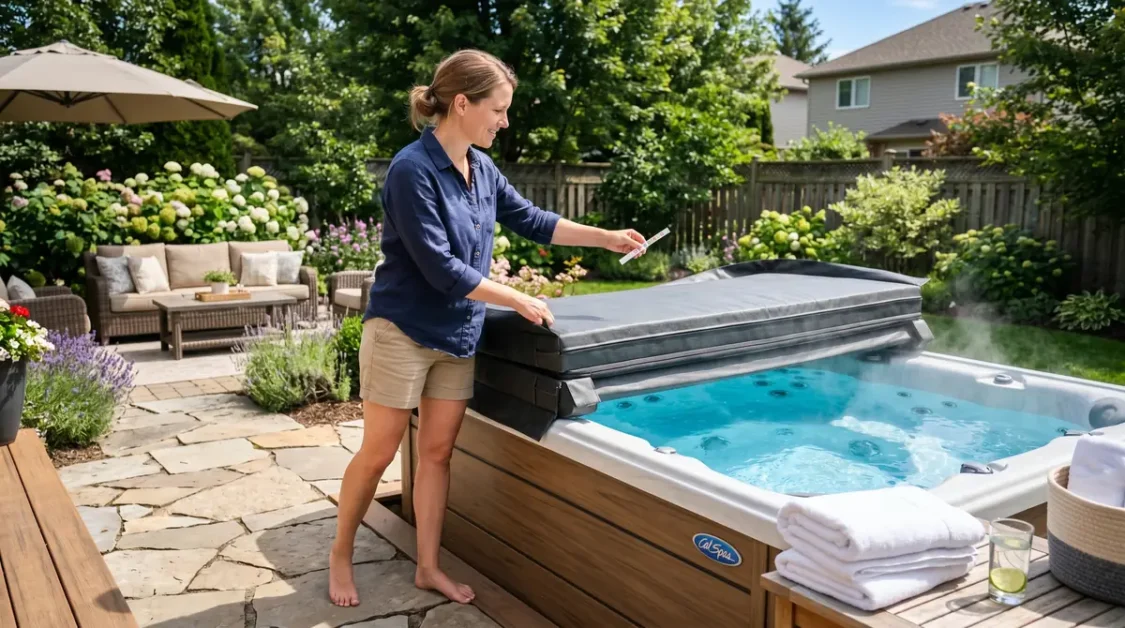
You may also notice your filters working harder during summer because people tend to use the hot tub more often for parties, relaxing evenings, or cooler nighttime soaks. A common mistake many owners make is assuming clear water means clean water. In reality, leftover winter contaminants and dissolved solids can still create problems even when the water looks fine.
For a deeper look at balancing and protecting your water during every season, this hot tub water care guide explains the basics in beginner-friendly language.
Complete Summer Hot Tub Opening Checklist
To get your hot tub ready for summer, drain old water, clean the shell and filters, inspect equipment, refill with fresh water, rebalance chemicals, and shock the tub before use.
Drain the Old Water
Draining old water gives your hot tub a clean starting point for summer. Even if the water still looks clear, it may contain leftover sanitizer byproducts, body oils, and dissolved solids that make balancing chemicals harder.
Signs your water should be replaced include:
- strong odor
- foamy water
- dull or cloudy appearance
- difficulty balancing chemicals
- water older than 3 to 4 months
Before draining, remove leaves or debris from the surface so they do not clog the drain. Many owners use a submersible pump to speed things up, especially for larger tubs.
If you want the quickest method possible, follow this step-by-step hot tub draining guide for faster water removal.
Clean the Hot Tub Shell and Jets
Once the water is drained, wipe down the shell, seats, and waterline. This removes residue that built up over winter or during spring downtime.
Focus on:
- the waterline ring
- around jets
- corners and seating areas
- under headrests
- the underside of the cover
A common mistake hot tub owners make is using household cleaners. Many leave behind soap residue that creates foam problems later. Use hot tub safe cleaners or diluted vinegar instead.
You can also follow these safe vinegar cleaning tips for hot tubs if you want a gentler cleaning method.
Rinse or Replace the Filters
Dirty filters are one of the biggest causes of cloudy water early in the summer season.
Start by rinsing the filters thoroughly with a garden hose to remove trapped debris. If the filters look oily or heavily discolored, soak them overnight in a filter cleaning solution before rinsing again.
Replace the filter if:
- the pleats are damaged
- the filter stays dirty after cleaning
- water flow feels weak
- the filter is more than a year old
In most backyard hot tub setups, a clean filter makes a bigger difference than people expect. Better circulation helps chemicals work properly and keeps the water clearer longer.
For a full walkthrough, this hot tub filter cleaning guide explains how to deep clean filters correctly.
Inspect Pumps, Jets, and the Cover
Before refilling the tub, inspect the equipment closely.
Check for:
- visible leaks
- cracked hoses
- weak jet pressure
- unusual pump sounds
- mold or mildew on the cover
- damaged cover seals
Spring is also a good time to look for signs of insects or rodents around equipment compartments if the tub sat unused.
Many owners overlook small leaks during reopening season because everything seems fine at first. Catching issues early can prevent expensive repairs later in the summer.
If something seems off, this hot tub troubleshooting and maintenance guide can help narrow down common equipment problems.
Refill With Fresh Water
Fresh water gives you a much easier starting point for balancing chemistry. Reusing old water often leads to frustrating chemical swings and cloudy conditions.
Refill the tub slowly with a clean garden hose. Some manufacturers recommend placing the hose inside the filter compartment first to help reduce trapped air in the plumbing lines.
Avoid overfilling the tub. The water level should usually sit slightly above the highest jet.
If you need a beginner-friendly walkthrough, these hot tub refill instructions make the process easier.
Balance the Water Chemistry
Hot tub water should have a pH between 7.4 and 7.6 with proper sanitizer levels to stay clean and comfortable during summer use.
One of the biggest beginner mistakes is adding chemicals in random order. The sequence matters because each adjustment affects the next reading.
Recommended chemical balancing order:
- Adjust total alkalinity
- Balance pH levels
- Add sanitizer
- Shock the water
- Retest after circulating
Ideal summer ranges:
- pH: 7.4 to 7.6
- alkalinity: 80 to 120 ppm
- chlorine: 1 to 3 ppm
- bromine: 3 to 5 ppm
After testing the water, you should let the pumps circulate for at least 20 to 30 minutes before retesting.
To avoid guessing chemical amounts, use this hot tub chemical dosage calculator to match your tub size correctly.
Shock the Hot Tub Before Use
Shocking the water helps eliminate contaminants, chloramines, and bacteria that regular sanitizer may miss.
This is especially important after:
- refilling the tub
- heavy spring pollen exposure
- long periods without use
- large gatherings or parties
You can use either chlorine shock or non chlorine shock depending on your sanitizer system. After shocking, allow the water to circulate fully before soaking.
Many owners skip this step during summer setup and end up fighting cloudy water only days later.
If this is your first time doing it, these step-by-step hot tub shocking instructions explain the process clearly.
Adjust the Temperature for Summer
Most hot tubs feel comfortable in summer between 95°F and 99°F depending on outdoor temperatures and personal preference.
During hot weather, many owners lower the water temperature several degrees compared to winter settings. Cooler water feels more refreshing and also reduces energy costs during the summer months.
Some people even use their hot tub almost like a mini plunge pool by lowering temperatures into the low 90s during heat waves.
To keep the water comfortable:
- lower the thermostat gradually
- keep the cover closed during peak sun
- open the cover briefly if heat builds up
- avoid running temperatures above 100°F on very hot days
If you are unsure where to set your spa, this best hot tub temperature guide breaks down ideal ranges for different seasons.
Common Summer Hot Tub Problems
Cloudy Water After Opening
Cloudy water after reopening is usually caused by:
- dirty filters
- low sanitizer
- poor circulation
- leftover contaminants from old water
This is something many new hot tub owners deal with during the first week after setup. The good news is that it usually clears quickly once filtration and chemistry stabilize.
If your water stays cloudy, these tips for clearing cloudy hot tub water can help identify the exact cause.
Strong Chlorine Smell
A strong chlorine smell does not always mean there is too much chlorine in the water. In many cases, it means chloramines have built up because the sanitizer is no longer working effectively.
Shocking the tub usually solves this problem by breaking apart contaminants and restoring sanitizer performance.
If the smell becomes overwhelming, these common signs of too much chlorine in a hot tub explain what to watch for.
Foamy Water in Summer
Foam becomes more common during summer because of:
- sunscreen
- lotions
- sweat
- body oils
- heavier bather loads
Even swimsuits washed in detergent can contribute to foam buildup.
A quick shower before soaking helps more than most people realize.
If foam keeps returning, these common causes of hot tub foam explain how to stop it.
Water Gets Too Hot During the Day
Direct sunlight and insulated covers can cause water temperatures to climb during the day, especially in southern U.S. states.
To prevent overheating:
- lower the thermostat slightly
- crack the cover open briefly
- run filtration during cooler evening hours
- avoid leaving the cover fully sealed in extreme heat
These energy efficient hot tub tips can also help reduce heat buildup and operating costs during summer.
Simple Weekly Summer Maintenance Routine
Summer maintenance gets much easier once you follow a simple routine.
Test Water 2 to 3 Times Per Week
Warm weather changes water chemistry faster than winter conditions. Frequent testing helps catch problems early before the water turns cloudy or develops odor.
Rinse Filters Weekly
Quick weekly rinses remove pollen, dust, and oils before they clog the filter completely.
Shock the Water After Heavy Use
Large gatherings and frequent soaking increase contaminants quickly. A small shock treatment after heavy use helps maintain clarity.
Keep the Cover Clean and Dry
Summer humidity can create mildew underneath the cover if moisture stays trapped too long.
Shower Before Soaking
This simple habit removes sunscreen, sweat, and body oils that commonly cause foam and cloudy water.
For more ways to keep your spa cleaner during busy summer months, these hot tub hygiene best practices are worth following.
Mistakes to Avoid When Reopening a Hot Tub
A few simple mistakes can create frustrating water problems later.
Avoid these common reopening errors:
- skipping filter cleaning
- reusing old water too long
- adding chemicals too quickly
- ignoring mold under the cover
- forgetting to shock after refilling
- keeping water temperatures too high in summer
- testing water before chemicals fully circulate
A common mistake hot tub owners make is trying to fix multiple chemical readings all at once. Small gradual adjustments usually work much better.
If your water chemistry keeps acting unpredictable, this water care troubleshooting guide can help pinpoint the problem.
Tailored Action Plan
30 Minute Summer Hot Tub Reset
Use this quick workflow at the beginning of every summer season:
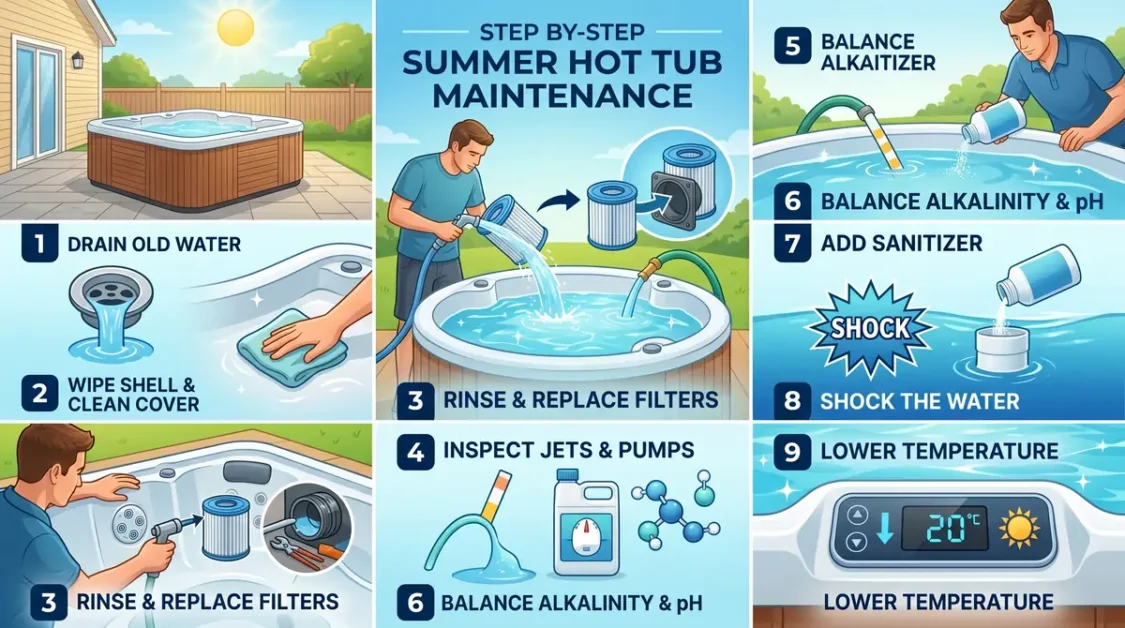
- Drain old water
- Wipe shell and clean cover
- Rinse or replace filters
- Inspect jets and pumps
- Refill with fresh water
- Balance alkalinity and pH
- Add sanitizer
- Shock the water
- Lower temperature for summer comfort
If you want to stay ahead of seasonal problems year-round, this complete hot tub maintenance guide is a great place to start.
Beginner Summer Water Testing Routine
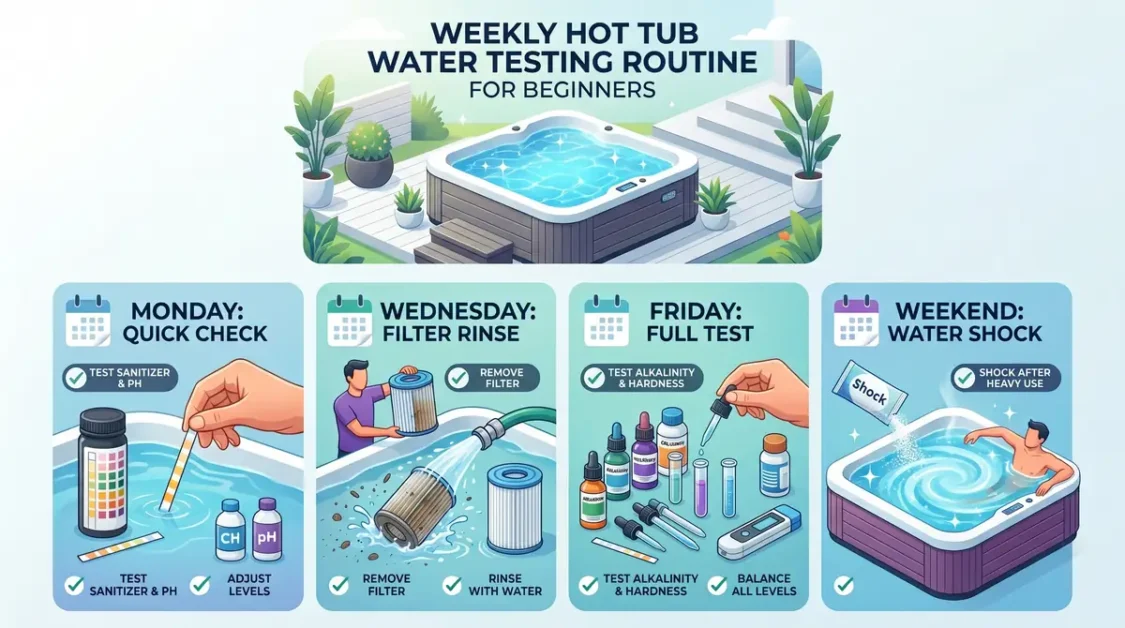
Weekly schedule:
- Monday: test sanitizer and pH
- Wednesday: quick filter rinse
- Friday: full water test
- Weekend: shock after heavy use
Quick Troubleshooting Table
| Problem | Most Common Cause | Quick Fix |
|---|---|---|
| Cloudy water | Dirty filter | Clean or replace filter |
| Strong odor | Chloramines | Shock the water |
| Foam | Oils and lotions | Shock and rinse filters |
| Water too hot | Summer heat | Lower thermostat |
| Weak jets | Dirty filter or low flow | Clean filter and inspect pump |
Printable Summer Checklist Ideas Downloadable
Helpful items to keep nearby:
- water test strips
- filter cleaner
- sanitizer
- non chlorine shock
- garden hose filter
- microfiber cleaning cloth
Check here for free download for every week use.

You can also explore more free hot tub owner resources for maintenance tools and seasonal guides.
When to Fully Change Hot Tub Water in Summer
Most hot tubs should have the water changed every 3 to 4 months, but heavy summer use may require more frequent water changes.
You may notice that water becomes harder to balance once dissolved solids build up over time. Even strong sanitizer levels stop working effectively when the water gets overloaded.
Signs it is time for a water change:
- persistent cloudiness
- strong odor
- foaming
- dull water appearance
- difficulty balancing chemicals
If your tub gets frequent use during summer, this guide on how often to change hot tub water explains when to schedule the next refill.
Frequently Asked Questions
How often should I test my hot tub water in summer?
Most hot tubs should be tested 2 to 3 times per week during summer because warmer temperatures and heavier use change water chemistry faster.
What temperature should a hot tub be during summer?
Most people prefer summer hot tub temperatures between 95°F and 99°F for more comfortable warm weather soaking.
Do I need to drain my hot tub every summer?
If your water is older than 3 to 4 months or difficult to balance, a full drain and refill is usually the best option before summer.
Why does my hot tub get cloudy faster in summer?
Summer heat, sunscreen, sweat, body oils, and heavier use can overwhelm filters and sanitizer more quickly.
Can I use my hot tub like a small pool in summer?
Many owners lower the temperature into the low 90s during hot weather for cooler soaking sessions.
How long should I run my hot tub filter in summer?
Most hot tubs benefit from at least 4 to 8 hours of filtration daily during summer, depending on usage and weather conditions.
Should I shock my hot tub more often in hot weather?
Yes. Heavy use, higher temperatures, and summer contaminants usually require more frequent shock treatments.
What happens if I leave old water in my hot tub too long?
Old water becomes harder to sanitize properly and often leads to odor, cloudy water, foam, and scaling problems.