
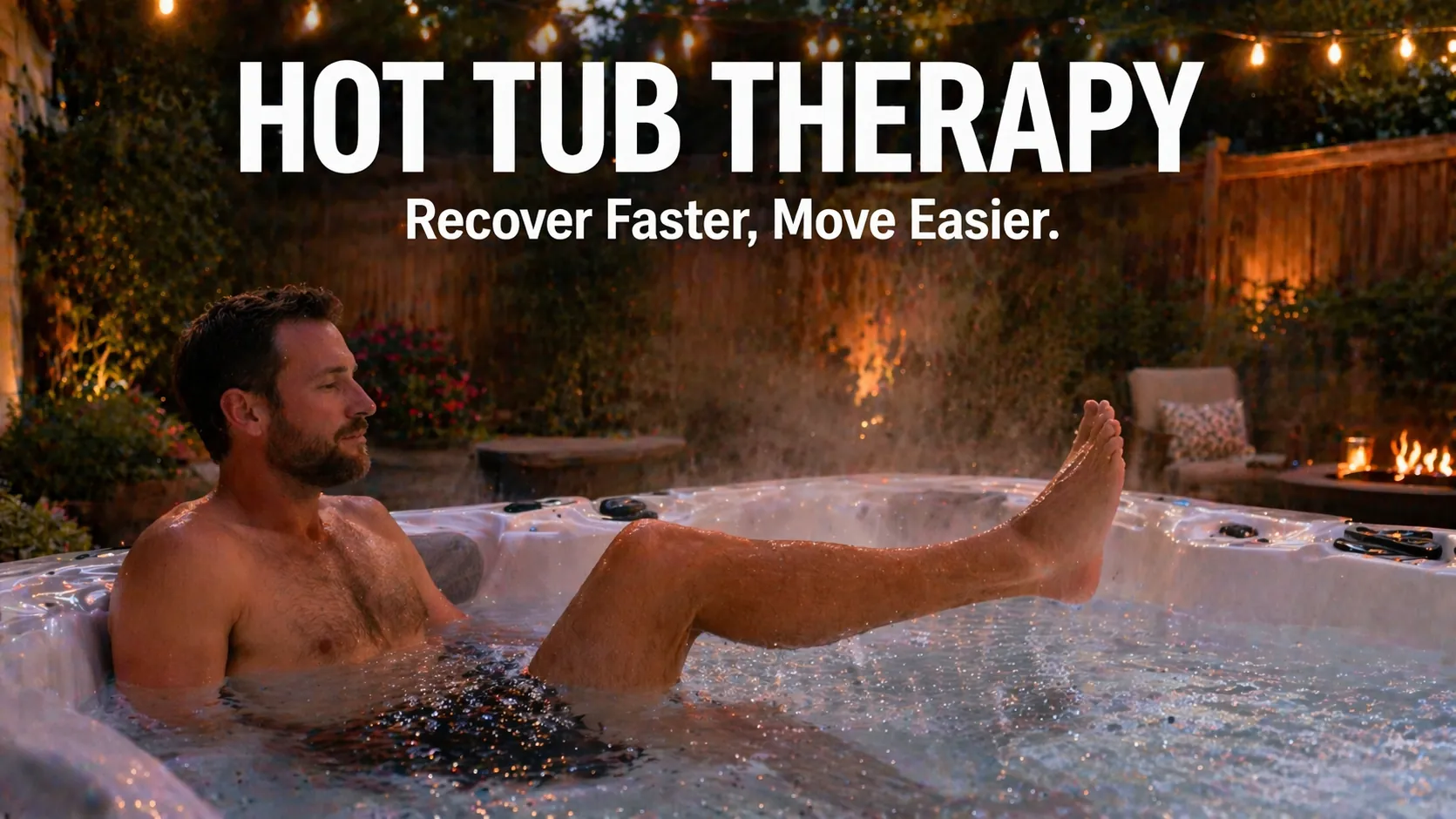
Hot Tub Therapy After Knee Replacement: When It’s Safe and How to Use It Right

Recovering from knee replacement surgery can feel slow and frustrating. One day you’re making progress, and the next day your knee feels stiff, swollen, or just not cooperating.
That’s completely normal.
A lot of people start looking for ways to ease that discomfort, and hot tub therapy often comes up. It sounds simple, just sit in warm water, right? But timing and technique matter more than most people realize.
Used the right way, a hot tub can help you move better, feel less pain, and stay consistent with your recovery. Used too early or incorrectly, it can slow things down.
Let’s walk through exactly how to use it safely and actually benefit from it.
Can You Use a Hot Tub After Knee Replacement?
Short answer: Yes, but only after your incision has fully healed and your doctor says it’s safe.
Most people need to wait several weeks before using a hot tub. Getting in too early can increase your risk of infection and swelling, which can delay your recovery.
If you’re unsure, don’t guess. Always follow medical advice first.
Why Hot Tub Therapy Helps Knee Replacement Recovery
Hot tub therapy works because of how water interacts with your body. It’s not just about comfort, there’s real science behind it.
Buoyancy reduces joint pressure
When you’re in water, your body weight is partially supported. That means less pressure on your knee, making it easier to move.
Warm water improves circulation
Heat increases blood flow, which helps your body deliver oxygen and nutrients to the healing area.
Hydrostatic pressure reduces swelling
Water naturally applies gentle pressure around your body, which can help reduce fluid buildup in your knee.
Heat relaxes tight muscles
After surgery, muscles around your knee tend to tighten up. Warm water helps loosen them so you can move more freely.
Mental recovery matters too
Recovery isn’t just physical. Sitting in warm water can reduce stress and help you stay motivated.
If you want a broader look at how soaking supports your body, these hot tub health benefits explain why it works beyond just recovery.

When Is It Safe to Use a Hot Tub After Knee Surgery?
This is one of the most important parts of your recovery.
Typical recovery timeline
While everyone heals differently, most follow a general pattern:
- Week 1 to 2: Avoid hot tubs completely
- Week 3 to 6: Possible use with doctor approval
- 6 weeks and beyond: Safer for regular use
Signs your body is ready
You’re likely ready when:
- Your incision is fully closed
- There’s no redness or drainage
- Swelling is under control
Why using it too early is risky
Jumping in too soon can lead to:
- Infection from bacteria in water
- Increased swelling due to heat
- Slower healing overall
If you’re ever unsure, it’s safer to wait.
How to Use a Hot Tub Safely After Knee Replacement
Once you’re cleared, the next step is using it correctly.
Best temperature range
Stick to 95°F to 100°F.
Hotter water can feel good in the moment but may increase swelling.
How long to stay in
Start small:
- First sessions: 10 to 15 minutes
- Gradually increase to 20 minutes
Safe way to get in and out
This is where injuries can happen.
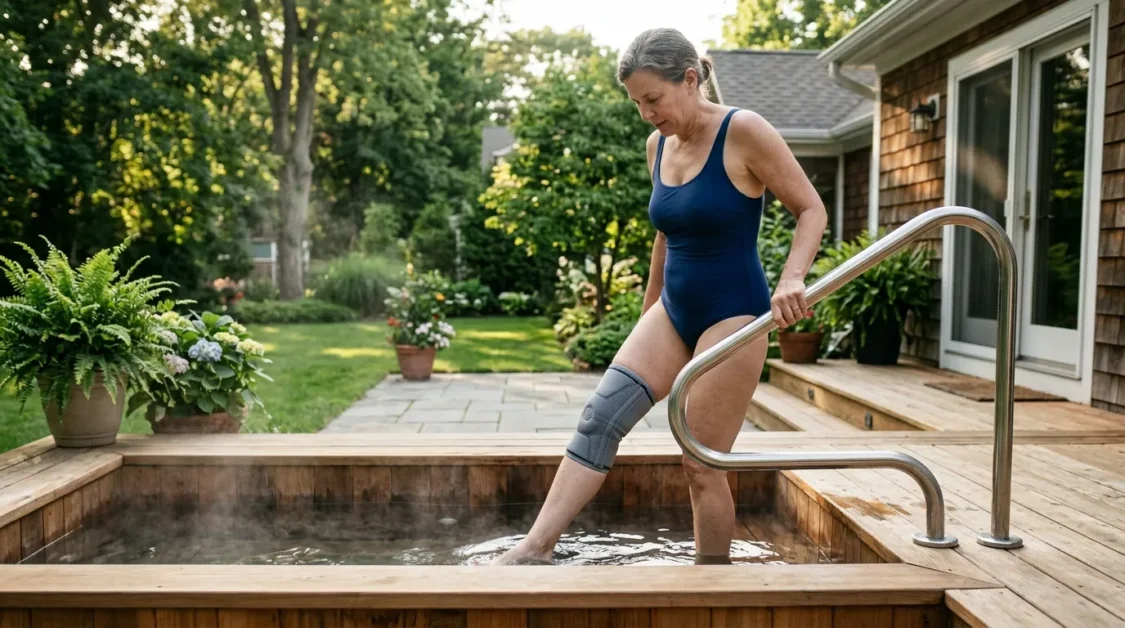
- Use a handrail or assistance
- Step in slowly
- Avoid twisting your knee
How often should you use it?
2 to 4 times per week is usually enough. Daily use can be fine later in recovery, but don’t rush it.
Keep your water clean
Clean water matters more than you think. Poor water quality can increase infection risk.
If you’re not confident about your setup, this hot tub water care guide shows how to keep your water safe and balanced.

Step by Step: Your First Hot Tub Session After Surgery
Your first session should be simple and controlled.
- Get approval from your doctor
- Make sure your water is clean and balanced
- Set temperature below 100°F
- Enter slowly with support
- Sit and relax, don’t rush into movement
- Stay for no more than 15 minutes
- Monitor your knee afterward
If you notice swelling or discomfort later, shorten your next session.
Best Hot Tub Exercises for Knee Replacement Recovery
Once you’re comfortable in the water, you can start adding gentle movement.
Beginner exercises
Start here if you’re early in recovery.
- Straight leg raises
- Slow knee bends
- Gentle range-of-motion movements
Intermediate exercises
As your strength improves:
- Water walking forward and backward
- Side steps
- Controlled leg lifts
Advanced recovery movements
Later on, you can add:
- Balance exercises
- Light resistance movements
- Controlled movement drills
Consistency matters more than intensity.
If you want structured routines, these hot tub workout routines can help guide your progression.
Common Mistakes That Slow Down Recovery
A lot of people unknowingly make these mistakes.
Starting too soon
This is the biggest one. Waiting a little longer is always safer than rushing.
Water too hot
Higher temperatures can increase inflammation instead of helping it.
Staying too long
Long sessions can lead to fatigue and swelling.
Doing too much too fast
Just because it feels easier in water doesn’t mean you should push harder.
Ignoring pain signals
Pain is feedback. Don’t push through it.
Who Should Avoid Hot Tub Therapy After Surgery?
Hot tub therapy isn’t right for everyone.
Open wounds or stitches
If your incision isn’t fully healed, stay out of the water.
Certain medical conditions
Be cautious if you have:
- Heart conditions
- Circulation issues
- Diabetes
High infection risk
If your immune system is compromised, talk to your doctor first.
For a deeper look at risks, this hot tub benefits and risks guide helps you understand when it’s safe and when to avoid it.
Hot Tub Therapy vs Physical Therapy
This isn’t an either or situation.
What hot tubs help with
- Pain relief
- Easier movement
- Muscle relaxation
What they don’t replace
- Strength building
- Movement correction
- Structured rehab
Best approach
Use both together.
Hot tubs make movement easier. Physical therapy makes movement stronger.
Tips to Speed Up Recovery with Hot Tub Use
If you want better results, focus on these habits.
Be consistent
Short, regular sessions are better than long, occasional ones.
Combine with rehab
Use the hot tub before or after physical therapy to improve mobility.
Use jets wisely
Let them massage around your knee, not directly on sensitive areas.
Keep your water balanced
Poor water quality can cause skin irritation or infection.
If you’re thinking about adding extras like Epsom salt, read this guide on using Epsom salt in your hot tub before trying it.
Pros and Cons of Hot Tub Therapy for Knee Replacement
Here’s a quick breakdown.
| Pros | Cons |
|---|---|
| Reduces pain | Infection risk if used too early |
| Improves mobility | Can increase swelling if too hot |
| Helps relaxation | Not a replacement for rehab |
| Supports recovery consistency | Requires proper maintenance |
Is Buying a Hot Tub Worth It for Recovery?
If you already have one, it’s a great tool.
If you’re thinking about buying one just for recovery, it depends.
Short-term benefits
- Pain relief
- Easier movement
- Better consistency
Long-term value
- Ongoing relaxation
- Muscle recovery
- Stress reduction
Hot tubs aren’t just for recovery, they’re something you’ll likely keep using long after your knee heals.
Final Thoughts
Hot tub therapy can make a big difference in your knee replacement recovery, but only if you use it the right way.
The key is simple.
Wait until it’s safe. Start slow. Stay consistent.
When you combine it with proper rehab and smart habits, you’ll notice better movement, less pain, and a smoother path back to normal life.
Frequently Asked Questions
When can I go in a hot tub after knee replacement?
Most people need to wait several weeks until the incision is fully healed and their doctor gives approval.
Is hot water good for knee swelling?
It can help reduce stiffness, but water that’s too hot may increase swelling if used too early.
How long should I stay in the hot tub?
Start with 10 to 15 minutes and gradually increase to about 20 minutes.
Can hot tub therapy replace physical therapy?
No, it supports recovery but doesn’t replace structured rehabilitation.
What temperature is safest after surgery?
Keep the water between 95°F and 100°F for safe and effective use.