

Benefits of Hot Tubs for Pregnant Women: What Is Safe and What to Avoid

The benefits of hot tubs for pregnant women are mostly tied to the comfort that warm water can provide.
Relief from back pain, reduced muscle tension, better sleep, improved relaxation, and temporary circulation support are all reasons many expecting mothers consider using a hot tub.
However, traditional hot tubs also carry overheating risks that should not be ignored.
For most pregnant women, the safest approach is to talk with their healthcare provider and consider lower-risk alternatives such as warm baths, prenatal hydrotherapy, heated therapy pools, or gentle swimming.
Pregnancy can be uncomfortable at times, but there are plenty of ways to find relief while keeping both you and your baby safe.

Important Medical Disclaimer
This article is for educational purposes only and should not be considered medical advice. Pregnancy affects every woman differently, and recommendations about hot tub use can vary based on your health history, pregnancy stage, and individual risk factors.
Before using a hot tub, spa, heated pool, or any form of warm water therapy during pregnancy, speak with your healthcare provider or obstetrician. If you experience dizziness, overheating, dehydration, fainting, unusual discomfort, or any concerning symptoms, leave the water immediately and seek medical advice.
Hot Tub Patio does not provide medical diagnoses, treatment recommendations, or professional healthcare services. Always follow the guidance of your licensed healthcare provider regarding pregnancy-related health decisions.
Are Hot Tubs Safe During Pregnancy?
Most healthcare providers recommend avoiding traditional hot tubs during pregnancy because water temperatures above 100°F can raise your core body temperature. Elevated body temperature may increase health risks for both mother and baby, particularly during the first trimester.
This doesn’t mean warm water itself is harmful. In fact, many of the benefits people associate with hot tubs come from gentle warmth and buoyancy. The concern is prolonged exposure to high temperatures.
A common mistake many new hot tub owners make is assuming that if the water feels comfortable, it must be safe. During pregnancy, your body may heat up faster than you realize.
If you’re interested in learning more about general spa safety, review these hot tub safety rules every owner should know.

Why Body Temperature Matters During Pregnancy
Your body naturally works hard to regulate temperature.
During pregnancy, this process becomes even more important because the developing baby cannot regulate temperature independently.
When your core temperature rises too high, your body experiences additional stress. Healthcare providers are particularly cautious about prolonged overheating during early pregnancy because major fetal development occurs during this period.
You may notice that activities that never bothered you before pregnancy can suddenly make you feel overheated. This includes hot weather, warm baths, intense exercise, and hot tubs.
What Temperature Is Considered Unsafe?
Most traditional hot tubs operate between 100°F and 104°F.
Unfortunately, that range is exactly what concerns many healthcare professionals.
The hotter the water, the faster your body temperature may rise.
Several factors influence how quickly this happens:
- Water temperature
- Time spent soaking
- Outdoor temperature
- Individual health conditions
- Pregnancy stage
- Hydration levels
For many pregnant women, the safest option is to avoid traditional hot tubs entirely unless specifically approved by their healthcare provider.
Potential Benefits of Warm Water During Pregnancy
Warm water may help reduce back pain, ease muscle tension, improve sleep quality, lower stress levels, and temporarily improve circulation. These benefits are often why pregnant women consider hot tubs in the first place.
It’s important to remember that these benefits come from warm water exposure, not necessarily from extremely hot temperatures.
Relief From Lower Back Pain
Lower back pain is one of the most common pregnancy complaints.
As your baby grows, your center of gravity shifts. This places additional pressure on your lower back, hips, and pelvis.
Warm water helps in two ways:
- Heat can relax tight muscles.
- Water buoyancy reduces pressure on joints and the spine.
Many women report feeling noticeably lighter when supported by water.
In our experience with hot tub owners, this feeling of weightlessness is often one of the biggest reasons people find water therapy relaxing.
If you’re exploring wellness-related spa use, this guide on understanding hot tub benefits and risks provides additional context.
Reduced Muscle Tension
Pregnancy can create tension throughout the body.
Common trouble areas include:
- Hips
- Legs
- Calves
- Neck
- Shoulders
Warm water encourages muscles to loosen naturally.
Many women experience leg cramps during pregnancy, especially at night. While warm water may not eliminate these cramps completely, it can help reduce overall muscle tightness and discomfort.
The key is maintaining a safe temperature and limiting exposure.
Better Sleep Quality
Sleep often becomes more difficult as pregnancy progresses.
Common causes include:
- Back discomfort
- Frequent bathroom trips
- Leg cramps
- Stress and anxiety
- Difficulty finding a comfortable sleeping position
Warm water promotes relaxation, which may help prepare your body for sleep.
Many expecting mothers find that gentle heat before bedtime helps them unwind after a long day.
The benefit isn’t necessarily the hot tub itself. The relaxation response created by warm water is what often helps improve sleep quality.
Stress and Anxiety Reduction
Pregnancy is exciting, but it can also be stressful.
There are doctor appointments, lifestyle adjustments, financial planning, and countless decisions to make.
Warm water naturally encourages relaxation.
When your muscles relax, your mind often follows.
Many spa owners describe their soaking time as a chance to disconnect from daily stress and focus on recovery. During pregnancy, stress management becomes even more valuable.
Improved Circulation
Warm water causes blood vessels to expand slightly, which may temporarily improve circulation.
Better circulation can sometimes help with:
- Mild swelling
- Stiffness
- General discomfort
- Muscle recovery
However, improved circulation can become a double-edged sword if temperatures are too high.
This is one reason healthcare providers focus heavily on temperature control when discussing hot tubs and pregnancy.
The goal is to gain the comfort benefits of warm water without creating overheating risks.
Why Doctors Warn Against Traditional Hot Tubs During Pregnancy
The biggest concern isn’t the water itself.
The concern is prolonged exposure to heat that raises your internal body temperature.
Risk of Overheating
Overheating remains the primary reason healthcare providers discourage traditional hot tub use during pregnancy.
Unlike a warm bath that gradually cools down, a hot tub continuously maintains its temperature.
This constant heat exposure can make it difficult for your body to cool itself effectively.
The risk increases when:
- Water temperatures exceed 100°F
- Soaks last longer than 10 to 15 minutes
- Outdoor temperatures are hot
- Hydration is inadequate
Dehydration
Hot water increases sweating, even when you don’t notice it.
Pregnant women already need additional fluids to support healthy circulation and fetal development.
Dehydration can contribute to:
- Headaches
- Fatigue
- Dizziness
- Muscle cramps
Always prioritize hydration around any form of heat exposure.
Dizziness and Fainting
Pregnancy naturally affects blood pressure.
When warm water expands blood vessels, some women may experience:
- Lightheadedness
- Dizziness
- Weakness
- Feeling faint
These symptoms increase the risk of falls, which is another reason many doctors recommend caution around hot tubs.
Hot Tubs Are Different From Warm Baths
Many people assume hot tubs and baths carry identical risks.
They don’t.
A warm bath naturally cools as time passes.
A hot tub continually reheats the water to maintain a consistent temperature.
This creates a much greater chance of prolonged heat exposure.
For that reason, healthcare providers often view warm baths more favorably than traditional hot tubs during pregnancy.
Hot Tub Use During the First Trimester
Why the First Trimester Carries the Highest Concern
The first trimester is generally considered the most sensitive stage of pregnancy when it comes to overheating.
During the first 12 weeks, major fetal development is taking place. Because of this, healthcare providers are particularly cautious about anything that may significantly increase core body temperature.
This is why many doctors recommend avoiding traditional hot tubs altogether during early pregnancy.
A common concern among expecting mothers is accidental exposure before they knew they were pregnant. While this can be frightening, it’s important to stay calm and speak with your healthcare provider rather than assuming the worst.
What Most Doctors Recommend
Recommendations vary, but many healthcare providers suggest:
- Avoiding traditional hot tubs during the first trimester
- Staying well hydrated
- Choosing warm baths instead
- Monitoring for signs of overheating
- Discussing any concerns with your doctor
Every pregnancy is different. Women with high-risk pregnancies may receive different advice than those with uncomplicated pregnancies.
Hot Tub Use During the Second Trimester
Does the Risk Change?
The second trimester is often called the “honeymoon phase” of pregnancy.
Morning sickness may improve, energy levels often increase, and many women begin feeling more comfortable.
However, this doesn’t mean hot tubs suddenly become risk-free.
The main concern remains the same:
Avoiding overheating.
Although the baby’s development has progressed beyond the earliest stages, elevated body temperature can still create problems for both mother and baby.
Questions to Ask Your Doctor
Before considering any spa, heated pool, or hydrotherapy session, ask:
- Is warm water therapy safe for my pregnancy?
- What temperature should I avoid?
- How long can I safely remain in warm water?
- Are there any pregnancy complications that change my risk?
- Would a heated therapy pool be safer?
Keeping a list of questions during prenatal appointments can help you make informed decisions.
If you’re looking for additional wellness information, explore these more hot tub health and wellness resources.
Hot Tub Use During the Third Trimester
Can You Go in a Hot Tub at 33 Weeks Pregnant?
Many women ask this question because discomfort often increases during the third trimester.
The simple answer is that you should speak with your healthcare provider before using a hot tub late in pregnancy.
Although some risks associated with early fetal development are no longer the primary concern, overheating, dehydration, dizziness, and blood pressure changes can still occur.
For many women, these risks actually become more noticeable later in pregnancy because carrying extra weight places additional demands on the body.
Additional Third Trimester Concerns
During the third trimester, pregnant women may experience:
- Increased swelling
- Reduced balance
- Lower energy levels
- Shortness of breath
- Greater sensitivity to heat
Even standing up too quickly can sometimes cause dizziness.
Adding prolonged heat exposure into the mix may increase discomfort rather than relieve it.
A common mistake many pregnant women make is assuming that because they’re near the end of pregnancy, hot tub safety concerns disappear. In reality, safe temperature management remains important throughout pregnancy.
When Warm Water May Still Help
Even if a traditional hot tub isn’t recommended, many women still benefit from:
- Warm baths
- Prenatal aquatic therapy
- Heated therapy pools
- Gentle swimming
- Warm foot soaks
These options often provide similar comfort without the same level of heat exposure.
What If You Accidentally Used a Hot Tub While Pregnant?
A brief soak in a hot tub does not automatically mean something bad has happened.
Many women discover they were pregnant only after spending time in a hot tub, taking a hot bath, exercising intensely, or experiencing other heat exposure.
If this happens:
- Stay calm.
- Hydrate well.
- Monitor how you feel.
- Contact your healthcare provider if you have concerns.
Your doctor can evaluate your specific situation and provide personalized guidance.
Signs You May Have Become Overheated
Symptoms of overheating may include:
- Dizziness
- Headache
- Excessive sweating
- Rapid heartbeat
- Nausea
- Feeling faint
If you experience any of these symptoms, leave the hot tub immediately and move to a cooler environment.
When to Contact Your Doctor Immediately
Seek medical guidance if you experience:
- Fainting
- Severe dizziness
- Persistent overheating symptoms
- Vaginal bleeding
- Severe abdominal pain
- Decreased fetal movement later in pregnancy
- Any symptom that feels unusual or concerning
Healthcare providers would rather answer questions early than address a preventable complication later.
Safe Alternatives to Traditional Hot Tubs During Pregnancy
Many women are surprised to learn that they can enjoy several of the same comfort benefits without using a traditional hot tub.
Warm Baths
Warm baths are one of the most common alternatives.
Unlike hot tubs, bath water gradually cools as you soak.
This makes it easier to avoid prolonged overheating.
Keep the water comfortably warm rather than hot.
Prenatal Hydrotherapy Pools
Some physical therapy clinics and wellness centers offer prenatal hydrotherapy.
These pools are often carefully temperature controlled and supervised by trained professionals.
Benefits may include:
- Reduced joint pressure
- Improved mobility
- Better comfort
- Gentle exercise opportunities
Heated Therapy Pools
Heated therapy pools are often maintained at lower temperatures than traditional hot tubs.
These facilities may be recommended by healthcare providers for certain pregnancy-related aches and pains.
Always confirm water temperatures before entering.
Foot Soaks
If you’re mainly looking for relaxation, a warm foot soak can be surprisingly effective.
Benefits include:
- Stress reduction
- Temporary relief for tired feet
- Improved comfort
- Lower overheating risk
Many expecting mothers use foot soaks as part of their evening relaxation routine.
Gentle Swimming
Swimming remains one of the most recommended forms of exercise during pregnancy.
The water supports your body weight while reducing pressure on joints and muscles.
Many women find that swimming provides some of the same relief they were hoping to get from a hot tub.
For additional ideas, see these natural ways hot tubs help relieve aches.
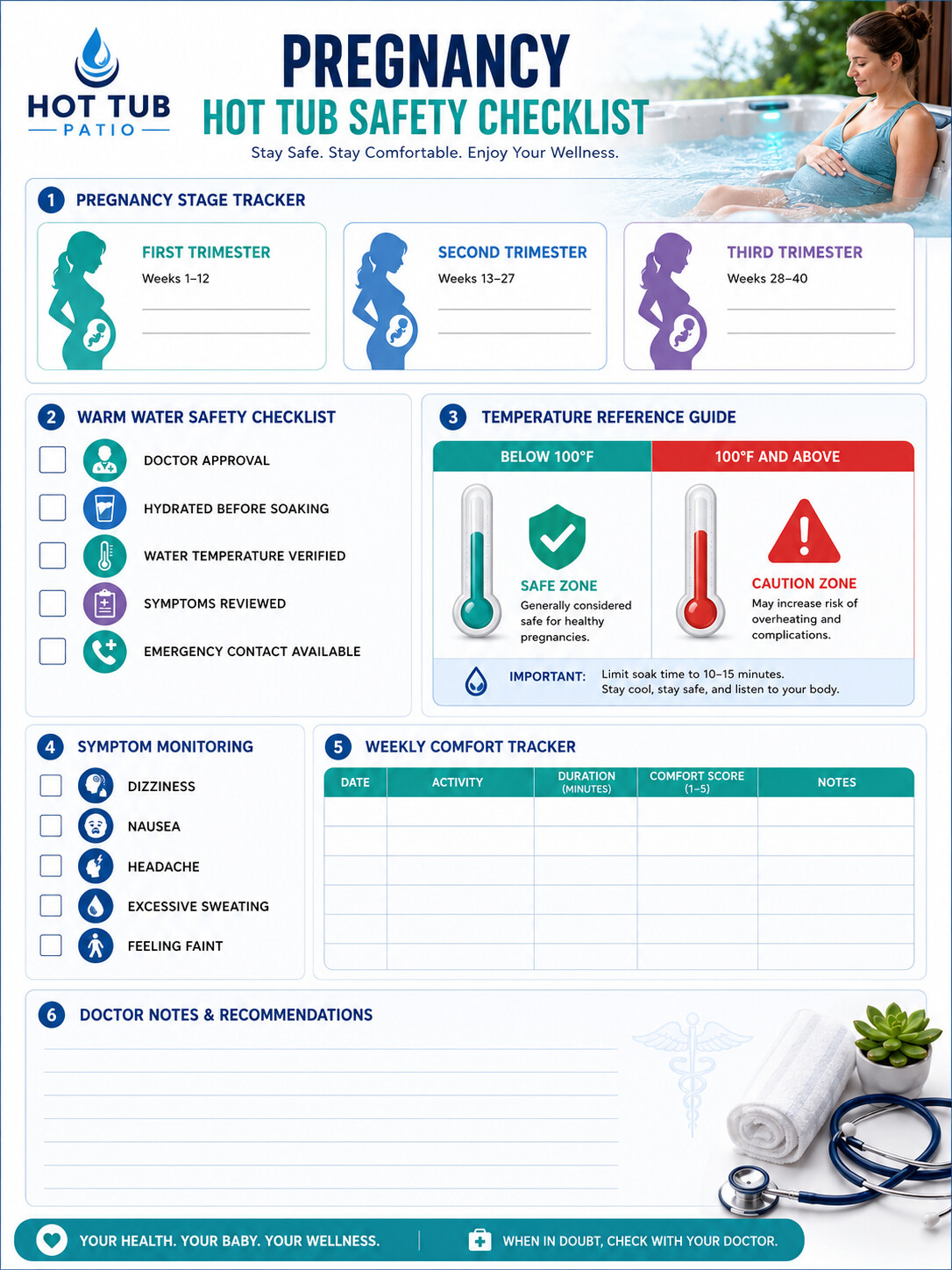
Pregnancy Hot Tub Safety Checklist
If you’re considering any form of warm water therapy during pregnancy, review this checklist first.
Before Entering the Water
✔ Speak with your healthcare provider
✔ Know the water temperature
✔ Bring water to stay hydrated
✔ Avoid entering if you already feel overheated
✔ Have someone nearby if possible
While in the Water
✔ Monitor how you feel
✔ Exit immediately if dizzy or uncomfortable
✔ Avoid prolonged exposure
✔ Stay aware of body temperature
✔ Take breaks when needed
After Leaving the Water
✔ Rehydrate
✔ Rest if needed
✔ Monitor for unusual symptoms
✔ Contact your doctor if concerns arise
Remember, comfort should never come at the expense of safety.
Common Hot Tub Pregnancy Myths
Pregnancy advice often comes with plenty of myths and misinformation. Let’s separate fact from fiction.
Myth: One Minute in a Hot Tub Will Harm Your Baby
This is one of the most common fears among newly pregnant women.
A brief exposure does not automatically mean harm has occurred. The main concern is prolonged overheating that significantly raises core body temperature.
If you accidentally spent a short time in a hot tub, contact your healthcare provider for reassurance and guidance rather than assuming the worst.
Myth: All Warm Water Is Dangerous During Pregnancy
Warm water itself is not the problem.
Many healthcare providers encourage warm baths, prenatal swimming, and hydrotherapy under appropriate conditions.
The concern is excessive heat exposure, not every form of warm water.
Myth: The Third Trimester Is Completely Safe
Some women believe that once they reach the third trimester, hot tub restrictions no longer apply.
While early fetal development concerns decrease, overheating, dehydration, dizziness, and blood pressure changes can still create risks throughout pregnancy.
Myth: Hot Tubs Improve Pregnancy Outcomes
Hot tubs may help relieve discomfort, but they do not improve pregnancy outcomes or replace medical care.
Think of warm water as a comfort tool, not a treatment.
When to Talk to Your Doctor Before Using Any Spa
Some women should be especially cautious about heat exposure.
Always discuss hot tub use with your healthcare provider if you have:
A High-Risk Pregnancy
High-risk pregnancies often require additional precautions.
Multiple Pregnancy
Women carrying twins, triplets, or more may have different recommendations than women carrying one baby.
Pregnancy Complications
Examples include:
- Gestational hypertension
- Preeclampsia
- Placenta complications
- Previous preterm labor
Heart or Blood Pressure Conditions
Because hot water affects circulation and blood pressure, existing cardiovascular conditions deserve special attention.
When in doubt, ask your doctor. A quick conversation can provide far more reassurance than hours of internet research.
Tailored Action Plan
If you’re pregnant and looking for relief from aches, stress, or poor sleep, use this simple decision framework.
Step 1: Identify Your Main Symptom
Choose the issue bothering you most:
- Lower back pain
- Hip discomfort
- Leg cramps
- Poor sleep
- Stress and anxiety
- Swelling
Step 2: Discuss Warm Water Therapy With Your Doctor
Before trying any hot tub, heated pool, or spa treatment, ask your healthcare provider about safe options for your specific pregnancy.
Step 3: Choose the Lowest-Risk Solution
| Symptom | Recommended Option |
|---|---|
| Back pain | Warm bath |
| Hip pain | Prenatal hydrotherapy |
| Swelling | Swimming |
| Stress | Warm foot soak |
| Sleep problems | Warm bath before bed |
| Muscle tension | Heated therapy pool |
Step 4: Monitor Your Body
Pay attention to:
- Dizziness
- Fatigue
- Excessive warmth
- Headaches
- Changes in comfort levels
Your body often provides early warning signs before overheating becomes serious.
Step 5: Track Results for One Week
Keep a simple journal noting:
- What method you used
- How long you used it
- Your comfort level afterward
- Any symptoms experienced
Many women discover that lower-temperature options provide the same comfort they were hoping to get from a hot tub.
Downloadable Resource
Frequently Asked Questions
Should pregnant women go in a hot tub?
Most healthcare providers recommend avoiding traditional hot tubs during pregnancy because high temperatures can raise your core body temperature and increase overheating risks.
Can I go in a hot tub at 33 weeks pregnant?
You should speak with your healthcare provider first. Overheating, dizziness, and dehydration can still occur during late pregnancy.
What if I accidentally went in a hot tub during early pregnancy?
A brief soak does not automatically mean harm has occurred. Stay hydrated and contact your healthcare provider if you have concerns.
Are warm baths safer than hot tubs during pregnancy?
Generally, yes. Warm baths naturally cool over time, while hot tubs continuously maintain higher temperatures.
What temperature should pregnant women avoid?
Many healthcare providers recommend avoiding prolonged exposure to water temperatures above 100°F.
Can warm water help pregnancy back pain?
Yes. Warm water may help reduce pressure on muscles and joints, providing temporary relief from common pregnancy aches and pains.
Why do doctors warn against hot tubs during pregnancy?
The main concern is overheating. Elevated body temperature may create risks for both mother and baby.






2 Comments
Comments are closed.