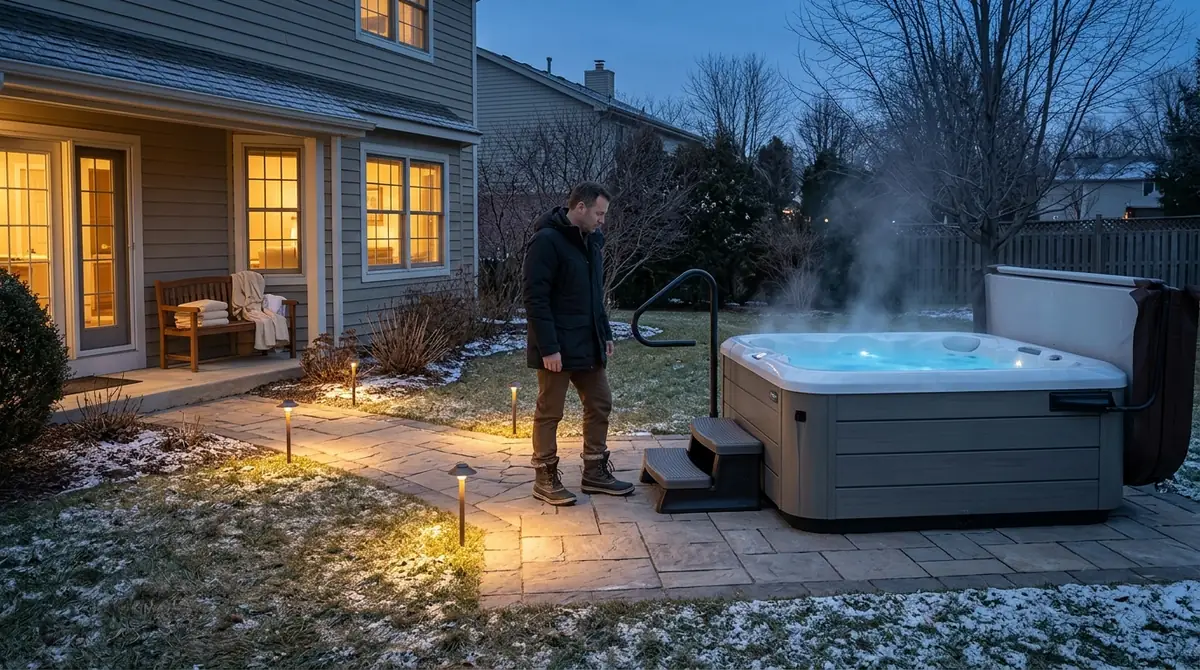
Cold-Weather Hot Tub Safety Checklist: Lighting, Slippery Paths, Towels & When to Skip a Soak

Cold air can make a warm hot tub tempting, but most winter soaking problems happen on the way in or out: icy steps, poor lighting, wet towels, and a difficult walk back indoors. This cold-weather hot tub safety checklist helps you decide whether the whole setup is safe tonight, not just whether the water is warm.
Start with a short inspection before lifting the cover. A safe soak requires working equipment, properly treated water, a clear exit route, and weather that lets everyone get out, dry off, and return indoors without rushing or slipping.
Quick answer: is your hot tub safe to use tonight?
Use the spa only if the water and equipment pass their normal checks, the walking route and steps are free of ice and trip hazards, lighting is adequate, towels are dry, and people can leave safely at any time. If the path cannot be made safe or electrical equipment is compromised, skip the session. These are also useful cool-night hot tub safety tips when the air is merely chilly rather than freezing: check the dark walkway, keep a dry towel within reach, and make it easy to head indoors. Ice and snow add extra reasons to postpone.
| Check | Go ahead | Fix first or skip |
|---|---|---|
| Path and steps | Dry or safely treated; good footing | Ice, pooled freezing water, unstable mat |
| Lighting | Steps and route visibly lit | Dark corners or damaged wet-area wiring |
| Water and heater | Normal heat, flow and sanitation | Unexpected shutdown, alarms, poor water |
| Dry exit | Warm dry towels and safe footwear ready | No dry change area in severe weather |
| Weather | Clear enough for a controlled exit | Ice storm, severe wind, poor visibility |
Walk the route before anyone changes into a swimsuit
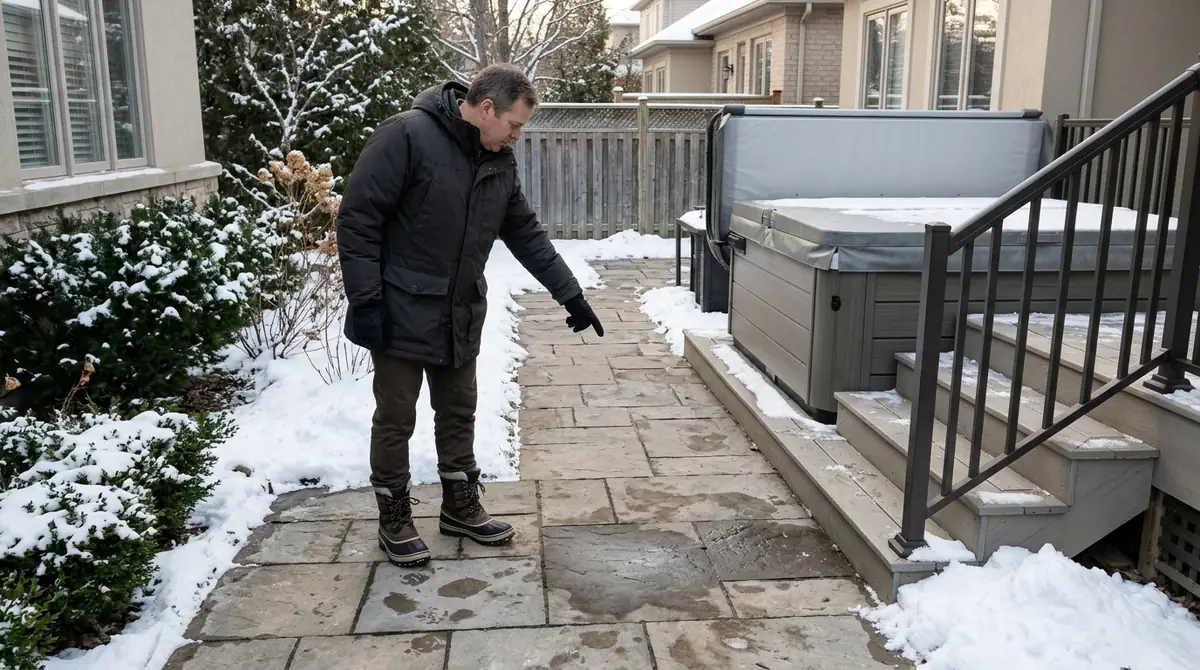
The most useful test is to walk from the door to the spa and back in the shoes guests will actually wear. Pay attention to raised pavers, decking seams, standing water, slick handrails, and the bottom step, where splashes often collect.
- Clear snow and loose debris before guests arrive. Follow the deck or paving manufacturer’s advice for approved traction and ice treatment products.
- Check the path after dark. Put practical task lighting on the step edges and turning points, not only decorative lighting overhead.
- Secure a weather-appropriate non-slip mat so it will not fold, slide or freeze into a raised edge. Keep drains clear.
- Make sure handrails, steps and any cover lifter are stable. Do not use a cover as a seat or support.
- Repeat the check immediately before entry if temperatures or precipitation have changed.
Our winter hot tub care guide covers equipment, freezing and power outages in more depth. This checklist focuses on the person’s route and the decision to soak tonight.
Light the steps without creating an electrical hazard
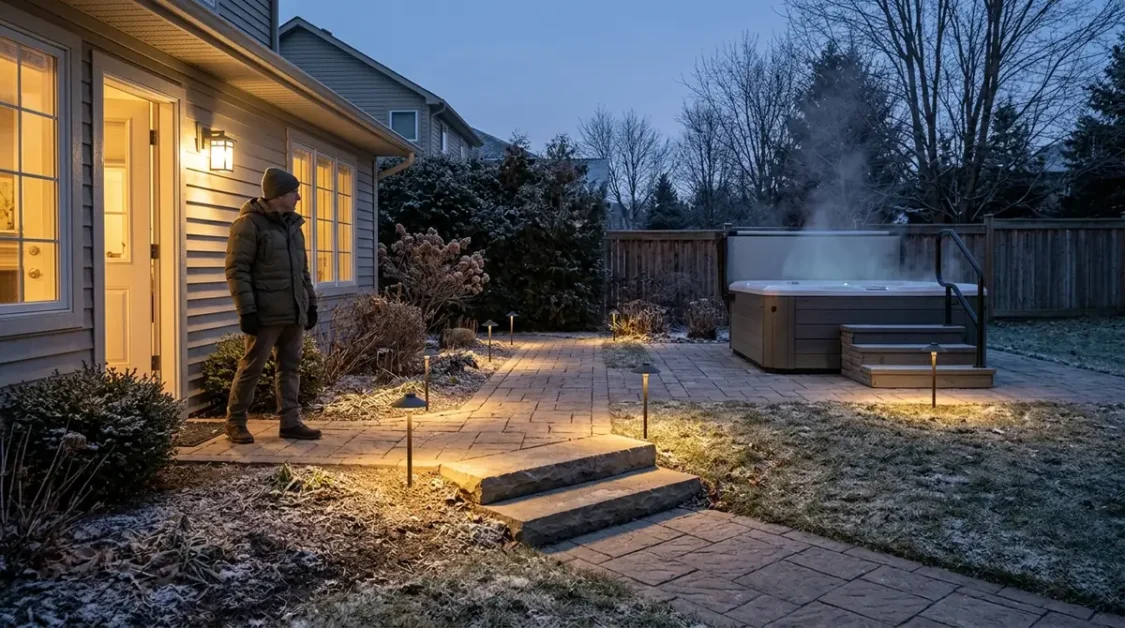
In cold weather, dusk arrives before many owners expect it. A light that makes steam look beautiful is not necessarily bright enough to show the edge of a slick step.
- Place lighting to reveal changes in height and the path to the house, without glare in bathers’ eyes.
- Use only outdoor-rated fixtures in approved locations and follow manufacturer instructions.
- Keep temporary light strings and power cords out of the water area. The U.S. Consumer Product Safety Commission advises keeping electrical cords, wires and products at least 5 feet from water, and using GFCI protection.
- Never route an extension cord through a wet path or under a mat. Have a qualified electrician handle permanent wet-area lighting when needed.
- If lights, outlets or wiring show damage, stop using that setup until the hazard has been resolved.
Keep dry towels, footwear and a clear exit nearby
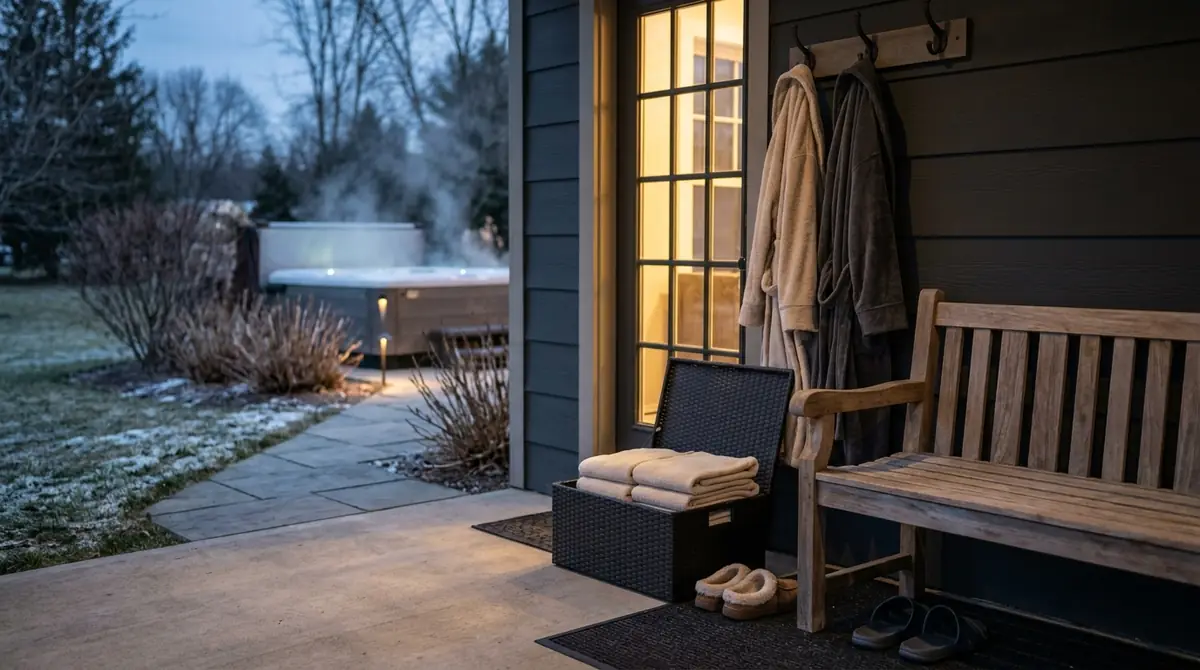
Plan the exit before the soak starts. A warm-water session can end abruptly if someone feels faint, and the person should not have to search for a towel while standing on an icy deck.
- Keep a dry towel or robe for each bather in a protected container near the door, not on a snow-covered table.
- Use footwear with traction and a secure fit, and place it where people can step directly into it.
- Keep the house unlocked or make sure someone can open it immediately.
- Provide a stable place to sit while drying off and changing shoes.
- Avoid leaving wet towels on the deck; they can freeze or become trip hazards.
Clothing choices change with the weather. See our winter hot tub clothing guide for practical ideas without wearing bulky layers in the water.
Check water temperature, chemistry and equipment
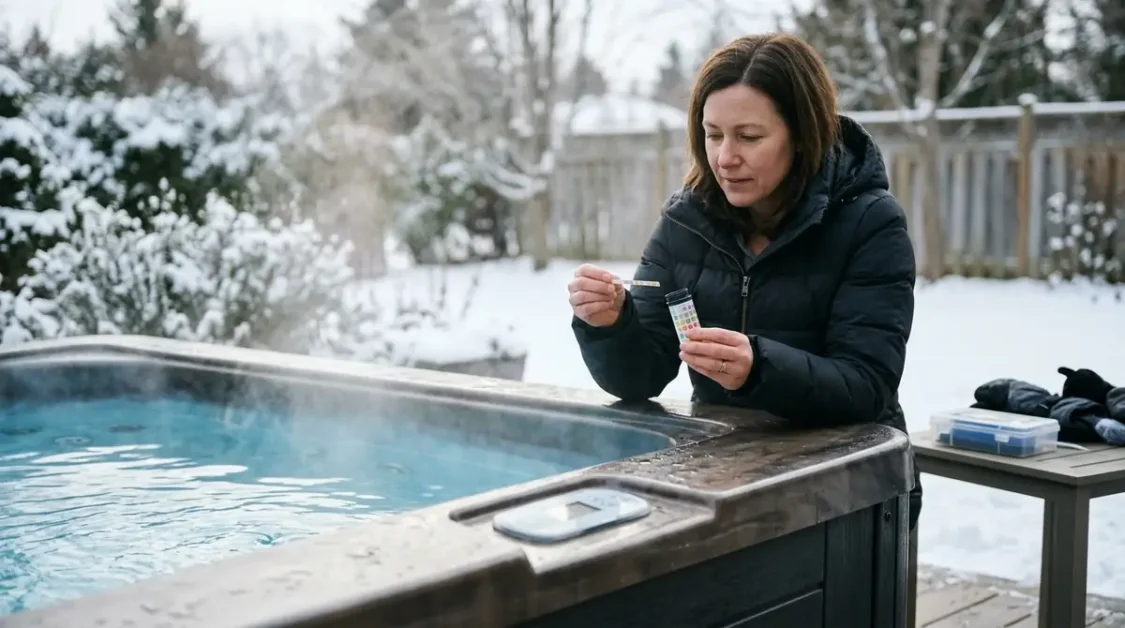
A cold night does not make overheating harmless. The CDC recommends a hot tub water temperature no higher than 104°F. Shorter sessions, breaks to cool down, and drinking water outside the spa are sensible precautions, especially for guests who are new to hot tubs.
- Check the water temperature with a reliable reading; do not raise it above the safety limit to compensate for chilly air.
- Test sanitizer and pH using your hot tub’s testing method and treatment instructions. The CDC lists at least 3 ppm free chlorine, 4–8 ppm bromine, and pH 7.0–7.8 as hot tub reference values.
- Look for unusual water appearance, odor, pump noises, error messages or unexpected loss of heat.
- Confirm that the cover can be removed and replaced without forcing frozen or damaged components.
- If circulation, heating or sanitation is uncertain, do not use the spa until the issue is resolved.
If the hot tub has lost power during freezing weather, use our freezing-weather power outage guide rather than experimenting with wiring, heating devices or improvised antifreeze.
When to skip a cold-weather soak
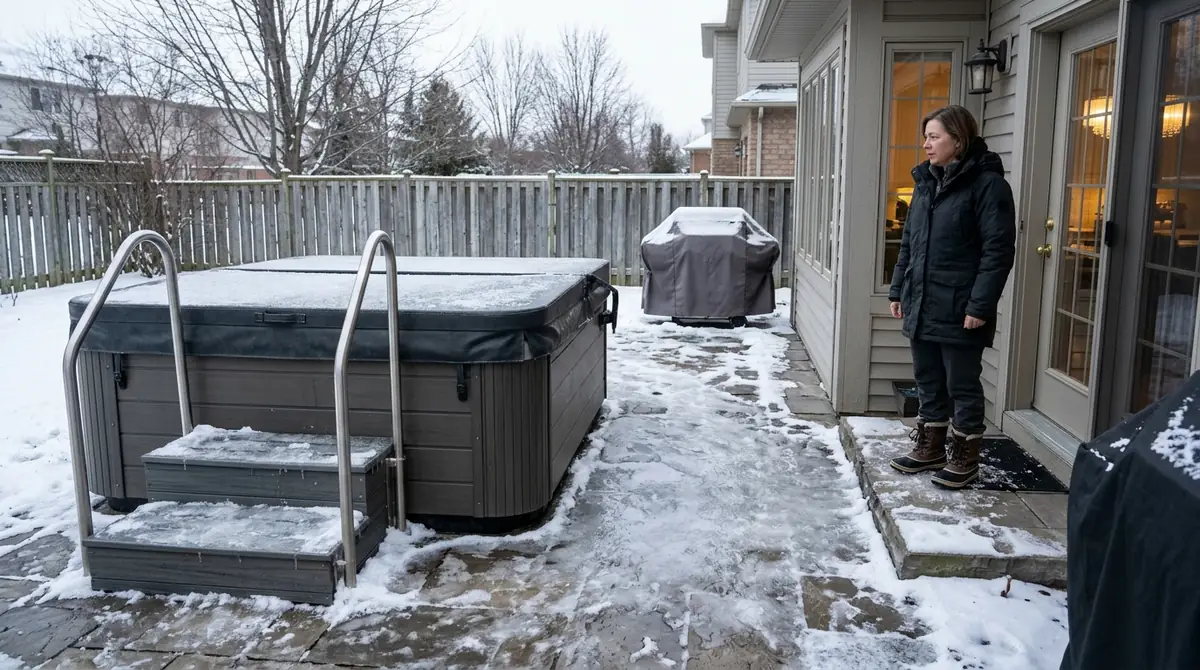
A canceled soak is not a failed evening. Use the following go/fix/skip decision table instead of relying on a single outside temperature cutoff, because wind, surface conditions, mobility, equipment and individual health differ.
| Situation | Decision | Why |
|---|---|---|
| The route is dry, lit and stable; water tests normally | GO | Basic access and water checks pass |
| Towels are wet or a light is out, but both can be fixed safely | FIX FIRST | Solve the avoidable problem before entry |
| Ice cannot be cleared from steps or the exit route | SKIP | A fall is possible during an urgent exit |
| GFCI trips, wires are damaged or equipment is malfunctioning | SKIP | Electrical or equipment fault requires attention |
| Someone feels ill, faint, impaired or unable to exit safely | SKIP | Hot water can add stress and delay a safe exit |
| Severe weather makes supervision or safe exit unreliable | SKIP | A warm spa does not protect the walking route |
Guest safety matters more than how chilly it feels
Keep the spa at or below its designed capacity and set a simple exit signal so guests can ask to leave without embarrassment. Alcohol and hot water are a poor mix; provide water and nonalcoholic drinks outside the tub. The CDC advises that children under five should not use hot tubs, and pregnant people should consult a healthcare professional before use.
A person who becomes dizzy, nauseated, weak, overly hot or confused should exit with assistance and seek appropriate medical help if symptoms are serious or persistent. Our hot tub body-temperature safety guide explains why hot water can be too intense even when the air feels cold.
Tailored action plan: a five-minute pre-soak inspection
Assign the same person to run this quick check on every cold evening. Keep a small flashlight and dry towel container near the house door. For a shared household, write the date and initials on the checklist so no one assumes someone else already checked.
| Sequence | Action | Initials |
|---|---|---|
| 1 | Check weather and visibility; decide if the session is sensible | _____ |
| 2 | Walk the path and steps; remove hazards | _____ |
| 3 | Check handrail, lighting, cover and GFCI-related warning signs | _____ |
| 4 | Test water and confirm normal temperature, filtration and heat | _____ |
| 5 | Place dry towels, footwear, water and a clear exit plan | _____ |
Printable cold-weather hot tub safety checklist
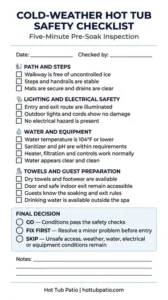
- ☐ Path and steps have safe footing and no uncontrolled ice
- ☐ Handrails and mats are secure
- ☐ Entry and exit are clearly illuminated
- ☐ Outdoor lights and cords are intact and correctly placed
- ☐ Water temperature is at or below 104°F
- ☐ Sanitizer and pH meet the spa’s requirements
- ☐ Pumps, heater and controls are operating normally
- ☐ Dry towels, footwear, water and indoor access are ready
- ☐ Bathers understand capacity, breaks and exit rules
- ☐ No weather, health or equipment warning requires canceling
Frequently asked questions
Is it safe to use a hot tub when it is snowing?
Snow alone does not answer the safety question. Water quality, visibility, electrical safety, the condition of the steps and the ability to exit safely matter more than the sight of snow.
Should I turn up the hot tub temperature on cold nights?
Do not exceed 104°F. Increasing the water temperature to compensate for cold air is not a substitute for dry towels, traction and a safe route indoors.
What should I do if the steps are icy?
Do not enter until the route has been made reliably slip-resistant. If that is not possible, cancel the soak.
Can I use holiday string lights around my hot tub?
Only use properly rated lighting placed and powered according to electrical safety guidance, the spa manual, and applicable codes. Keep temporary electrical cords and products away from water.
When should a guest stop soaking?
Leave if dizzy, weak, sick, unusually hot or uncomfortable. Help the person to a safe, dry place and seek medical care for concerning symptoms.
Make the route as safe as the water
The best winter hot tub safety habit is to inspect the entire journey from the house to the spa and back. The checklist takes minutes to use, but its most valuable result may be a decision to postpone until the path, weather or equipment is safe.