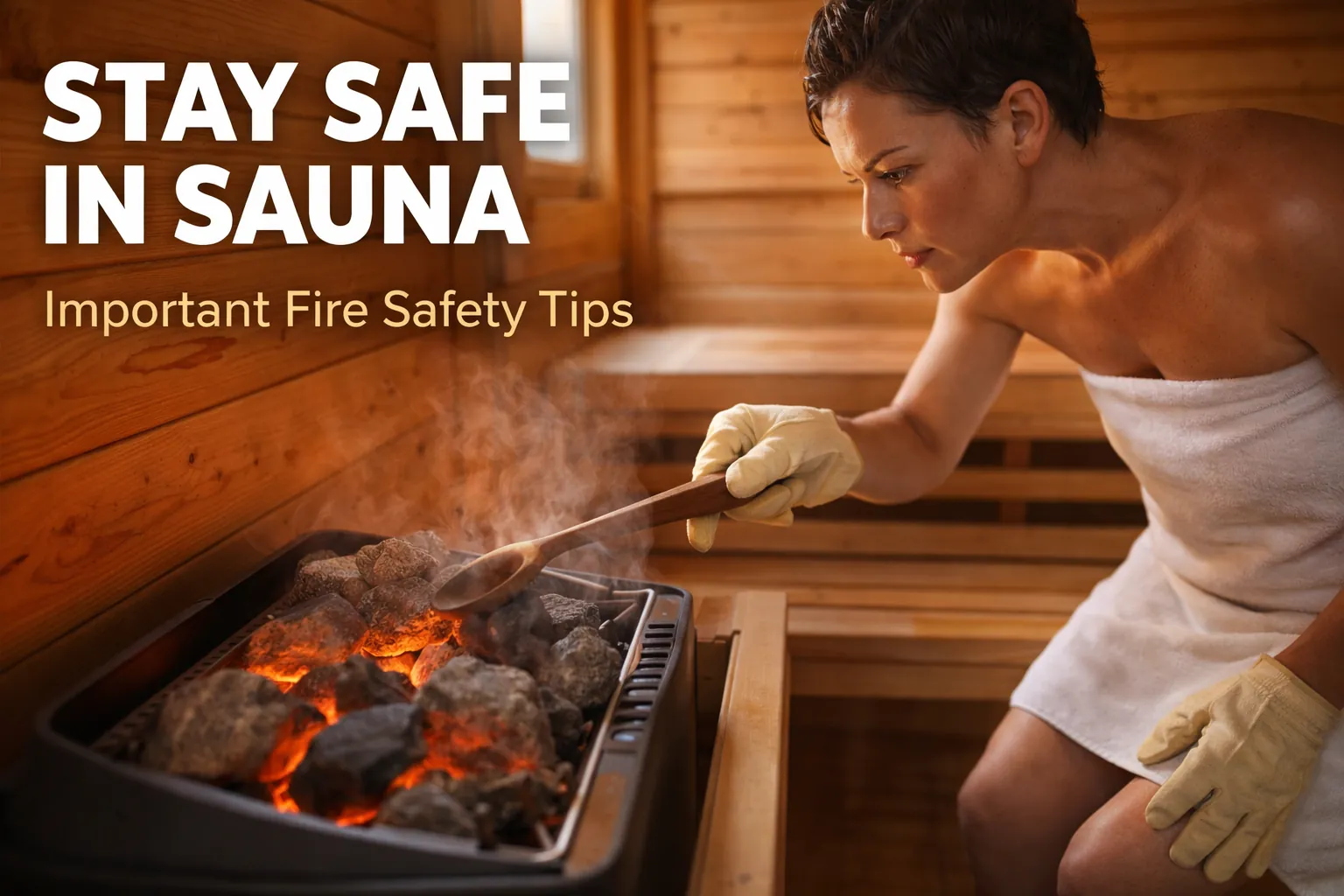
Sauna Fire Safety Guidelines: Stay Safe and Relax

Using a sauna should feel relaxing, not risky. But if you ignore basic safety rules, things can go wrong fast, especially with high heat, wood materials, and powerful heaters.
In this guide, you’ll learn exactly how sauna fires happen, how to prevent them, and what to do if something feels off. Whether you’re using a traditional sauna, infrared sauna, or a home sauna setup, these tips will help you stay safe every session.
What Causes Sauna Fires?
Quick takeaway, most sauna fires are preventable.
In real sauna setups, fires usually happen because of overheating, poor maintenance, or simple mistakes people don’t think about.
Common causes include:
- Items placed on or near the sauna heater
- Faulty electrical wiring
- Poor ventilation or airflow
- Dirty sauna with debris buildup
- Overheating beyond safe sauna temperature
- Worn-out sauna stones or heater components
A common mistake beginners make is assuming sauna heat is harmless because there’s no visible flame. But the heat source, especially in a wood-burning sauna or electric sauna heater, can easily ignite materials if misused.
If you want a deeper breakdown of safe usage basics, check out this helpful guide on sauna safety basics.
Essential Sauna Fire Safety Rules
Here’s the stuff you should never ignore.
Always follow these core safety rules:
- Never leave a sauna unattended
This is especially critical for wood-burning sauna setups. - Keep flammable items out
Towels, clothing, paper, oils, and plastics can ignite quickly. - Don’t place anything on the heater
Even a small towel can become a fire hazard. - Stick to safe temperature ranges
Most saunas should stay below 195°F. - Watch for warning signs
Smoke, burning smells, or unusual heat spikes mean something’s wrong. - Install a shut-off system
Modern heaters should have automatic high-temperature cutoffs.
If you’ve ever used a sauna before, you’ve probably noticed how quickly heat builds after a few minutes. That’s exactly why monitoring temperature matters.
For a better understanding of heat control, you can explore this guide on ideal sauna temperature settings.
Step-by-Step: How to Prevent Sauna Fires
This is where most people get it right or wrong.
1. Inspect Your Sauna Regularly
Check these areas:
- Electrical wiring
- Sauna heater condition
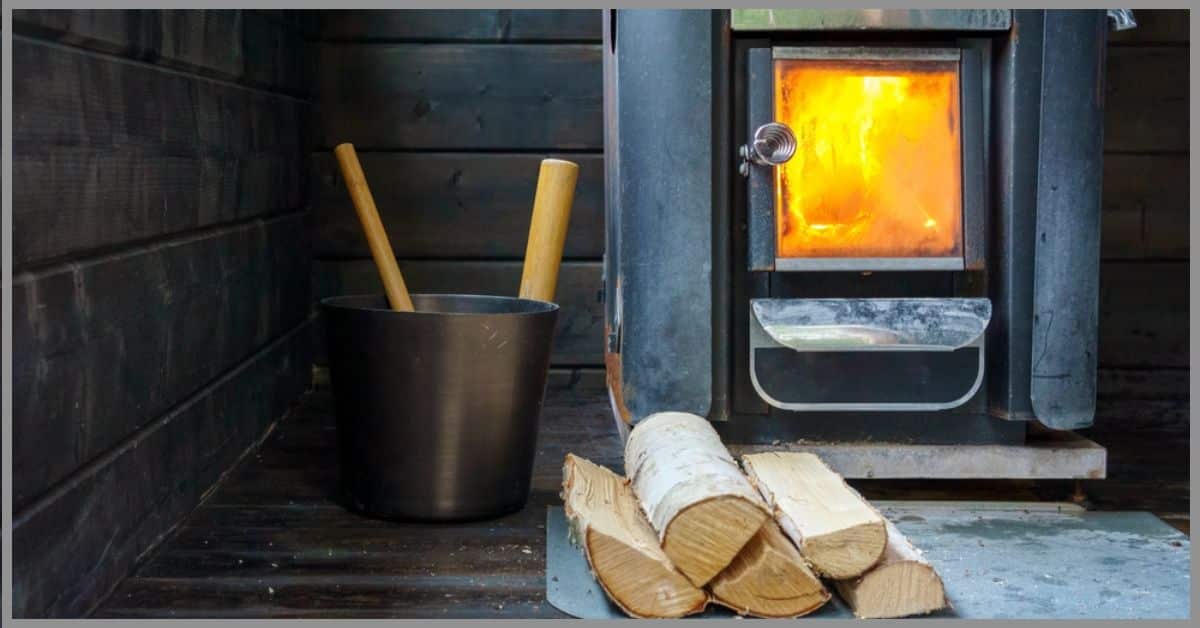
- Chimney in wood-burning setups
- Sauna stones and airflow
Many home sauna owners run into problems because they skip inspections for months.
2. Keep the Sauna Clean
Debris increases fire risk.
- Remove dust and lint
- Avoid leaving towels inside
- Clean around the heater area
One thing people often overlook is how easily lint and fibers can ignite under high heat.
3. Maintain Proper Ventilation
Airflow keeps heat balanced.
- Ensure vents are open and clear
- Avoid blocking airflow with objects
If the sauna struggles with uneven heat, ventilation is often the issue.
4. Replace Sauna Stones Annually
Over time, stones break down.
- Cracked stones block airflow
- Poor airflow leads to overheating
In most home sauna setups, replacing stones once a year keeps heat consistent and safe.
5. Install Safety Features
Modern safety matters.
- High-temperature shutoff switch
- Fire-resistant materials
- Optional sprinkler systems in commercial setups
These systems act as a backup if something goes wrong.

Common Sauna Fire Mistakes to Avoid
Quick heads-up, these mistakes happen all the time.
Avoid doing this:
- Leaving sauna running unattended
- Using oils or sprays near the heater
- Overcrowding the sauna cabin
- Ignoring strange smells or sounds
- Installing benches too close to the heater
Many first-time sauna users underestimate how quickly things heat up. What usually happens is they stay too long or add items that shouldn’t be there.
If you’re setting up your own space, this guide on choosing the right sauna heater can help you avoid major setup mistakes.
What to Do If a Sauna Fire Starts
Stay calm, act fast.
Follow these steps immediately:
- Evacuate everyone from the sauna
- Call emergency services
- Do NOT throw water on electrical or oil-based fires
- If trapped, stay low and cover your nose and mouth
- Use a fire extinguisher only if it’s safe
In everyday sauna use, emergencies are rare, but knowing what to do makes a huge difference.
Practical Sauna Safety Tips for Everyday Use
These small habits go a long way.
- Bring only essentials into the sauna
- Stay hydrated before and after sessions
- Limit session duration
- Let the sauna cool down properly after use
- Always supervise if others are using it
A simple way to improve safety is just being aware of your surroundings. Most issues start small and build up over time.
For official fire safety standards and guidelines, check out the National Fire Protection Association:
https://www.nfpa.org
FAQs:
Can I leave my sauna running unattended?
No, it’s risky and one of the main causes of sauna fires.
Do I need to replace sauna stones regularly?
Yes, once a year is recommended to maintain proper airflow and heat balance.
Is it okay to put towels on a sauna heater?
No, towels can easily catch fire and should never be placed on heaters.
What’s the safest temperature for a sauna?
Typically between 150°F and 195°F, depending on the sauna type.
Can sauna heaters overheat?
Yes, especially if ventilation is poor or safety systems fail.